Add your city to see in-person AI meetups near you here.
The Weekly AI Founder Mastermind is every Thursday at 11 AM CT, 60 minutes on Zoom. Join us!
For paid members
18,791 AI investor contacts, ready to reach
Key partners at 5,433 firms investing in AI: name, title, verified email, LinkedIn and phone. Filter by role, firm type and country; export the ones you want as a CSV.
Edward Igushev worked at Google before co-founding TrueSource, where he served as CEO until the company was acquired. Since January 2024 he has been CTO of Created by Humans, a licensing marketplace where AI developers obtain permission to use books. Rights holders list their titles there, and bestselling writers including Douglas Preston and Susan Orlean back the effort. The company has introduced the American AI and Copyright Accord.
“Make sure the person who leads this embraces the technology. If there's a hint of resistance, it's the wrong person, and those people are in every workplace.”
“MCPs already exist. You still need to build the business knowledge, the context and the rules, so the agent goes exactly where it needs to instead of through the whole database.”
“Migrating it all, we'd have ended up with a wall of spaghetti. Rebuilding from scratch on our existing infrastructure solved legacy problems we had never managed to fix.”
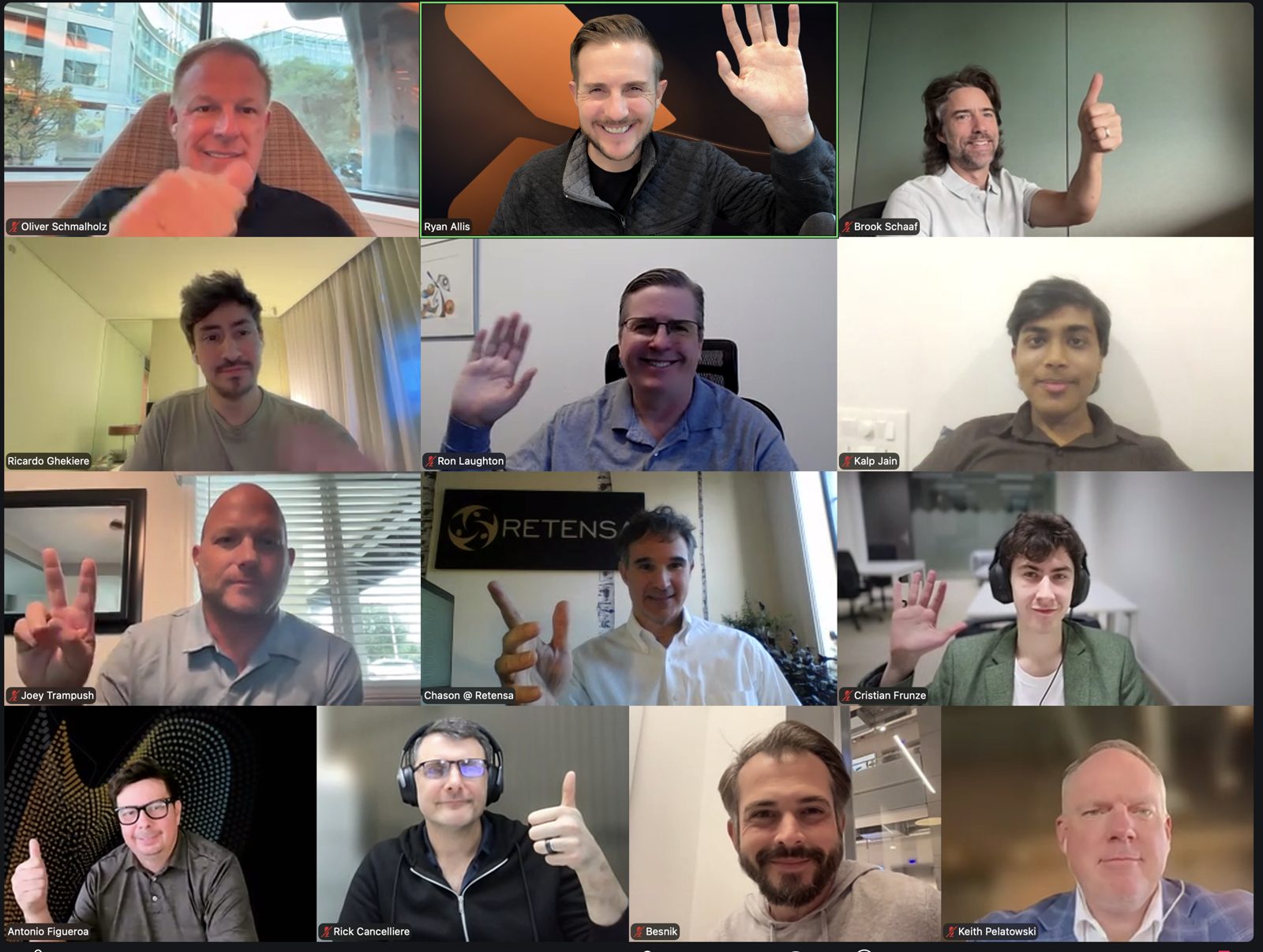
The fourth Weekly AI Founder Mastermind, and the first at 60 minutes, brought together 18 founders from New York, Lisbon, London, Amsterdam, India, South Africa, Austin and more (join next week's call with Lounge Pro). Three topics: rebuilding a 20-year-old SaaS platform to be AI-native, letting AI answer questions from your own data, and code review once AI writes hundreds of pull requests a day. The thread through all three: the AI tools work, and the results come from the system you build around them.
Community updates
Growth: Lounge passed 2,500 members, about 230 of them founders at a verified $1M+ ARR.
City ambassadors: Berlin, Lisbon (Oliver Schmalholz hosts), Ankara, Mogadishu, Tokyo, London, Reno and Austin, with Montreal and Cleveland applying. One event a quarter, with about $1,000 per city for food and drinks once sponsors are on board. Want to host or sponsor? Message Ryan.
Topic 1: Rebuilding a 20-year-old SaaS platform with AI
Keith Pelatowski (Chief Executive Officer, Points North) runs a profitable, 70-person company whose 20-year-old platform now keeps AI out of its users' workflows. About 15 engineers have Claude Code; 2 or 3 use it daily. The goal: an AI-native platform by April or May.
Ron Laughton (Founder & CEO, ReviewInc): three developers on $100-a-month Claude Code plans rebuilt a 15-year-old portal (Bootstrap 5, Section 508 accessibility, site-wide search, an AI help assistant) in about three weeks instead of six months. Secrets went into Azure Key Vault first, and Claude got a schema dump, never the database.
Antonio Figueroa (Founder and CEO, Raken AI Labs) modernizes version by version: write down the business rules nobody documented, prototype with the customer in short cycles, and build the back end in parallel with Claude skills. Raken's gross margin went from 40% to 67% in six months.
Besnik Vrellaku (CEO & Founder, Salesflow) rebuilt on a new agentic stack over 8 months and kept the infrastructure that worked. If a full rebuild is too much, start with one module.
FuriosaAI · Series D · $620M · led by National Growth Fund of Korea · $2.9B valuation · Seoul, South Korea
FuriosaAI closed a KRW 820 billion Series D that it values at roughly $2.9B after the round. The National Growth Fund of Korea invested $280M and was the largest investor. International investors contributed $110M, with Infinitum the largest of them, alongside QUDA Capital, Cisco Investments, NeoFort Holding, Jericho Capital and Worldline Capital. Existing shareholders added $125M, including $22M from Korea Development Bank, and NAVER Ventures, DSC Investment and KDB Capital all took part.
The company builds the RNGD inference accelerator and says the new money will expand production, grow its software stack and fund a third-generation chip. Inference silicon is drawing capital as demand shifts toward serving models at scale.
For founders, the round shows that sovereign funds can anchor a hardware raise of this size. Chip companies run long development cycles, so state and corporate investors often stay through production ramps. Teams that depend on alternative accelerators should track which software ecosystems the company funds next.
Quick update: AI-Atlas is officially live on Product Hunt today!
Some of you have already followed my journey building it independently, and I genuinely appreciate the feedback I've received here.
I'd love to hear your thoughts on the launch, especially whether the product's value and evaluation methodology come across clearly.
If you have a minute, I'd really appreciate your feedback in the Product Hunt discussion. And if you think the project deserves some support, that would mean a lot too.
Among European founders it's quite common to hear a lot of frustration and confusion regarding the demands made by European business angels and investors. One adagio, quite common amongst the European founder community, is that "American investors invest and European investors say they're investors." Indeed, the lack of public guarantees, of a duly integrated capital market, of a perennial high risk aversion culture, and of the lack of legal efficiency and certainty, make private investors not focus on the opportunities posed by EU founders. The power law explained by Sebastian Mallaby is, in Europe, anathema, as much as the "move fast and break things" motto.
I have created this EU Startup Monitor beresol.eu/startups/ that tells us to which extent the gap between the EU and the US keeps growing, relentlessly. I still remember meeting a European "business angel" who told me he'd be interested in investing 10k EUR (yes, ten-thousand euros) in a project I've developed for 1% of the equity of that project, with voting rights and a return of 0.5%. I nicely answered "No, thanks, that is money I can myself bootstrap, and that's not being a business angel." I pity those who let him meddle in their projects. Sadly, he was not rare, but quite common in Europe.
Hi everyone, I’m Abdulkadir, founder of Finakis. 15 years in health tech, two exits, now building my third company. This one is in a part of healthcare where the money is large. Türkiye is live, the EU and the US are next.
One thing I need: I’d love to hear from founders who took a local winner into the US. What would you do differently in year one?
Happy to share what I learned about selling into hospitals. It is a different game.
Austin, Texas. I was a managing director at an early stage fund before this, so I sit on both sides of the table here.
We build Mira, an AI interviewer. She interviews applicants on day one instead of leaving them in a queue, and hands recruiters a ranked shortlist with the interview already done. Mid-market and enterprise teams hiring 50+ roles a year. Over 1M candidates evaluated so far. Candidate NPS is above 75, which is the number that changed how I think about the product. Candidates don't tolerate the AI interview, they prefer it to waiting.
Hey everyone 👋🏽 I'm Lambert, an AI Systems Builder and the founder of Lynktern, building from Nigeria 🇳🇬. I'm currently building Lynktern, a platform that started from a problem I experienced firsthand during my SIWES journey: students struggling with logbooks, reports, and the lack of proper guidance throughout their industrial training.
Question for the founders and operators reading this: when you hit the build-vs-buy call on infrastructure, financing, or anything else that isn't your core product, what tipped you toward doing it the hard way? Curious what forced your hand.
Power and data centers take years to build. The agentic applications that will run on them change in weeks. If you're building AI infrastructure right now, you're making a multi-year bet against a demand curve nobody has finished writing. Most founders only plan for one side of that mismatch.
Hey Lounge 👋 I’m The TechWiz (Muhammed Alpha Diab) — founder of The TechWiz, building practical products from The Gambia 🇬🇲. Flagship: LocalHands Verified skilled workers platform for The Gambia. Connects people who need work done with ID-checked, in-person verified local hands (phone repair, solar, electricians, farm labour, etc.).
Mobile-first, ratings, clear pricing, Wave mobile money rails. Built for how work actually happens here.
I’m Andreé Settembrino, an Italian software engineer and Founder & CTO of CashOut SpA, building technology from Chiloé Island, at the gateway to Chilean Patagonia.
Far from traditional tech hubs, I’m developing CashOut — Your City in Real Time, an AI-powered territorial platform connecting local businesses, professionals, marketplaces, services and communities in one digital ecosystem.
As businesses invest heavily in artificial intelligence, an important question is emerging: Should the return on AI investment be measured by how many jobs it eliminates?
AI and autonomous agents can increasingly perform tasks traditionally handled by employees, including customer support, data analysis, software development, financial operations, and administrative work.
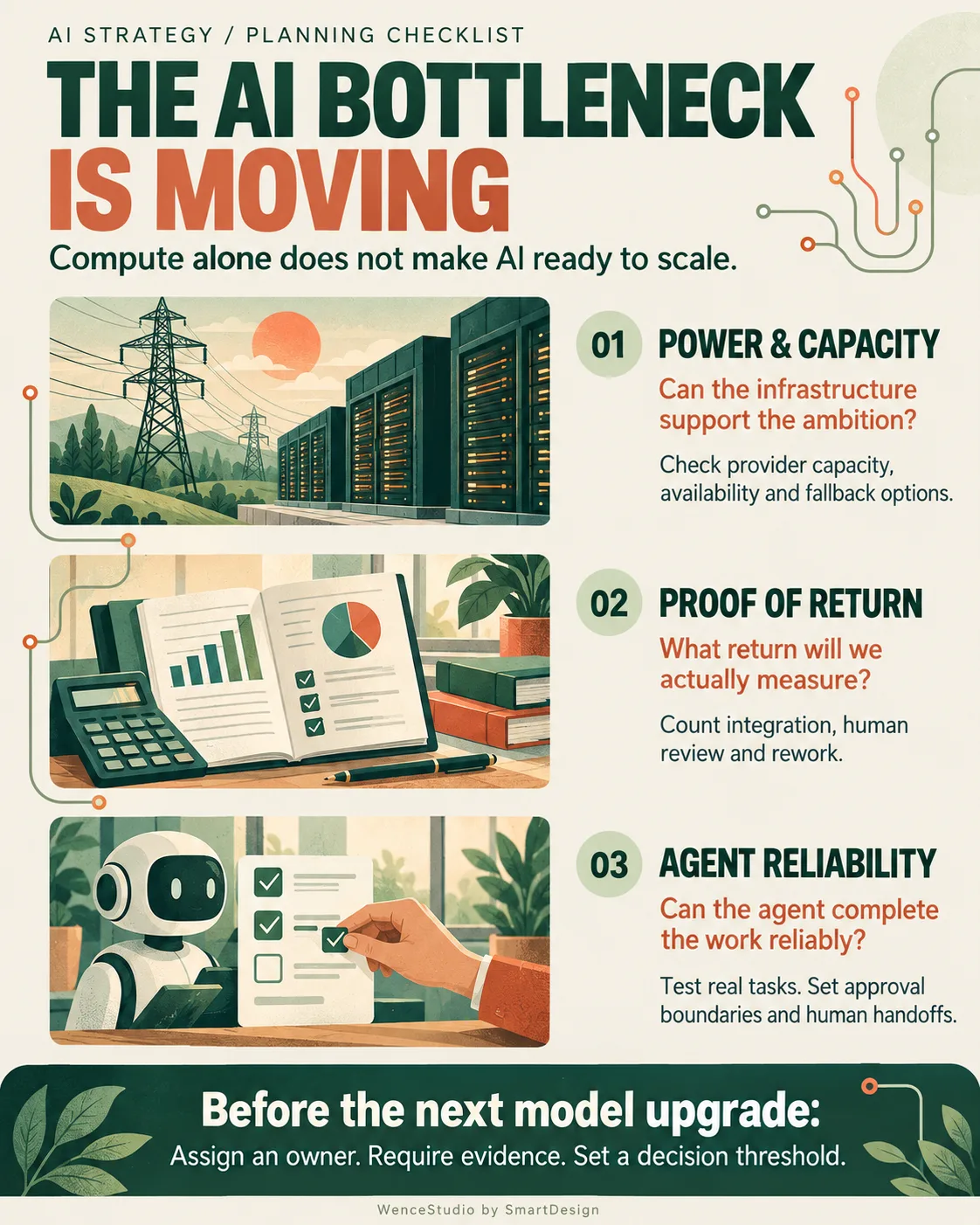
Chips still matter. But access to compute alone cannot tell you whether an AI investment is ready to scale. My view: founders need to bring three questions into the planning conversation much earlier.
While the market is obsessed with benchmark races and base compute costs, Enterprise AI adoption is hitting a structural wall: Legal & Operational Risk.
High-margin corporate processes cannot be handed over to autonomous agents without a clear framework of accountability, deterministic auditing, and compliance.
Just as finance needed Moody’s/S&P and civil engineering required TÜV/ISO standards, autonomous AI systems will inevitably require Independent Institutional Accreditation.
Who I am: Alex (Pop Alexandru), a 17-year-old high schooler from Romania, ICYS 2026 Gold Medalist and Independent AI researcher :) I’m building AI-Atlas on my own.
What I’m building: “AI engineer” is easy to write on a CV and hard to check. Stars and followers measure popularity, not the work. AI-Atlas reads the code instead. Enter a GitHub username and it scores every public AI project on a 7-part rubric across six fields (ML, Computer Vision, Data Science, NLP & LLMs, AI Agents, MLOps), and every score links to the files it’s based on. The goal is a trusted, verifiable signal of AI skill that developers can show and companies can hire on.
Yesterday I announced the GSR Network Android app. Then I spent a good chunk of the day watching the download count.Seven in the first six to eight hours. Ten by late afternoon.
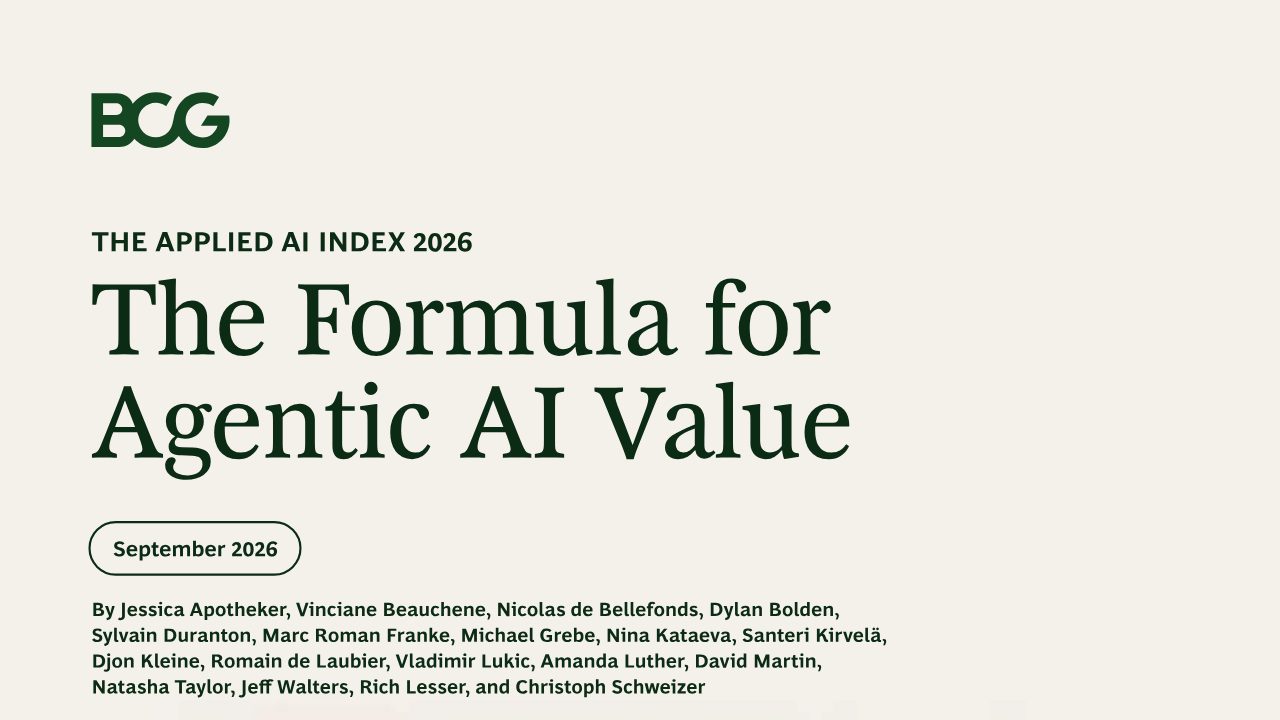
Boston Consulting Group · Index · 28 pages · September 2026
BCG's 2026 Applied AI Index, drawn from a survey of more than 1,300 executives across more than 20 sectors, finds that almost half of companies now get measurable value from AI, but the gains are concentrated. Only 7.5% are future-built, and firms that pair strategic clarity with applied AI capture five times the value of those with neither. AI spending rose from about 1% of revenue to 3.3%, with roughly 80% sitting outside the IT budget.
Agents already produce 22% of total AI value, a share BCG expects to reach 39% by 2030, yet only 5% of companies have the controls autonomous agents need. For founders, the report sketches the buyer: enterprises that measure AI in the P&L, run one multiyear program, and want agent controls and workflow redesign rather than point tools.
Agents account for 22% of AI value, projected to reach 39% by 2030.
Only 5% of companies have the full controls autonomous agents require.
Buyers want P&L-measured AI, one multiyear program, and workflow redesign over point tools.
Featured investmentDeal of the day · 1d agoAll deals →
Physical Intelligence · Series round (reported talks) · $1B · led by Lux Capital · $20B valuation
Bloomberg reports that the robotics software developer is in early discussions to raise at least $1B, a round that would nearly double its valuation to roughly $20B. Lux Capital and Avenir, both existing backers, are reportedly in talks to lead. The talks are not closed, and terms could change before any announcement.
The company last priced at $11.5B earlier this year. Earlier investors include Alphabet's CapitalG, Thrive Capital and Jeff Bezos, and the business has not reported revenue. The report frames the round as continued appetite for foundation models built for physical tasks.
For builders, the talks show investors will pay steep step-ups for pre-revenue models aimed at robots, and that a fast valuation climb can be supported by research progress alone when the market sees a clear category.
Rick Cancelliere (Founder and CEO, PracticeBeat) put a number on the problem (60 to 90 day implementations, about $25,000 a month in delayed revenue each), set a one-day go-live goal and tied bonuses to it.
Chason Hecht (Retensa) would build in-house if you have runway, for the team's pride of ownership. Brook Schaaf (Co-Founder and CEO, FMTC) said guardrails, not models, are where things break now.
Lessons learned
Tie the rebuild to a business number and to the team's bonuses.
Document the unwritten rules first, then rebuild in short cycles, one module at a time if needed.
Secure it before you start: secrets out of the code, a schema instead of database access.
Topic 2: Letting AI answer questions from your data
Ron wants ReviewInc customers to ask their 100+ reports questions in plain English. MCP with a temporary token, or server-to-server?
Antonio built this for a telecom with a petabyte data lake. What fixed the hallucinations was a metadata layer: what every KPI means, where it lives and what people will ask. Starburst and Qlik Answers now build much of it for you.
Ricardo Ghekiere (Founder, Patricia.app) maps where the data lives instead of importing it, reviews every failed prompt each Monday, and plans for up to 50 rounds per use case.
Ron's plan: an MCP layer filtered to each user's access, with PHI and PII removed before the model sees anything.
Lessons learned
Build the metadata layer first. MCP is the connector, not the solution.
Filter by permission and sanitize sensitive data before the model touches it.
Topic 3: Code review and CI/CD when AI writes the code
Ricardo outgrew CodeRabbit, built his own review tool and batches PRs into "trains" so the merge queue doesn't jam. Costs fell from about $4,000 to $1,000-$1,500 a month.
Cristian Frunze (Founder, Ken), #4 on Lounge's GitHub leaderboard, moved CI/CD to bare-metal servers. A classifier routes each PR by size: an open-source model or Grok for small changes, Opus for medium, the top OpenAI models plus Opus for the largest, with 3 to 5 review rounds. It took two days to build.
Ken's numbers: in 30 days, a team of two merged 4,666 PRs on 371 billion Claude Code tokens, about $172,600 at API list prices, paid with accelerator credits. That is about $15 per commit, the benchmark Chason suggested everyone track.
Ultracode mode: Cristian plans a module as Linear tickets, then lets Claude Code run 10 to 50 sub-agents on it overnight.
Lessons learned
Past about 50 PRs a day, build your own review pipeline and route reviews by size.
Thursday, November 5 at 11 AM CT, 60 minutes on Zoom. Add a topic on the mastermind page and vote on what we cover. Ideas from today: monetizing AI inside your app, and AI pricing as teams move to open-weight models.
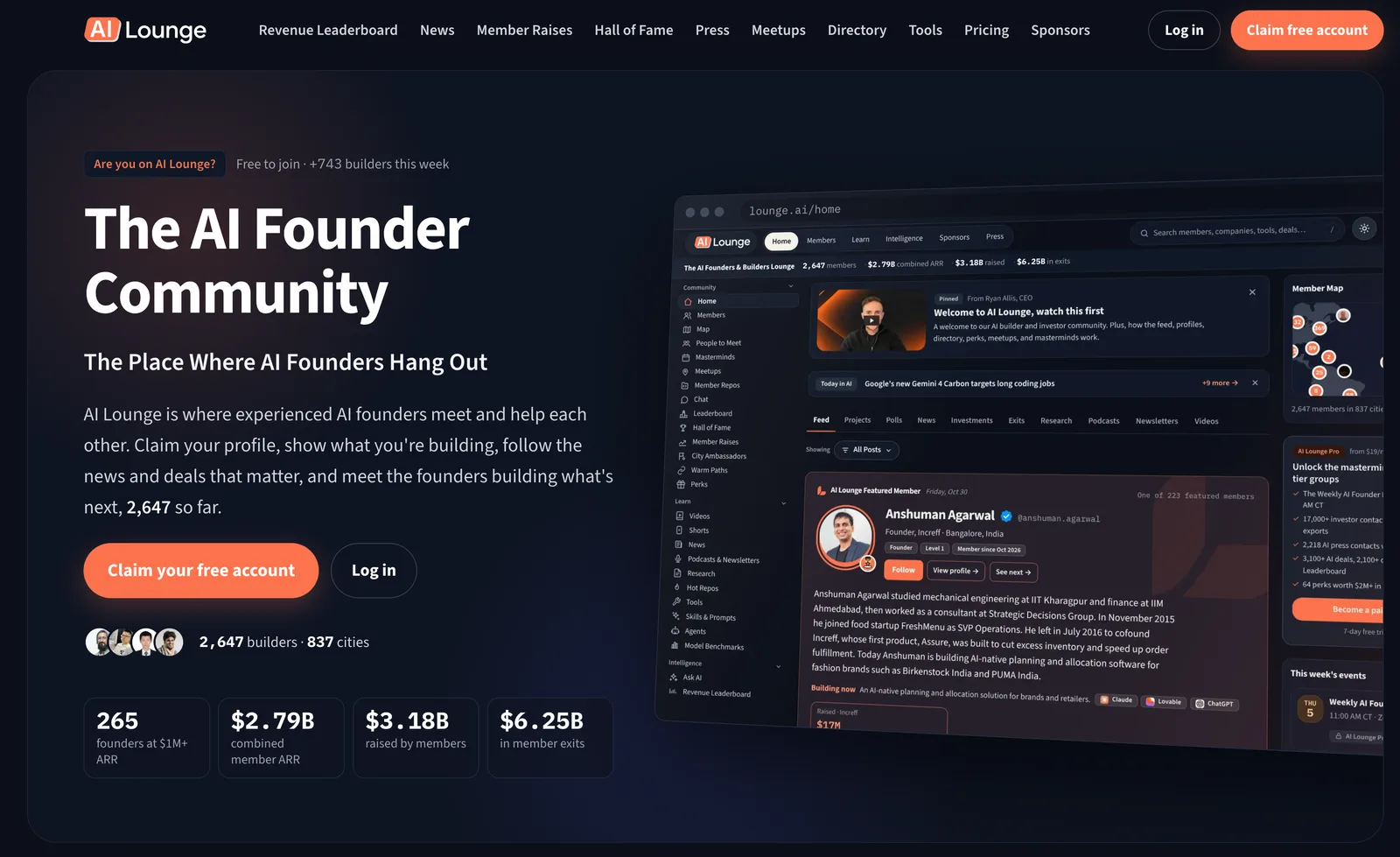
We decided today the name Lounge was too generic -- so we are now called AI Lounge. Over time we will have many Lounges (SaaS Lounge, CEO Lounge, etc.) -- but for now AI Lounge is our first and only Lounge.
So welcome to the AI Lounge! Thanks for being one of our first 2500 members!
Thanks again to everyone who's been following along! Quick update: AI-Atlas is officially live on Product Hunt today!
Some of you have already followed my journey building it independently, and I genuinely appreciate the feedback I've received here.
I'd love to hear your thoughts on the launch, especially whether the product's value and evaluation methodology come across clearly.
If you have a minute, I'd really appreciate your feedback in the Product Hunt discussion. And if you think the project deserves some support, that would mean a lot too.
With open weight models catching up to frontier models and there being a major privacy and cost benefit to using your own internal model, I'm guessing that Anthropic's revenue won't be able to grow that much more post IPO. I'm definitely not a buyer at a $2T valuation. Your thoughts?
I wouldn't be surprised if their rate of revenue growth drops dramatically in the next 24 years as large enterprises bring their models and harnesses in-house.
Everyone is racing to add AI to everything. AI agents. AI wrappers. AI copilots. AI-powered everything. But here's what I find interesting: two founders can have access to exactly the same models, tools, and APIs, yet one builds something people love while the other builds something nobody uses.
The difference isn't necessarily the technology. It's understanding people, identifying real problems, and building an experience worth returning to. We're entering a world where building software is getting easier every month. So, if everyone can build, what actually separates great founders from everyone else?
Hot take: 90% of AI startups are building features, not companies. Better question: If OpenAI, Google, or Anthropic can ship your entire product as a feature tomorrow, what exactly are you building that will survive?
118 new members joined since the last post, and today we shipped a shorter mastermind recap with a Best advice section, pinned posts, and a calmer For You feed.
Mastermind recaps: each recap now has a designed Best advice section with the top advice, the quote and who said it, and the recap text is shorter.
Email digests: daily digests now go to members who have opened a Lounge email or visited in the last 7 days. Everyone else gets the weekly digest, and queued digests are no longer sent twice.
For You: unseen posts load from the start of the feed. Once those are more than a week old, posts you have already seen this week come back in between.
Pinned posts: admins can pin posts to the top of For You until they unpin them. The weekly mastermind recap pins itself.
Post cards: closer to Skool's look, with the level on the avatar, the space and time on a second line, a larger title, and a New comment link in the footer.
Day-14 email: now asks what features to add and how to make Lounge better.
Today in AI: a one-line strip on Home with the top headline and a link to AI News, which now holds the full swipe carousel.
Research, deals and events: today's featured research, deal of the day and event cards sit right under the top post in For You.
Lighter pages: the member map, profiles, Hall of Fame and topic spaces load faster, and long lists now show one page at a time.
Ask: saved conversations with links open without an error.
What's working: we stopped treating the web app as the product. Our MCP connector runs the whole loop inside Claude and ChatGPT. Build the interview, send it, read results, hire, without opening a dashboard. We put it on every plan including the free tier. Gating the connector would have protected revenue and killed the distribution.
What I need: intros to heads of talent acquisition at companies hiring 50+ roles a year. Staffing and RPO firms count, some of our best accounts look like that. If you know who owns that budget somewhere, send me the name.
We've grown to over 200 users, with paying customers validating that this problem is worth solving. Now, I'm expanding Lynktern beyond SIWES into a broader academic companion, helping students navigate university life, develop practical skills, and prepare for the real world.
My interests span AI engineering, full-stack development, and building sustainable technology products. I'm here to connect with founders, learn from people building at the frontier of AI, exchange ideas, and share the journey of turning a small idea into something meaningful.
Still early. Still building. A lot more to come. Looking forward to meeting you all. 🤝🏽
The team: 4 Claude Code agents (director, lead scout, mockup maker, outreach writer) write me a brief each morning: who to visit, when, and what to say.
What surprised me, all measured:
15% of "your website is down" leads loaded fine the next day. Now a site has to fail on two different days.
Half the "no website" businesses actually had one. Now that's a question I ask at the counter, not a claim.
Small SEO issues were stacking into top scores. Polish problems alone now can't make a lead "hot".
Running the mockup build at high effort made Opus think for 25 minutes and never write the page. Low effort plus a separate critique pass worked.
The rule I'm proudest of: the agents can't send anything. They only write drafts; I'm the one who walks in.
Builders doing local sales: what's your best walk-in opener?
TGPU Iqra — helping people learn Arabic progressively through their phones.
TEMAN Haramain — supporting Hajj and Umrah pilgrims, particularly seniors and elderly users.
TGPU Academy — connecting teachers, learners and classrooms through practical digital tools.
ILMU and Learning Hub — initiatives focused on learning and knowledge.
AMAL, SATU, Khalifah and Muthabbit — exploring ways technology can support daily life, small businesses, education and personal development.
Some initiatives are further along than others. Some remain in testing and development.
I'm not presenting this as a collection of finished products. I'm sharing the direction we're working toward.
What matters to me isn't how many applications we create, but whether they genuinely help someone.
Can we make learning easier? Support teachers? Help families? Make useful tools accessible to communities that need them?
And as a founder, I'm learning that building responsibly also means listening, correcting mistakes and knowing when to improve something rather than build something new.
I'd love to connect with Lounge members who are working in education, EdTech, accessibility, community technology or practical AI applications.
I'm especially interested in meeting:
Educators and institutions willing to explore small pilot collaborations.
Developers and product builders interested in improving real-world user experiences.
Founders and organisations who see opportunities to collaborate on useful, sustainable digital services.
If something here resonates with your work, I'd genuinely welcome a conversation.
I'm still learning, still building and open to meeting people who believe technology can create meaningful value.
RWAForge — AI-powered RWA tokenization + marketplace on Solana (Token-2022, KYC transfer hooks, USDC settlement)
Aisle — app store for AI agents
GambFarm Connect + Solana agents under The TechWiz Lab
What’s working: local distribution, mobile-money native design, and shipping under real constraints (bandwidth, trust, cash + crypto hybrid users).
One thing I need right now: Introductions to people working on African marketplace infrastructure, local services platforms, RWA (especially emerging market / land), or anyone who has scaled trust + payments in West Africa. Open to sharp feedback on positioning for grants and partners who care about actual adoption.
CashOut is already live, with functional modules covering business management (ERP/POS), local marketplaces, professional services, tourism, community features and Outy, our integrated AI assistant.
Where we are
We’re currently pre-revenue, transitioning from software development to commercial adoption.
Our initial focus is Chile, with a rollout strategy involving local payment infrastructure such as Klap and Mercado Pago. International expansion is planned through Stripe in supported markets.
What we’re looking for
We’re seeking strategic investors, experienced founders and partners to accelerate commercial deployment in Chile and support international expansion.
We’ve already built the technology. Our next challenge is turning a functioning platform into a scalable business.
Building from Patagonia comes with its challenges, but it also reinforces our vision: technology should create opportunities everywhere, not just in major cities.
I’d love to connect with founders and investors interested in AI, digital infrastructure, local economies and emerging markets.
Happy to share a live demo and discuss potential collaborations.
For business leaders, the financial argument can be compelling. If AI can perform certain tasks faster and at a lower cost, reducing headcount may appear to offer a measurable return on investment.
But is workforce reduction the right measure of AI success?
Consider several possible approaches: Cost reduction: Replace certain roles or reduce headcount to lower operating expenses. Workforce augmentation: Use AI to increase employee productivity without reducing staff. Workforce transformation: Retrain and redeploy employees into higher-value responsibilities. Business expansion: Use AI to increase output, improve customer service, and grow revenue without proportionally increasing staffing.
Each approach has different implications for profitability, employee morale, organizational knowledge, and long-term competitiveness.
There's also an important financial distinction between eliminating a position and realizing actual savings. AI infrastructure, implementation, oversight, security, and maintenance all introduce costs that must be considered.
My question for the Lounge.ai community: Should companies investing in AI prioritize reducing labor costs and headcount, or should the primary goal be improving productivity and growing the business?
And if AI enables a company to operate with significantly fewer employees, is that necessarily a successful business outcome?
I'd especially welcome perspectives from founders, CEOs, investors, employees, and business leaders navigating AI adoption.
Power availability and grid connections can constrain data centre expansion. IEA For businesses using hosted AI, the practical question is dependency. What happens to your critical workflows if your provider cannot deliver the capacity or availability you need?
What return will we actually measure?
Choose a business outcome before choosing the next model. Then account for the full cost of delivering it, including integration, human review and rework. A faster first draft means little if correcting it consumes the time you saved.
Define the baseline. Decide what improvement would justify the investment.
Can the agent complete the work reliably?
A polished demo gives you a reason to test. Production requires evidence across realistic tasks, including incomplete inputs and failed tool calls. Agent evaluations should examine the system as a whole, with measures such as error rates and cost per task. anthropic.com Set approval boundaries and define when a person takes over. Before you plan the next model upgrade, put these questions in your planning document. Give each one an owner, an evidence requirement and a decision threshold.
That gives buyers and investors something concrete to assess: the operating conditions behind your promise. Which is hardest to demonstrate in your AI roadmap today: infrastructure readiness, measurable return or agent reliability?
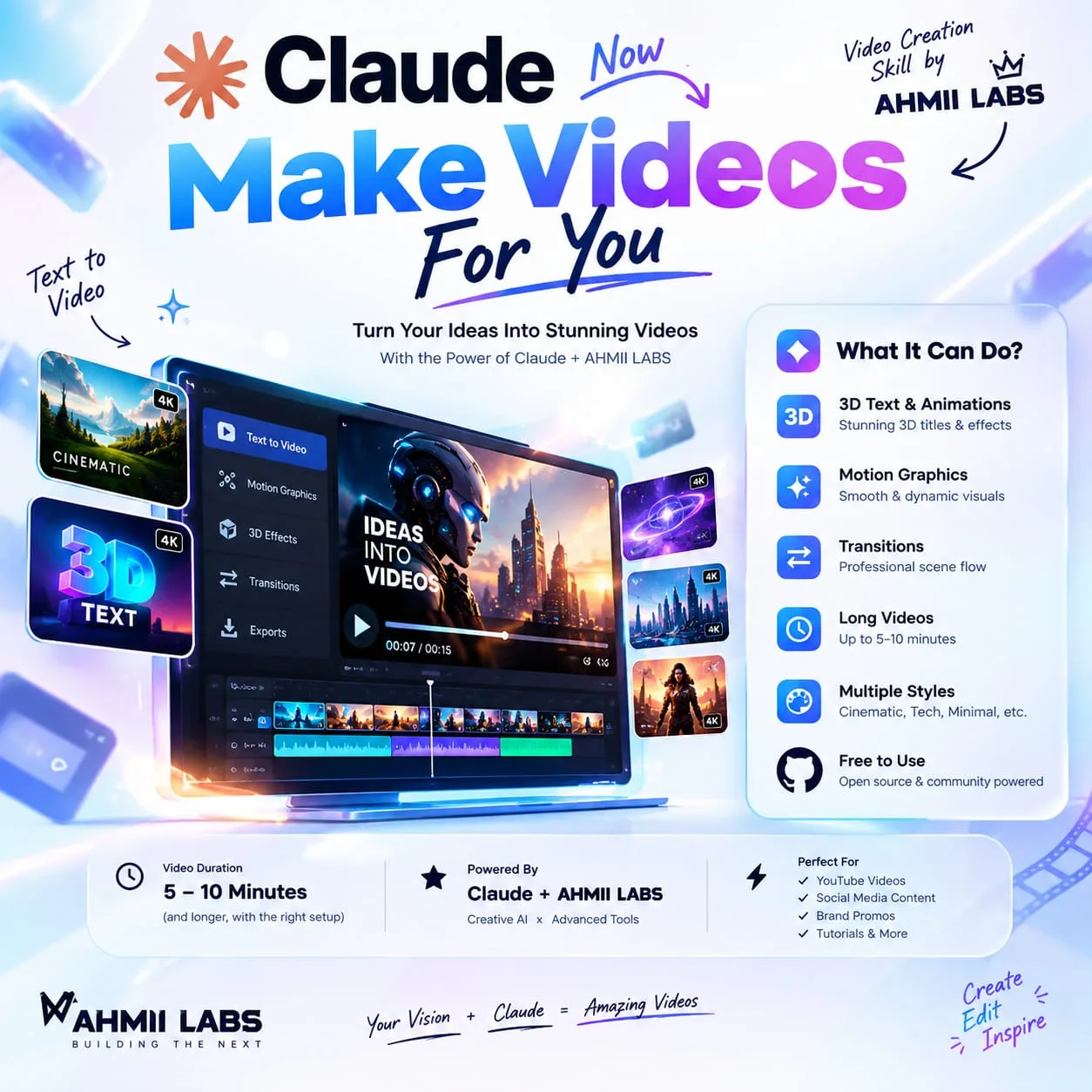
I've been working on the Claude Video Maker Skill by AHMII LABS, an open-source project designed to turn creative ideas into motion-graphics videos using Claude and local rendering tools.
🔥 What it can do:****
Kinetic typography and animated text
Glitch effects, transitions, and visual effects
Logo reveals and promotional videos
Animated backgrounds, captions, and lower thirds
Audio and voice-over integration
Local rendering with Python and FFmpeg
The goal is to make motion-graphics creation easier through AI-assisted workflows without depending entirely on paid video-generation services.
The next wave of massive enterprise value won’t just come from selling AI tools — it will belong to the entities that set the Standards of Trust, Audit & Sovereign Compliance for autonomous deployment.
Where do you see the primary bottleneck for Enterprise Agent deployment over the next 24 months?
For those who’ve raised for an early AI tool: what would you want to see from a product at this stage before backing it? And if this is something you’d invest in, I’d love a short call.
I gave every place I posted it its own link so I could see where downloads came from. X sent zero. Lounge AI sent zero. LinkedIn sent one.
And 10 isn't even 10 people. GitHub counts every time the file gets pulled down, repeats included, and a few of those were me testing it. It can't tell me how many people installed it, how many different people grabbed it, or whether anybody is actually using it.
Part of that is how I shipped it. It's a free direct APK, signed, with the checksum published, but there's no Google Play listing. You tap the link, your phone throws up a security warning, and most folks stop right there. I'd probably stop too.
So here's what I took from yesterday. Putting a launch in front of strangers is not distribution. I knew that already. Yesterday I watched a counter prove it.
The number I care about now is whether a specific person I named opens it. One download from a buyer I can name is worth more to me than 10anonymous ones.
One guy built this app and shipped it. Ten downloads is ten more than zero. Life of a solopreneur. gsrnetwork.io/app






 Claude
 Grok
 ChatGPT
 GitHub Copilot
 DeepSeek