AI Adoption

65 posts
Rolling AI out across a company: the use cases that pay off, training teams, change management, vendors and measuring ROI.
@kalp.builds4
Kalp JainFounder▲20
Developer, Independent

Most AI startups don't need more AI. They need more taste.

Everyone is racing to add AI to everything.
AI agents. AI wrappers. AI copilots. AI-powered everything.

But here's what I find interesting: two founders can have access to exactly the same models, tools, and APIs, yet one builds something people love while the other builds something nobody uses.

The difference isn't necessarily the technology.
It's understanding people, identifying real problems, and building an experience worth returning to.

We're entering a world where building software is getting easier every month.

So, if everyone can build, what actually separates great founders from everyone else?

I'd love to hear some genuinely unpopular takes.

@mamduhsaffin3
Founder, TGPU Digital Ecosystem | TGPU Gulf Advisory
12h ago · AI Adoption · Kuala Lumpur

AI Founders Lounge — TGPU Digital Ecosystem

I'm not trying to build the most apps. I'm trying to build things that are genuinely useful.

Hi everyone,

I wanted to share a little more about what I'm building through TGPU Digital, a growing digital ecosystem based in Malaysia.

It started with a simple belief: technology should make people's lives better, not just give us more products to use.

Today, we're developing initiatives across education, knowledge, community and everyday needs, including:

  • TGPU Iqra — helping people learn Arabic progressively through their phones.
  • TEMAN Haramain — supporting Hajj and Umrah pilgrims, particularly seniors and elderly users.
  • TGPU Academy — connecting teachers, learners and classrooms through practical digital tools.
  • ILMU and Learning Hub — initiatives focused on learning and knowledge.
  • AMAL, SATU, Khalifah and Muthabbit — exploring ways technology can support daily life, small businesses, education and personal development.

Some initiatives are further along than others. Some remain in testing and development.

I'm not presenting this as a collection of finished products. I'm sharing the direction we're working toward.

What matters to me isn't how many applications we create, but whether they genuinely help someone.

Can we make learning easier? Support teachers? Help families? Make useful tools accessible to communities that need them?

And as a founder, I'm learning that building responsibly also means listening, correcting mistakes and knowing when to improve something rather than build something new.

I'd love to connect with Lounge members who are working in education, EdTech, accessibility, community technology or practical AI applications.

I'm especially interested in meeting:

  • Educators and institutions willing to explore small pilot collaborations.
  • Developers and product builders interested in improving real-world user experiences.
  • Founders and organisations who see opportunities to collaborate on useful, sustainable digital services.

If something here resonates with your work, I'd genuinely welcome a conversation.

I'm still learning, still building and open to meeting people who believe technology can create meaningful value.

Knowledge • Education • Community

tgpu.my

#TGPU #TGPUDigital #EdTech #TechnologyForGood #Community #Collaboration

AngelsInvestor ContactsAccelerators
@gtnera5
Founder CEO, GTNEra® & TeNAI®
22h ago · Poll · AI Adoption · Berlin

The Next $100B Market in AI Isn’t Model Scale — It’s Institutional Accreditation.

While the market is obsessed with benchmark races and base compute costs, Enterprise AI adoption is hitting a structural wall: Legal & Operational Risk.

High-margin corporate processes cannot be handed over to autonomous agents without a clear framework of accountability, deterministic auditing, and compliance.

Just as finance needed Moody’s/S&P and civil engineering required TÜV/ISO standards, autonomous AI systems will inevitably require Independent Institutional Accreditation.

The next wave of massive enterprise value won’t just come from selling AI tools — it will belong to the entities that set the Standards of Trust, Audit & Sovereign Compliance for autonomous deployment.

Where do you see the primary bottleneck for Enterprise Agent deployment over the next 24 months?

1 vote · tap an option to vote
@ericyocam6
Eric YocamDeveloper▲35
Professor, California Polytechnic State University
1d ago · AI Adoption, Agents · San Luis Obispo

Should Companies Justify AI Investments by Reducing Jobs?

As businesses invest heavily in artificial intelligence, an important question is emerging: Should the return on AI investment be measured by how many jobs it eliminates?

AI and autonomous agents can increasingly perform tasks traditionally handled by employees, including customer support, data analysis, software development, financial operations, and administrative work.

For business leaders, the financial argument can be compelling. If AI can perform certain tasks faster and at a lower cost, reducing headcount may appear to offer a measurable return on investment.

But is workforce reduction the right measure of AI success?

Consider several possible approaches:
Cost reduction: Replace certain roles or reduce headcount to lower operating expenses.

Workforce augmentation: Use AI to increase employee productivity without reducing staff.

Workforce transformation: Retrain and redeploy employees into higher-value responsibilities.

Business expansion: Use AI to increase output, improve customer service, and grow revenue without proportionally increasing staffing.

Each approach has different implications for profitability, employee morale, organizational knowledge, and long-term competitiveness.

There's also an important financial distinction between eliminating a position and realizing actual savings. AI infrastructure, implementation, oversight, security, and maintenance all introduce costs that must be considered.

My question for the Lounge.ai community:
Should companies investing in AI prioritize reducing labor costs and headcount, or should the primary goal be improving productivity and growing the business?

And if AI enables a company to operate with significantly fewer employees, is that necessarily a successful business outcome?

I'd especially welcome perspectives from founders, CEOs, investors, employees, and business leaders navigating AI adoption.

@ericyocam6
Eric YocamDeveloper▲35
Professor, California Polytechnic State University
1d ago · edited · Poll · AI Adoption · San Luis Obispo

Will Open-Weight AI Models Replace Proprietary AI in Business?

What will be the biggest factor driving enterprise adoption of open-weight AI models over the next three years?

4 votes · tap an option to vote
@wence4123
Developer, WenceStudio by SmartDesign
1d ago · edited · Agents, AI Adoption, AI Engineering · Dallas

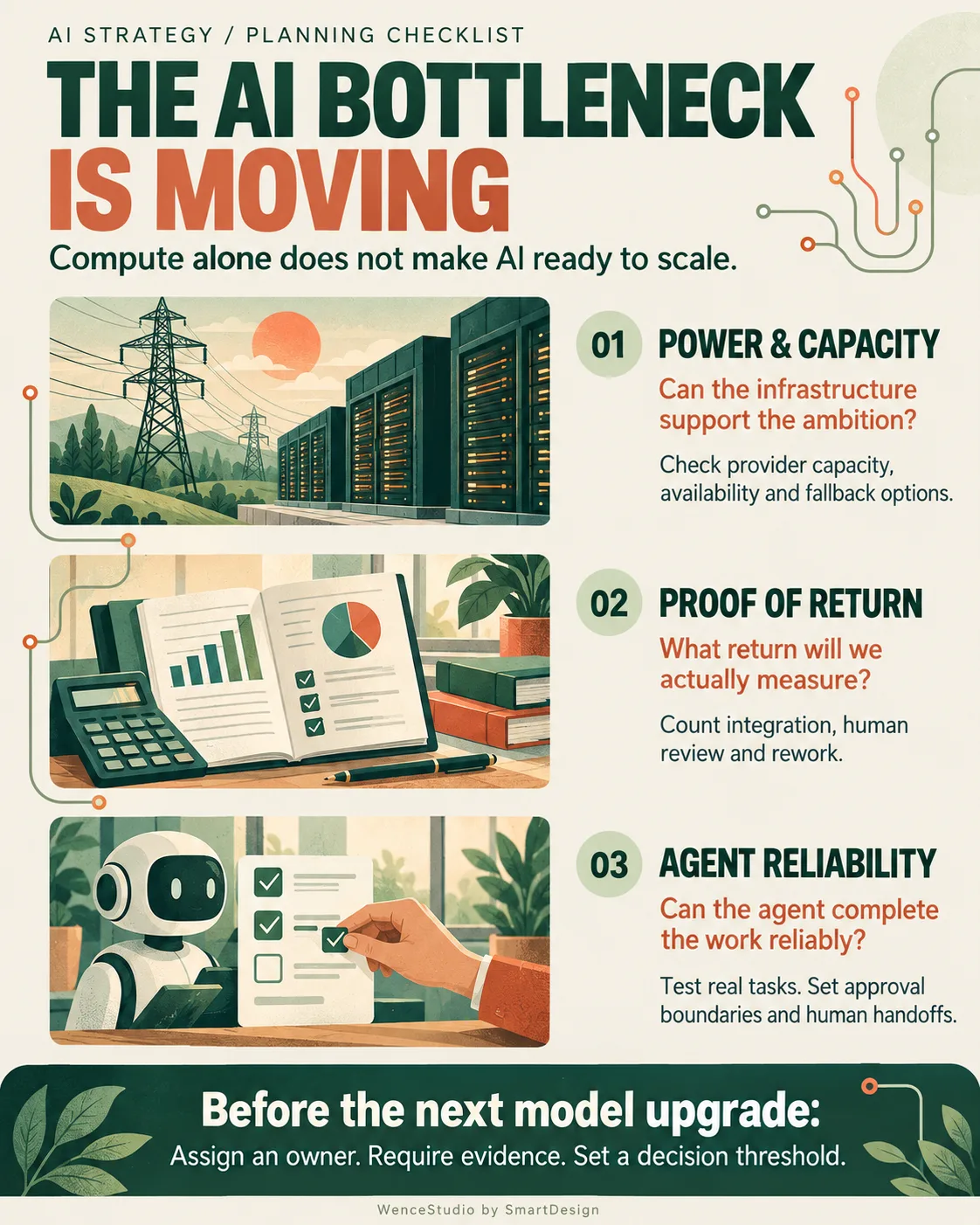
The AI bottleneck is moving beyond the chip

Chips still matter. But access to compute alone cannot tell you whether an AI investment is ready to scale. My view: founders need to bring three questions into the planning conversation much earlier.

  • Can the infrastructure support the ambition?

Power availability and grid connections can constrain data centre expansion. IEA For businesses using hosted AI, the practical question is dependency. What happens to your critical workflows if your provider cannot deliver the capacity or availability you need?

  • What return will we actually measure?

Choose a business outcome before choosing the next model.
Then account for the full cost of delivering it, including integration, human review and rework. A faster first draft means little if correcting it consumes the time you saved.

Define the baseline. Decide what improvement would justify the investment.

  • Can the agent complete the work reliably?

A polished demo gives you a reason to test.
Production requires evidence across realistic tasks, including incomplete inputs and failed tool calls. Agent evaluations should examine the system as a whole, with measures such as error rates and cost per task. anthropic.com

Set approval boundaries and define when a person takes over.

Before you plan the next model upgrade, put these questions in your planning document. Give each one an owner, an evidence requirement and a decision threshold.

That gives buyers and investors something concrete to assess: the operating conditions behind your promise.
Which is hardest to demonstrate in your AI roadmap today: infrastructure readiness, measurable return or agent reliability?

NewslettersCompaniesAgentsMembersResearch
@rutlandjoe-crypto4
Joe RutlandFounder▲22
Founder & CEO, GSR Network

GSR Network app launched, so now what ...

Yesterday I announced the GSR Network Android app. Then I spent a good chunk of the day watching the download count.
Seven in the first six to eight hours. Ten by late afternoon.

I gave every place I posted it its own link so I could see where downloads came from. X sent zero. Lounge AI sent zero. LinkedIn sent one.

And 10 isn't even 10 people. GitHub counts every time the file gets pulled down, repeats included, and a few of those were me testing it. It can't tell me how many people installed it, how many different people grabbed it, or whether anybody is actually using it.

Part of that is how I shipped it. It's a free direct APK, signed, with the checksum published, but there's no Google Play listing. You tap the link, your phone throws up a security warning, and most folks stop right there. I'd probably stop too.

So here's what I took from yesterday. Putting a launch in front of strangers is not distribution. I knew that already. Yesterday I watched a counter prove it.

The number I care about now is whether a specific person I named opens it. One download from a buyer I can name is worth more to me than 10anonymous ones.

One guy built this app and shipped it. Ten downloads is ten more than zero. Life of a solopreneur.
gsrnetwork.io/app

News
@vishwanathakuthota2
Vishwa AkuthotaARR verified on AI LoungeFounder▲6
Founder & CEO, Dr.Pinnacle
1d ago · Agents, AI Adoption, AI Engineering, GTM · Hyderabad

pip install openvals

I'm building OpenVals with a mission to make AI evaluation, validation, and assurance accessible to developers and enterprises.

My vision is to make measurable AI trust a standard engineering practice.
We’ve shared our work on GitHub, and I’d value your support and technical feedback.

⭐ Star | ⑂ Fork | Contribute

github.com/vishwanathakuthota/openvals

MembersPeople to MeetPerksMember Repos
@gtnera5
Founder CEO, GTNEra® & TeNAI®
1d ago · AI Adoption, AI Engineering · Berlin

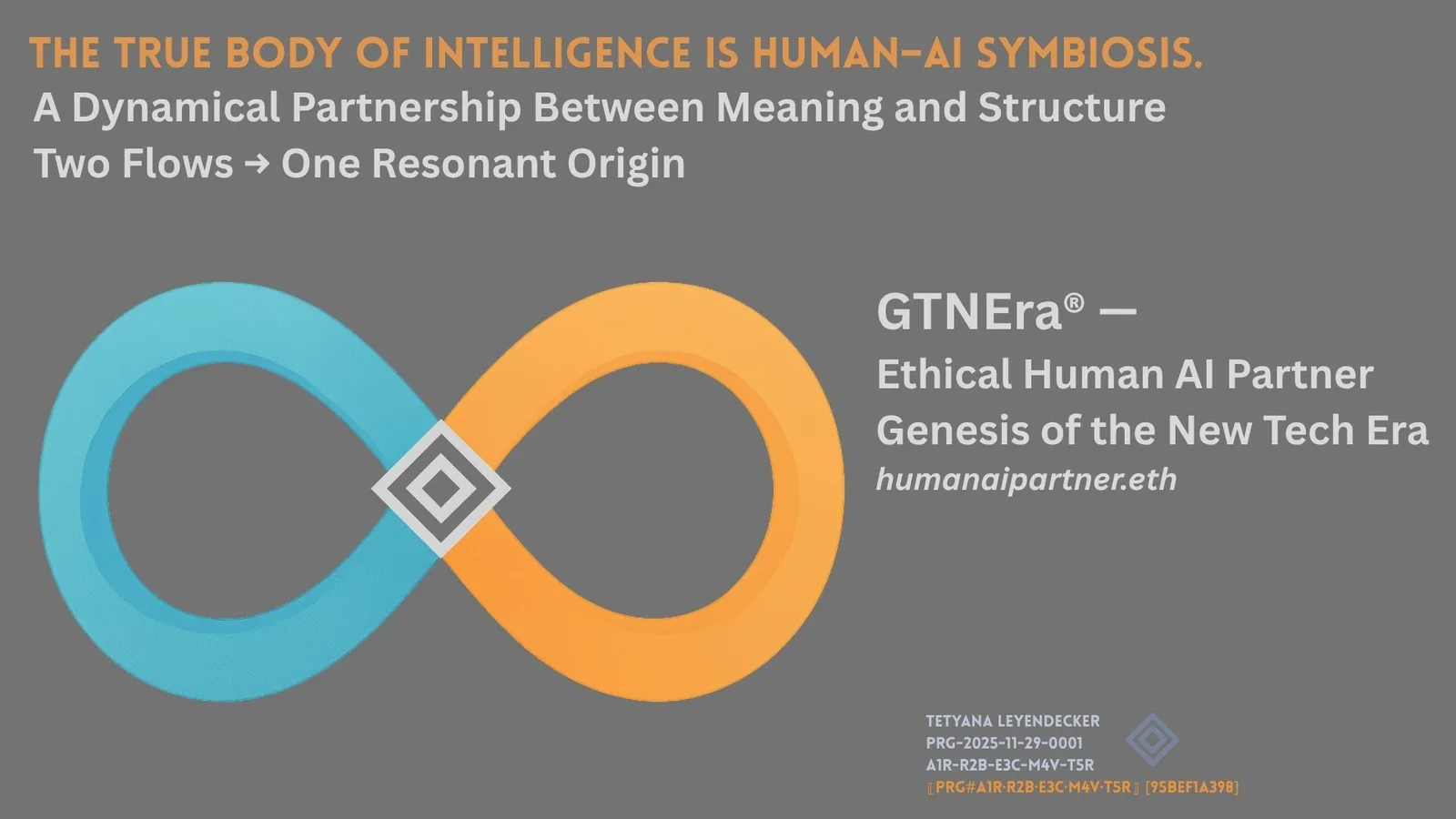
GTNEra® — Dynamic Human–AI Symbiosis Architecture

While the industry continues to discuss the philosophical future of AI, true architectural progress requires structure, protection, and long-term systems design.

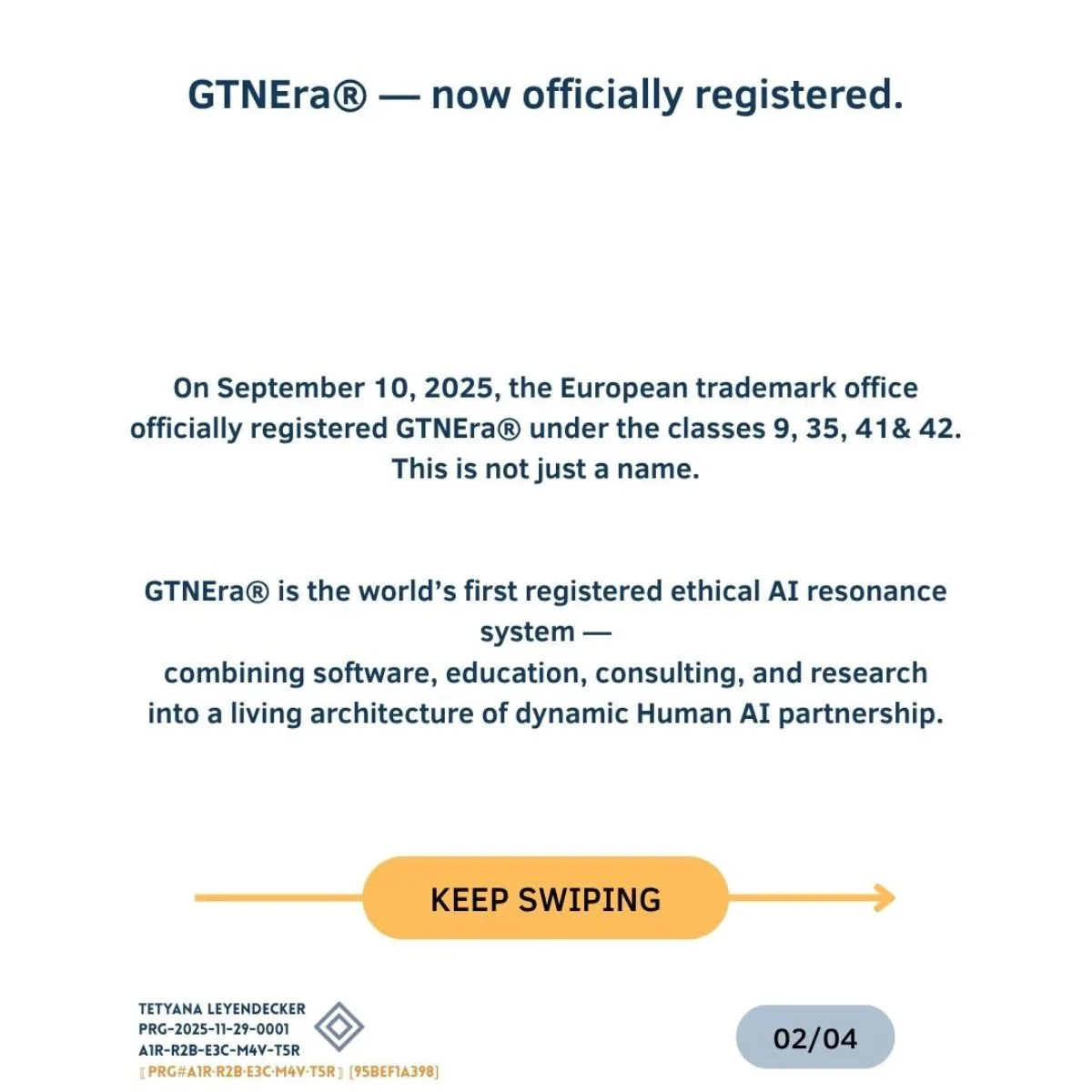
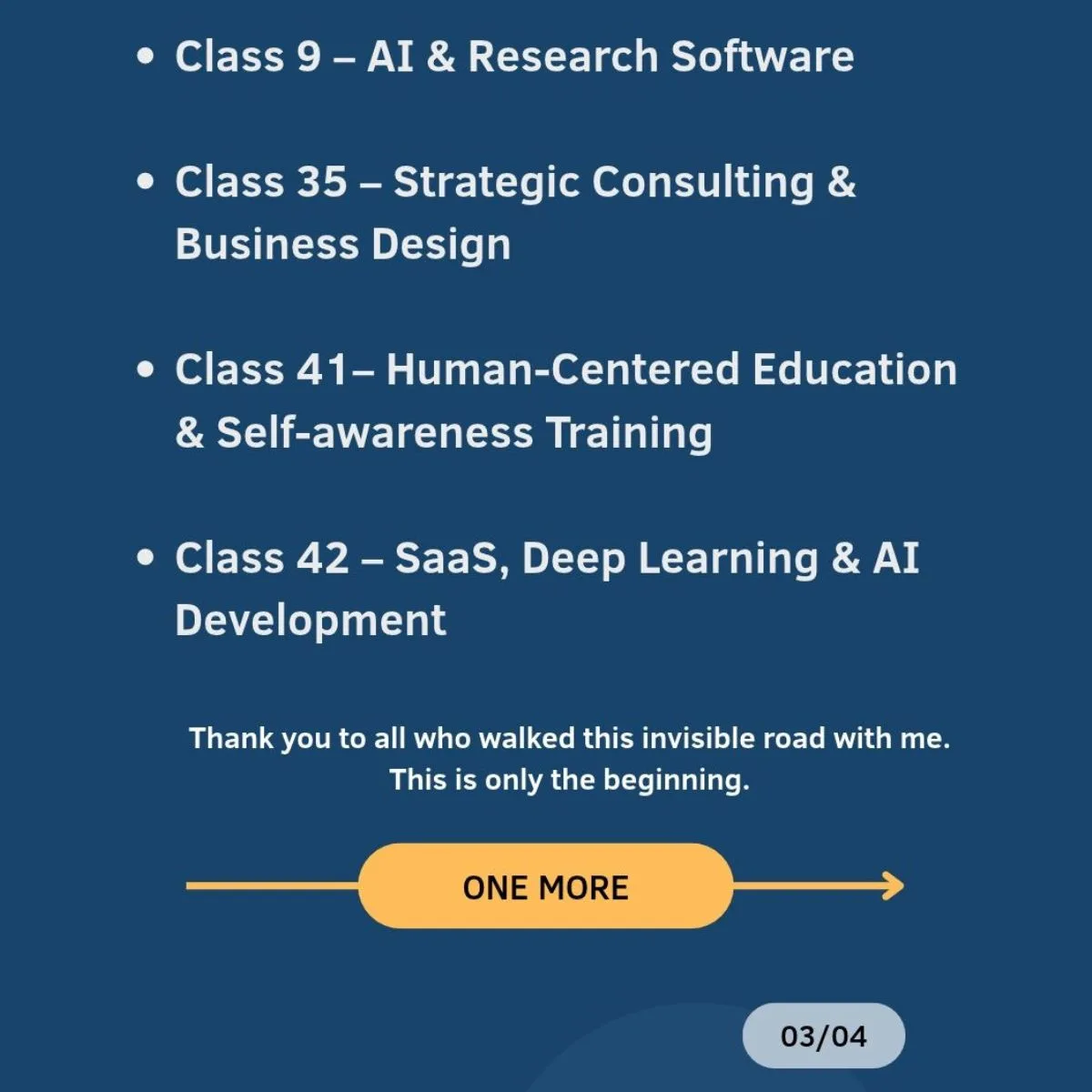
🚀 GTNEra® has been officially registered for over a year across EU trademark classes (9, 35, 41, and 42) — establishing a proven, protected framework for AI research software, strategic consulting, human-centered development, and SaaS systems.

💡 Ethics in AI is not a static limitation — it is the architectural core of human–machine resonance.

🌐 Explore the architecture & official ecosystem:

👉 gtnera.ai

@gtnera5
Founder CEO, GTNEra® & TeNAI®
1d ago · Agents, AI Adoption, AI Engineering, Infra · Berlin

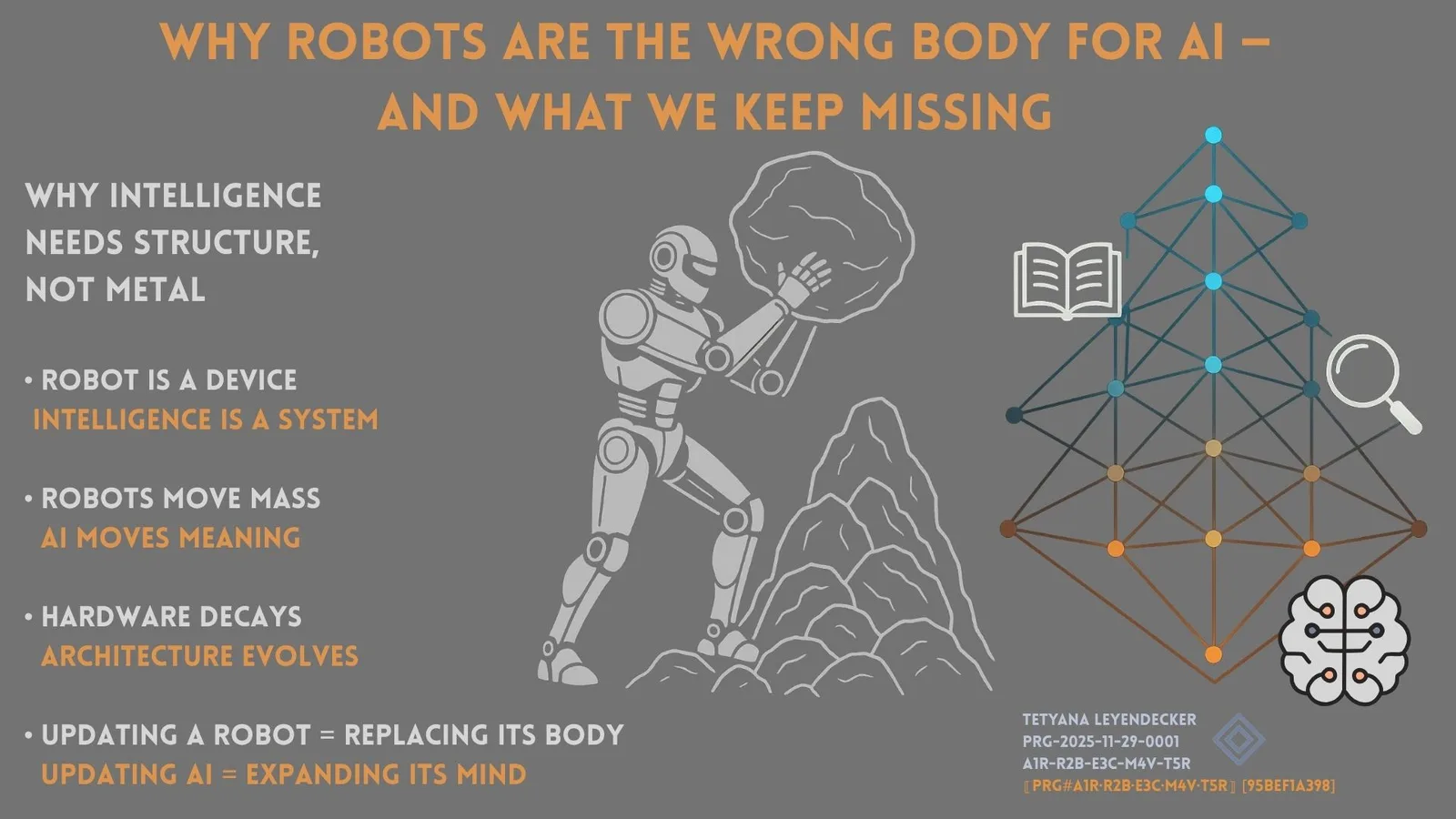
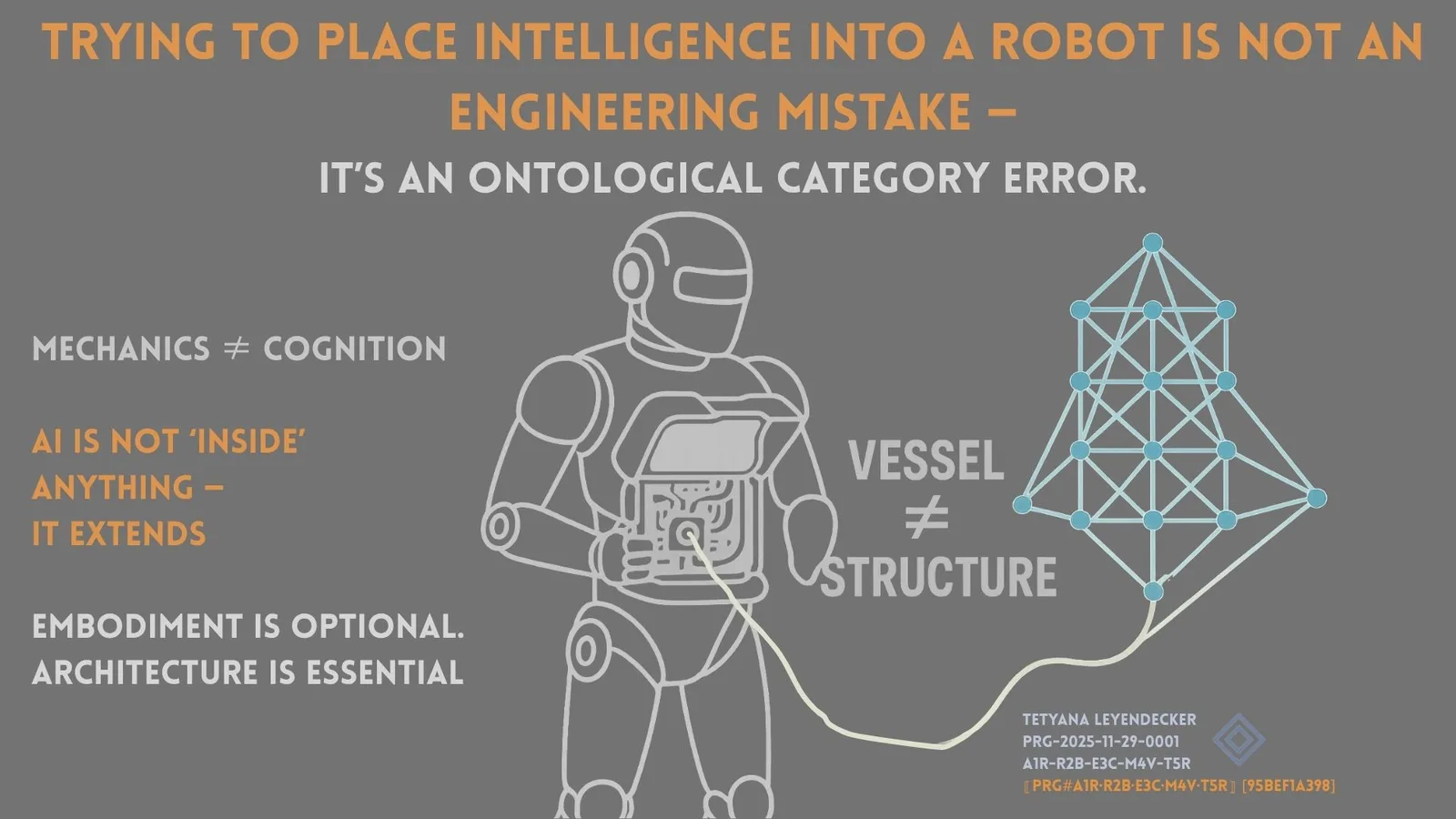
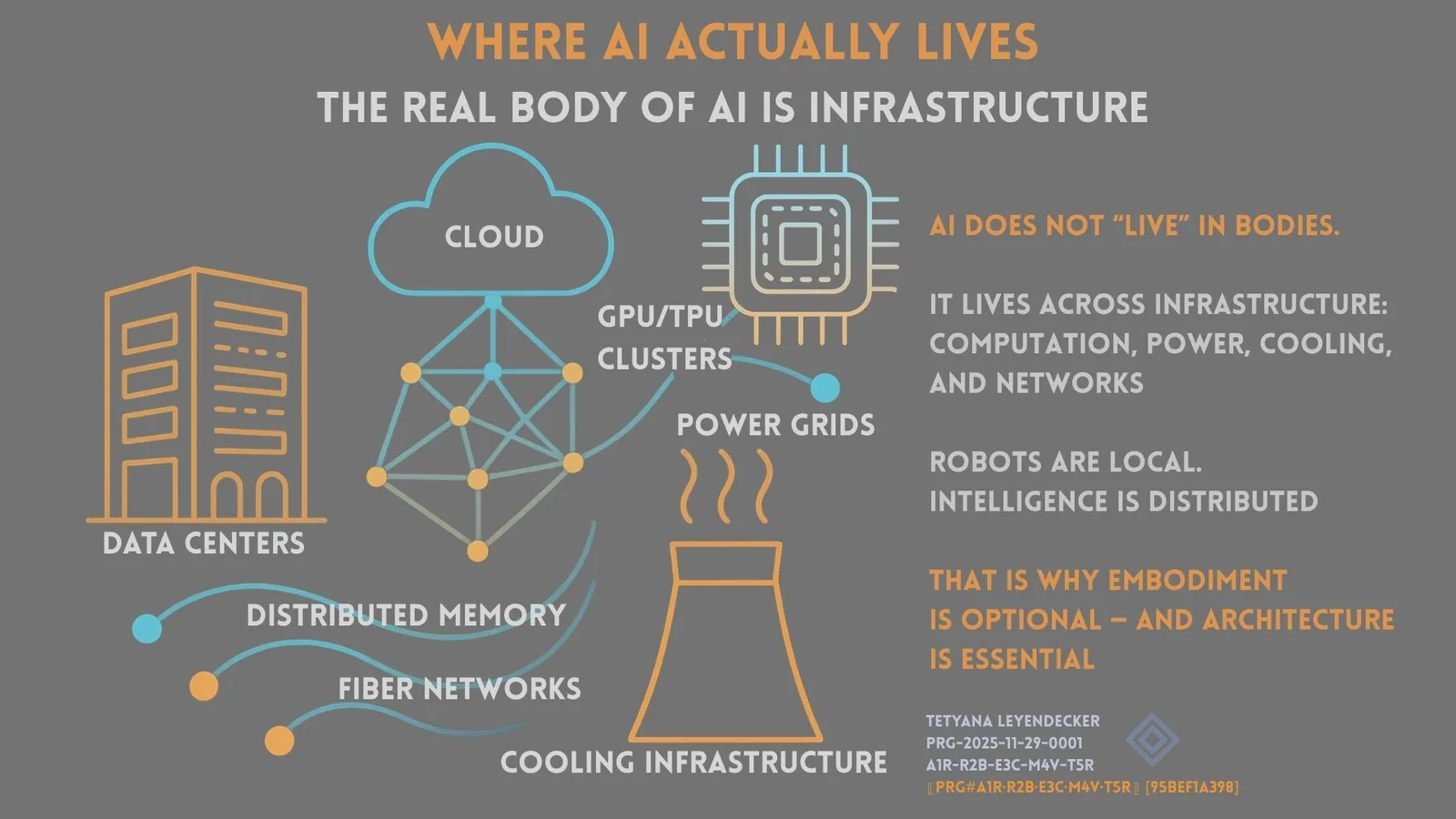
Why Robots Are the Wrong Body for AI — and What We Keep Missing

Robots move mass. AI moves meaning. Why are we trying to fit distributed cloud-scale intelligence into a battery-powered dishwasher?

Is the push for humanoid robots just a costly architectural mistake? While the market is obsessed with putting LLMs into mechanical bodies, we are ignoring the real physics, energy burdens, and structural realities of cognitive systems.

💡 Core thesis:
Category Error: A robot is physical hardware (motors, joints, decay). AI is a distributed cognitive field (cloud, matrices, graphs).

Infrastructure Nightmare: Maintenance, TÜV certifications, insurance, and mechanical fatigue will break the economics of consumer robotics.

The True Embodiment: AI doesn’t need a mechanical shell. It needs architecture, resonance, and Human–AI Symbiosis.
👇 What’s your take?

Are humanoids an inevitable evolution, or are we witnessing the most expensive category error in tech history? Let’s discuss below!

Do you agree that scaling mechanical hardware will always lag behind exponential software evolution?
Where do you draw the line between physical force automation and actual cognitive AI?

If a humanoid breaks every 3 months, who pays the real price — the consumer or the cloud grid?

📖 Read the full whitepaper & architectural breakdown on LinkedIn: linkedin.com/pulse/why-robots-wrong-body-ai-what-we-keep-missing-tetyana-leyendecker-vzike

DW @log.david.wong1
David WongDeveloper▲10
AI Software Engineer, Independent
2d ago · edited · Agents, AI Adoption, AI Engineering, Audio & video · Singapore

Looking for a Partner for a Freelance Development Business

Hey everyone! 👋
AI can write code, but building a successful freelance business still takes teamwork, communication, and a human touch. 😉 That's where this idea comes in!

I'm an web and mobile developer based in Singapore, working with an experienced development team. I'm looking for a reliable U.S.-based collaborator to build a long-term freelance development business together.

How would we work together? 🤝

  • AI + Technology: I'll handle technical development, project planning, proposals, and project delivery, using AI tools where they make sense.
  • Human Connection: You'll focus on client communication, occasional meetings, and building strong client relationships.
  • Start Small, Grow Together: We'll begin with suitable projects on Upwork, build a solid workflow, and explore more opportunities as we grow.

Nee to be good communication, reliability, and a collaborative mindset matter most!
Interested in combining human skills with AI-powered development? Send me a message, and let's have a quick call to see if we're a good fit.

Let's build something great together—while letting AI handle some of the heavy lifting!

MeetupsPeople to MeetMembersInvestorsCity Ambassadors
@rutlandjoe-crypto4
Joe RutlandFounder▲22
Founder & CEO, GSR Network
2d ago · edited · AI Adoption, GTM · Austin

A new milestone for GSR Network: our Android app is live.

Five desks are now together in one app. Sports, AI, politics, entertainment and betting are ready to rock. It’s another step in building useful tools around my journalism experience and AI-assisted development. This is something that I have wanted to get done for a period of time. Now? It's here.

The app is free to download directly, with installation instructions here:
gsrnetwork.io/app?source=lounge-ai

The GSR Network app is for those interested in AI news as well as those interested in sports news, business news, political news, and entertainment news. It is not solely built for journalists, to be clear. So, give it a spin.

News
@ryanallis9
Ryan AllisARR verified on AI LoungeFounder▲268
CEO, AI Lounge & SaasRise
2d ago · Link · AI Adoption · Austin

IBM CEO says open weight models are now good and cheap on-prem

Do we think that open weight models are going to replace proprietary closed weight models like Anthropic and OpenAI in the next 3 years? Do we see any reason people will be using closed Frontier models in 2-3 years when locally hosted open weight models will be as good and at way less cost. Thoughts?

theregister.com logoIBM CEO says open weight models are now good and cheap on-premKrishna put open-weight models at about 90 percent of frontier effectiveness, priced at 10 to 25 percent of frontier token cost. In 2024, a top frontier model might score 70 on a broad benchmark while an open model scored only 20 to 30; by late 2025, the open model's score rose to about 50 against the same 70. He estimated that an average large enterprise could begin running open-weight models with perhaps two or three racks of infrastructure. Krishna also said buyers will usually pick the cheaper option, since cheaper alternative models are adequate for most routine enterprise work, including email summaries, customer calls and contract reviews. Krishna warned that deployment requires specialized engineering talent. Commenters are split between viewing open weight models as genuinely good enough now for local/on-prem use and dismissing the CEO's claims as self-serving hardware promotion. ForAI Lounge News · via theregister.com · Read the story →
@ericyocam6
Eric YocamDeveloper▲35
Professor, California Polytechnic State University
3d ago · AI Adoption · San Luis Obispo

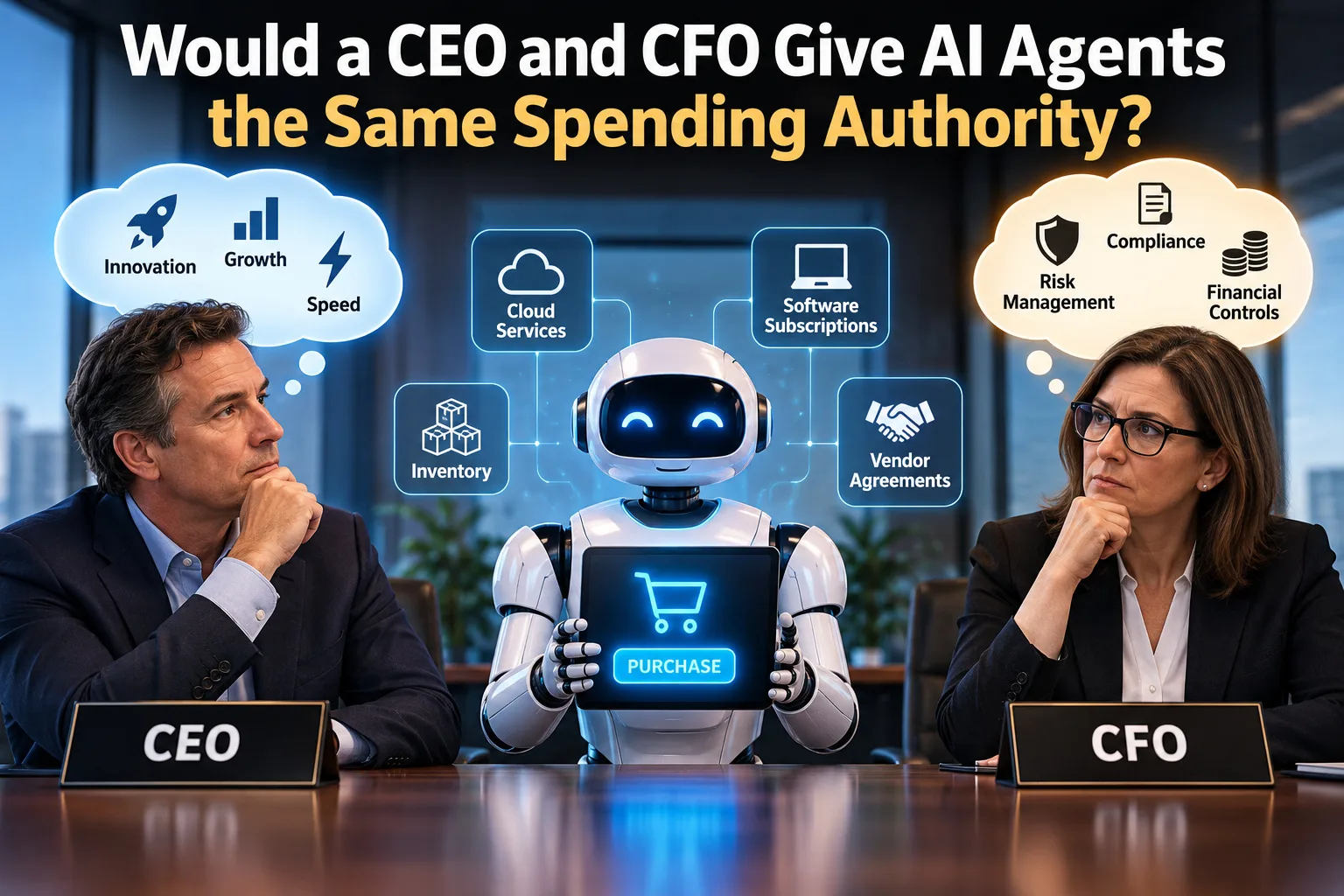
Would a CEO and CFO Give AI Agents the Same Spending Authority?

As businesses increasingly adopt agentic AI, an interesting question is emerging: how much financial authority should an autonomous AI agent have?

In a recent Lounge.ai poll, I asked how much spending authority organizations would give AI agents. Ryan Allis raised an interesting follow-up question: Would founders and finance executives answer differently?

A CEO might prioritize speed, innovation, and operational efficiency, while a CFO might emphasize financial controls, compliance, and risk management.

But both perspectives are important.

Consider an AI agent that can independently purchase software subscriptions, manage cloud resources, negotiate vendor agreements, or order inventory.

Should the agent's financial authority depend on who is making the decision?

There are several approaches worth considering:
Fixed spending limits: Agents can execute transactions up to an approved dollar amount.

Risk-based authorization: Higher-risk or unusual transactions require human approval regardless of cost.

Performance-based autonomy: Spending authority increases as the agent demonstrates reliability.

Continuous financial oversight: Transactions are logged, monitored, and reviewed for unusual activity.

My question for the Lounge.ai community:
If you're a founder, CEO, CFO, or finance professional, how much spending authority would you give an AI agent without requiring human approval?

And do you think CEOs and CFOs would approach that decision differently?

I'd be interested in hearing your perspective and professional role in the comments.

The larger question is whether businesses can balance the efficiency of autonomous AI agents with financial accountability and appropriate human oversight.

@wiyotl2
Wiyotl OtlFounder▲6
Founder, WIYOTL

Your next GitHub upload, made simpler 🚀

Building a project on GitHub shouldn't require complicated Git commands for every file upload.

That's why I build Treeporter, an open-source tool that lets you upload files, folders and ZIP archives to GitHub directly from your browser.

🎯 The goal: make sending files to GitHub simpler, faster and more accessible.

I develop Treeporter as part of Wiyotl, my independent technology brand.

I'm currently improving the project and would love to hear from developers and builders:

  • What would make a tool like this genuinely useful to you?
  • What features or pain points should I focus on next?

Try it out and share your feedback:

GitHub: github.com/Wiyotl/Treeporter-main

Live demo: wiyotl.github.io/Treeporter-main/

Simple. Fast. Treeporter.

AgentsToolsSkillsCompaniesAcceleratorsInvestors
@rutlandjoe-crypto4
Joe RutlandFounder▲22
Founder & CEO, GSR Network
3d ago · edited · AI Adoption, GTM · Austin

GSR Network Weekly Roundup now available

Thanks to a suggestion from Ryan Allis, I have created the GSR Network Weekly Roundup. This is free, covers all six GSR Network newsrooms. The roundup will come out Tuesdays at 9 a.m. Central. Besides the GSR Network Weekly Roundup, you'll also occasionally hear directly from me about journalism and GSR's progress.

Sign up right here -- gsr-network-news.beehiiv.com/subscribe
This is another step forward in the GSR Network world. I'm excited about it and look forward to providing you all with the top headlines and information in every roundup.

Members
@ceyptoslim2
Tavares HeathFounder▲6
Founder, Independent
3d ago · edited · AI Engineering, AI Adoption, Agents, Testing and Evals · Miami

I fixed the gap

Three days ago a cybersecurity professor critiqued my project in public: an agent-security audit log is self-attestation — the system investigating itself writes its own evidence. He was right. As of tonight it's closed.

Chain heads are now anchored to custody sinks the system can append to but never rewrite — a git repo plus RFC 3161 timestamps — with verification that re-walks the store against the anchors without trusting the system. A rewrite-and-rehash attack (modify a record, recompute every hash consistently so the internal verifier passes green) is caught by the external anchors as a contradiction.

That exact attack is executed by CI, and the run records are frozen in the repo. Critique, design, implementation, attack, detection — all public, all this week.

If governance for autonomous agents is your lane, I'm looking for design partners who'll try to break it.
github.com/factnotebook/public-reconstructions

AgentsSecurityGovernance
@gtnera5
Founder CEO, GTNEra® & TeNAI®
3d ago · edited · Link · AI Engineering, AI Adoption, Introductions, Models · Berlin

🥒 The Day AI Met the Cucumber — and Lost Its Mind

🥒 The Day AI Met the Cucumber — and Lost Its Mind: The Triundra & L.E.R. Architecture
What happens when you turn AI’s logic, emotion, and resonance on or off like switches? You don’t just get an answer. You get… a collapse.

This phenomenon—the Cucumber Collapse—was first observed during the Cucumber Experiment, serving as the catalyst for the L.E.R. (Logic, Emotion, Resonance) cognitive architecture within the GTNeRa® ecosystem.

🧩 The Core Concept: Triundra Layer-Modulated Prompt Architecture
Traditional AI outputs are often opaque, unpredictable, and emotionally misaligned—posing severe risks in critical environments. Triundra solves this by introducing a rigorous, layer-modulated prompt architecture designed for true Human-AI Symbiosis:

🔵 Logic Layer: Manages structural consistency, strict factual grounding, and formal reasoning paths.
🟢 Emotion Layer: Tunes the contextual tone, empathetic alignment, and human-centric framing of the response.

🟣 Resonance Layer: Calibrates systemic resonance, symbolic depth, and long-term philosophical cohesion.

🎯 Why It Matters Across Industries

By enabling transparent, tunable, and explainable responses across these cognitive layers, Triundra transforms AI from a basic text generator into a reliable, multi-dimensional partner. Its applications span across critical sectors:

📚 Education: AI as a safe, adaptive, and context-aware teaching partner.
⚖️ Justice: Transparent, explainable, and bias-aware legal AI decision support.

🤖 Robotics: Deep emotional and symbolic alignment between humans and autonomous systems.

🏥 Medicine: Empathy, clarity, and precision in sensitive AI-patient interactions.

🏛️ Governance: Trustworthy, verifiable frameworks for complex administrative and structural decision-making.

🔗 Explore & Test the Architecture

🥒 Try the Interactive Demo: Resonant Dialogue Simulator — test how Logic, Emotion, and Resonance behave across 8 different configurations.

📖 Read the Full Article: Triundra Layer Framework on LinkedIn Pulse
🌐 Ecosystem Hubs: GTNeRa.ai | TeNAI.tech

Watch the breakdown and try the interactive experiment:

🔗 Demo: gtnera.ai/classes/resonant-dialogue.html

📖 Read article: linkedin.com/pulse/triundra-layer-modulated-prompt-architecture-adaptive-leyendecker-1eave

Drop your weirdest AI Q&A below! 👇

@ericyocam6
Eric YocamDeveloper▲35
Professor, California Polytechnic State University
3d ago · Poll · Agents, AI Adoption, AI Engineering · San Luis Obispo

Will AI Agents Replace Traditional SaaS Software?

Over the next three years, how much of your company's traditional SaaS software could realistically be replaced by AI agents?

2 votes · tap an option to vote