 @zarmumia4
Why I don't start with full automation in lead generation
Full automation is tempting. An agent finds the posts, writes the comments, sends them, and you never touch it.
The problem is that people can tell. After a few weeks, they recognize the pattern: same structure, same length, a compliment and a call to action, never a real reply to anyone else in the thread. Once they see it, they stop answering.
In marketing, the voice that comments is the voice the lead will later talk to. If that voice is a template, the first real conversation starts with a gap in trust.
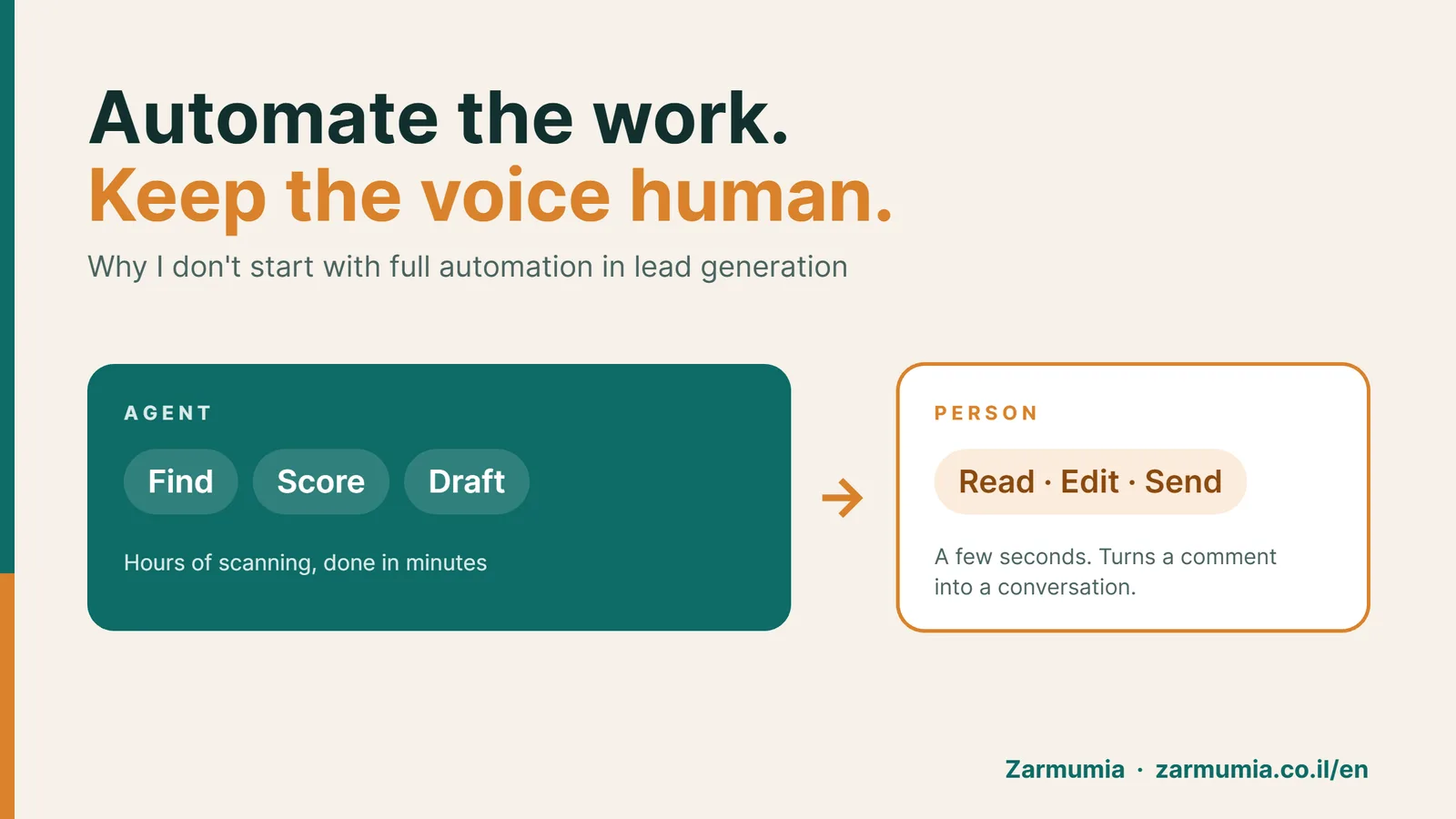
So I keep one human step. The agent finds the post, scores it and drafts the comment. A person reads it, changes a word if needed, and clicks send. That takes seconds, and it's the part that turns a comment into a conversation.
The manual phase is where you learn. You see which comments open conversations, which groups bring real leads, and where you keep rewriting the draft. Later you can automate more of it, but on a pattern that already works, not a guess. And even then, I'd keep the final click human.
Where do you draw the line between what the agent does and what a person does?













Comments2
I agree that human involvement is essential in lead generation. AI should help identify opportunities and improve efficiency while authentic human interaction builds trust and meaningful business relationships. The best approach is to automate the repetitive work without losing the human touch.
Same pattern in cold outbound: reps and prospects both spot a templated AI sequence fast, and that's exactly where reply rates fall off.
2 comments
I agree that human involvement is essential in lead generation. AI should help identify opportunities and improve efficiency while authentic human interaction builds trust and meaningful business relationships. The best approach is to automate the repetitive work without losing the human touch.
Same pattern in cold outbound: reps and prospects both spot a templated AI sequence fast, and that's exactly where reply rates fall off.