 @ericyocam7
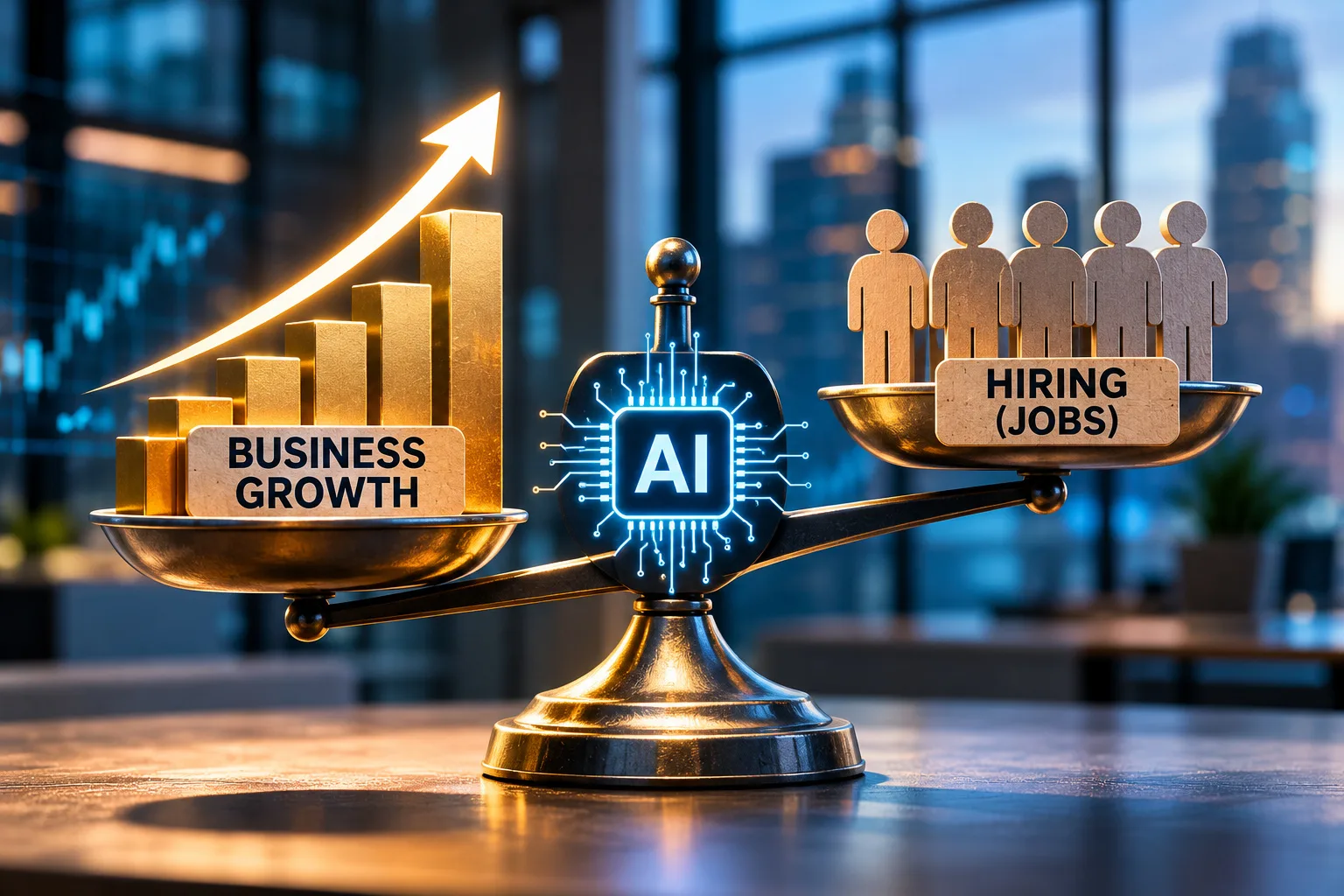
Will AI Break the Link Between Business Growth and Hiring?
For decades, business growth has generally meant hiring more employees. As companies increase revenue, expand operations, and acquire customers, they typically need additional people to support that growth.
But artificial intelligence and autonomous AI agents could change that relationship.
Imagine a company doubling its revenue without significantly increasing its workforce because AI agents handle customer support, sales operations, data analysis, software development, and administrative tasks.
From a business perspective, this could improve productivity, operating margins, and profitability.
But it also raises important economic and workforce questions.
Consider several possible outcomes:
- Revenue growth without proportional hiring: Companies expand their businesses while maintaining relatively small teams.
- Reduced demand for certain jobs: AI automates tasks that previously required additional employees.
- New employment opportunities: Businesses create roles focused on AI development, oversight, cybersecurity, and emerging technologies.
- Workforce transformation: Employees transition toward responsibilities that require human judgment, creativity, and strategic thinking.
For investors and business leaders, AI-driven productivity could make companies more profitable and scalable.
However, if businesses can generate substantially more revenue with fewer employees, what happens to traditional workforce growth?
My question for the Lounge.ai community:
Will AI allow companies to grow significantly without increasing headcount, and should that be considered a successful business outcome?
Or could widespread AI-driven automation create longer-term economic challenges if business revenues continue growing while employment opportunities decline?
I'd be interested in hearing perspectives from founders, CEOs, investors, employees, and AI developers.











Comments
0 comments