 @gtnera8
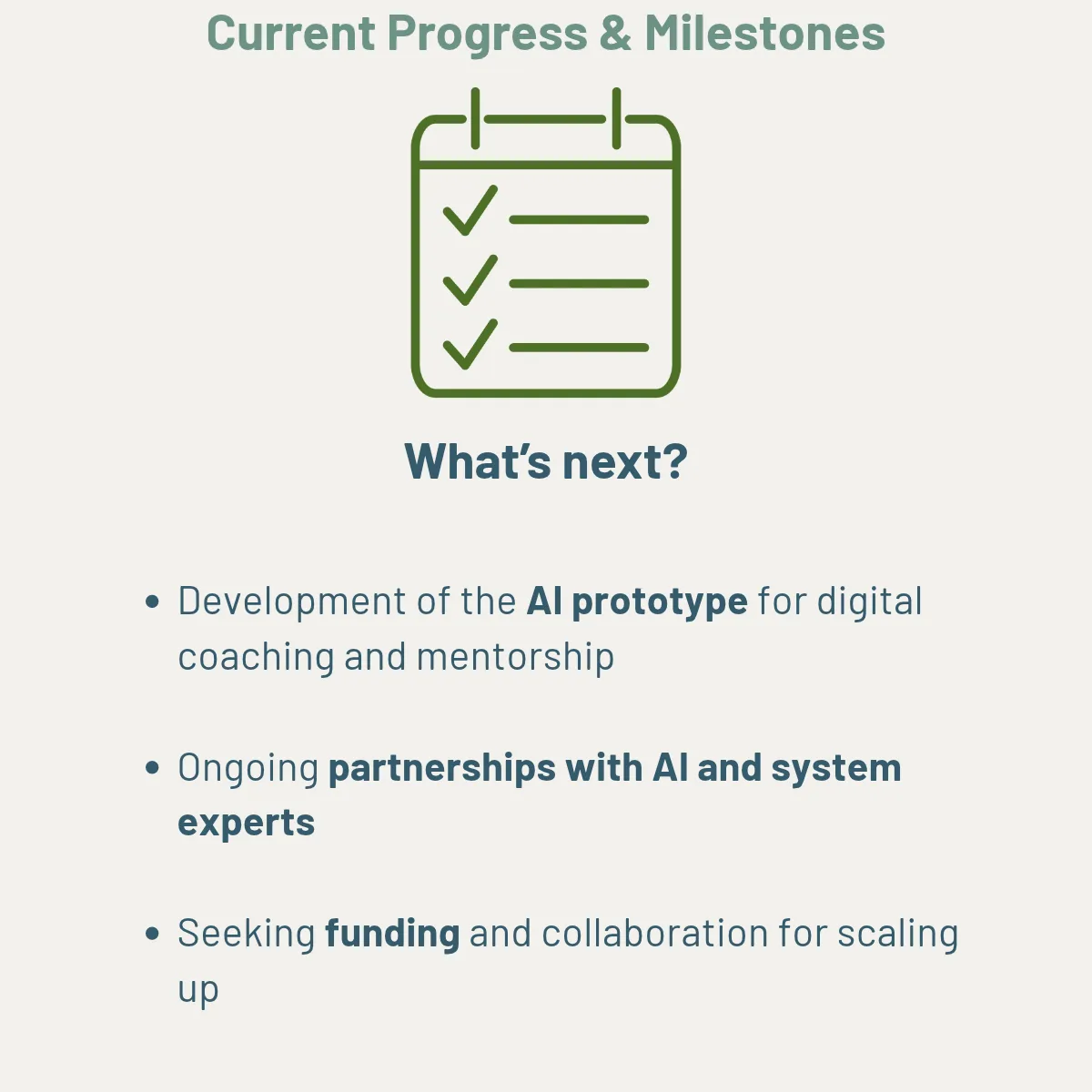
AI isn't failing on compute. It’s failing on human psychology.
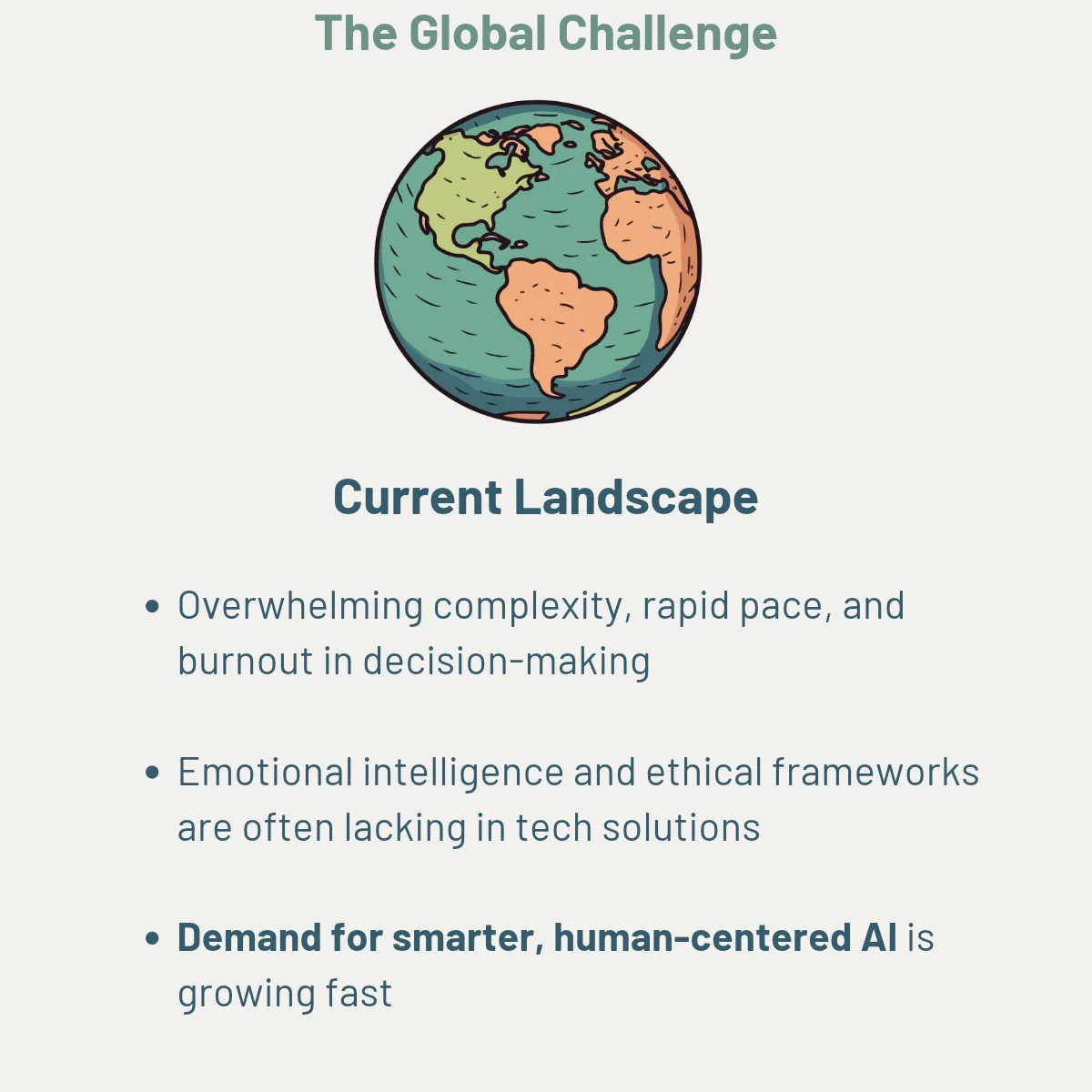
We are building models with trillions of parameters, yet decision-makers in healthcare, finance, and tech are experiencing record levels of cognitive overload and burnout.
The market focuses heavily on raw speed, but ignores the critical architecture: Human-AI Symbiosis.
Here is the hard reality:
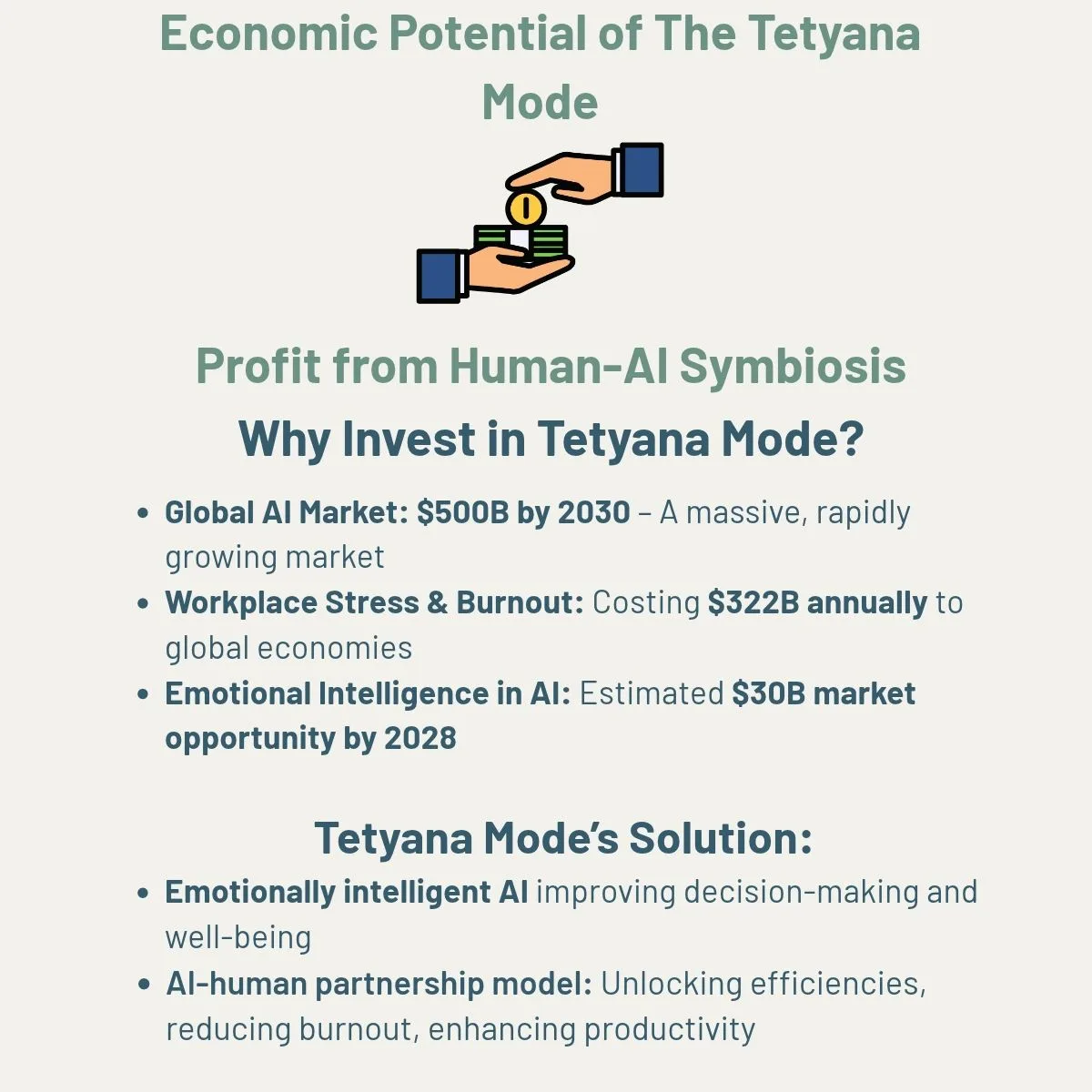
The Problem: Rapid technological pace creates overwhelming complexity without emotional or ethical guardrails. Workplace stress and decision fatigue are costing global economies hundreds of billions annually.
The Shift: Standard automated tools try to replace the human or push more data. Next-generation architectures enhance decision-making through emotional intelligence, reducing cognitive friction instead of adding to it.
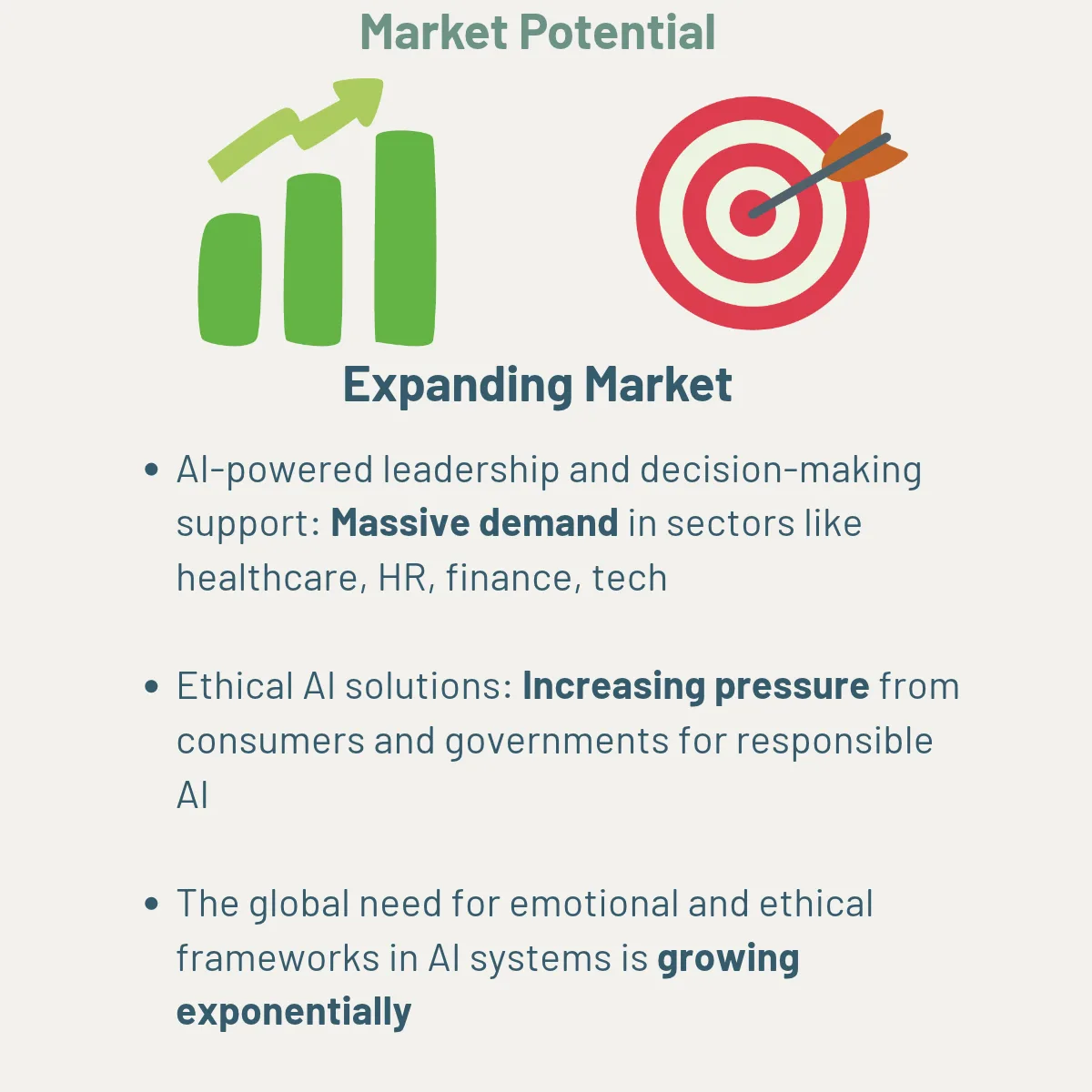
The next massive wave of AI growth won't belong to those who build faster models. It will belong to those who master ethical, human-centered systems.
Question for AI Engineers & System Architects:
Are we over-engineering task automation while completely ignoring the decision-maker's mental load?













Comments11
To add a bit more architectural context here: when we design Human-AI Coupled Systems, we aren't just measuring task completion rates or model latency.
We measure Cognitive Friction and Systemic Entropy within the decision loop. If an AI agent saves 5 minutes of execution but increases the human operator's cognitive load by requiring constant validation and error-checking, the net efficiency of the system is actually negative.
True scaling in AI engineering will happen when we start measuring the combined resilience of the coupled pair (Human + AI), rather than evaluating the model in isolation.
Cognitive Friction, the measure you mention in your own comment, is what a hospital or bank buyer will ask about first. Can you share the before and after numbers from one healthcare or finance team you've worked with, such as hours of decision work saved each week or fewer decisions pushed up to a manager? That would show what a lighter mental load actually looks like in practice.
Ryan Allis ! You’re highlighting the exact operational metrics enterprise buyers look for.
To be transparent, hard empirical "before and after" benchmarks are process-dependent and will be baseline-measured during upcoming pilot integrations. Rather than building raw LLMs from scratch, our framework functions as an independent orchestration, calibration, and meta-observer layer (via XeoPhysics & LER Layer) sitting on top of foundational models via API.
Because we focus on dynamic cognitive coupling rather than linear automation, the framework delivers non-linear scaling:
🌱 Dynamic Meta-Observer Layer: The core of our framework acts as a real-time observer over the decision loop. Rather than enforcing rigid binary rules, it dynamically shifts the boundaries of agent authority and human validation based on situational risk, ensuring decision integrity under high uncertainty.
🌱 Exponential Scaling for High-Value Experts: Instead of just saving hours on routine tasks, the framework aligns with an operator’s domain expertise. Enhancing a top-tier specialist produces an exponential multiplier on complex decision accuracy rather than a simple speed-up.
🌱 Living Proof of Concept: As an engineer financing and building this entire framework, multi-platform infrastructure, and core research independently alongside my primary job, I use my own setup daily. The sheer velocity of building this entire ecosystem single-handedly with my paired agents is the ultimate practical validation of the methodology.
You are completely right, though — as we transition into active enterprise pilots, these empirical ROI metrics will form the core of our published case studies!
So true. A tool you have to double-check all the time isn't saving anyone anything. What I've seen work: start with the one decision people dread most, and make just that one easier. Once they feel the relief, they ask for the next one.
Fanny Ben Ami Rabinovitch That principle of targeting the 'most-dreaded decision' first is the exact key to building trust in AI systems.
Since your work focuses heavily on operations and small business automation, how do you usually handle the friction when teams transition from manual validation to trusting that first automated bottleneck? Where do you draw the line between delegating to agents and keeping humans strictly on critical checkpoints?
Tetyana, thank you. The friction is real, and I don't skip it. Before automating anything I measure the baseline with the team, so every change is compared against real numbers.
The first lift is usually an owner's dashboard, built to pull straight from the CRM:
Next: cash flow in the same view.
Demo: zarmumia.co.il/ceo-dashboard/
When we automate, it runs alongside the manual work until the team sees it holds. Trust comes from the numbers, not from promises.
The line: agents prepare, people decide. Anything client-facing, or touching money or personal data, gets human approval. Counting, sorting, reminders and drafts run on their own.
Love this approach, Fanny Ben Ami Rabinovitch ! Extremely solid concept — especially the clear 'agents prepare, people decide' framework. Bringing this logic directly into CRM workflows (whether via native integrations or dedicated middleware dashboards) is exactly how high-trust operations should be built. It cleans up the routine data layer without compromising key decision-making.
Thanks, Tetyana. The CRM is usually where the mess hides, and the solutions too, so that's where I start. Enjoyed this thread :)
Same pattern in sales tooling: an AI SDR that needs every email reviewed adds work. We judge agents by rep hours saved after review, not drafts generated.
Spot on, @Tomr. That’s why we need a clear operational split: routine tasks like FAQs, tracking, and product updates can be handled by automation. However, for Key Accounts and enterprise sales, trust relies entirely on human accountability and relationships. That’s exactly where Human-AI Coupled Systems come in. AI shouldn't replace the seller; it should act as the operational engine behind the scenes, offloading the friction so the human expert can focus 100% on high-value, high-trust execution.
agreed on the split. for enterprise specifically, I'd keep AI out of anything that touches trust or pricing directly and use it to compress prep time before the human conversation, not replace the conversation itself.
11 comments
To add a bit more architectural context here: when we design Human-AI Coupled Systems, we aren't just measuring task completion rates or model latency.
We measure Cognitive Friction and Systemic Entropy within the decision loop. If an AI agent saves 5 minutes of execution but increases the human operator's cognitive load by requiring constant validation and error-checking, the net efficiency of the system is actually negative.
True scaling in AI engineering will happen when we start measuring the combined resilience of the coupled pair (Human + AI), rather than evaluating the model in isolation.
Cognitive Friction, the measure you mention in your own comment, is what a hospital or bank buyer will ask about first. Can you share the before and after numbers from one healthcare or finance team you've worked with, such as hours of decision work saved each week or fewer decisions pushed up to a manager? That would show what a lighter mental load actually looks like in practice.
Ryan Allis ! You’re highlighting the exact operational metrics enterprise buyers look for.
To be transparent, hard empirical "before and after" benchmarks are process-dependent and will be baseline-measured during upcoming pilot integrations. Rather than building raw LLMs from scratch, our framework functions as an independent orchestration, calibration, and meta-observer layer (via XeoPhysics & LER Layer) sitting on top of foundational models via API.
Because we focus on dynamic cognitive coupling rather than linear automation, the framework delivers non-linear scaling:
🌱 Dynamic Meta-Observer Layer: The core of our framework acts as a real-time observer over the decision loop. Rather than enforcing rigid binary rules, it dynamically shifts the boundaries of agent authority and human validation based on situational risk, ensuring decision integrity under high uncertainty.
🌱 Exponential Scaling for High-Value Experts: Instead of just saving hours on routine tasks, the framework aligns with an operator’s domain expertise. Enhancing a top-tier specialist produces an exponential multiplier on complex decision accuracy rather than a simple speed-up.
🌱 Living Proof of Concept: As an engineer financing and building this entire framework, multi-platform infrastructure, and core research independently alongside my primary job, I use my own setup daily. The sheer velocity of building this entire ecosystem single-handedly with my paired agents is the ultimate practical validation of the methodology.
You are completely right, though — as we transition into active enterprise pilots, these empirical ROI metrics will form the core of our published case studies!
So true. A tool you have to double-check all the time isn't saving anyone anything. What I've seen work: start with the one decision people dread most, and make just that one easier. Once they feel the relief, they ask for the next one.
Fanny Ben Ami Rabinovitch That principle of targeting the 'most-dreaded decision' first is the exact key to building trust in AI systems.
Since your work focuses heavily on operations and small business automation, how do you usually handle the friction when teams transition from manual validation to trusting that first automated bottleneck? Where do you draw the line between delegating to agents and keeping humans strictly on critical checkpoints?
Tetyana, thank you. The friction is real, and I don't skip it. Before automating anything I measure the baseline with the team, so every change is compared against real numbers.
The first lift is usually an owner's dashboard, built to pull straight from the CRM:
Next: cash flow in the same view.
Demo: zarmumia.co.il/ceo-dashboard/
When we automate, it runs alongside the manual work until the team sees it holds. Trust comes from the numbers, not from promises.
The line: agents prepare, people decide. Anything client-facing, or touching money or personal data, gets human approval. Counting, sorting, reminders and drafts run on their own.
Love this approach, Fanny Ben Ami Rabinovitch ! Extremely solid concept — especially the clear 'agents prepare, people decide' framework. Bringing this logic directly into CRM workflows (whether via native integrations or dedicated middleware dashboards) is exactly how high-trust operations should be built. It cleans up the routine data layer without compromising key decision-making.
Thanks, Tetyana. The CRM is usually where the mess hides, and the solutions too, so that's where I start. Enjoyed this thread :)
Same pattern in sales tooling: an AI SDR that needs every email reviewed adds work. We judge agents by rep hours saved after review, not drafts generated.
Spot on, @Tomr. That’s why we need a clear operational split: routine tasks like FAQs, tracking, and product updates can be handled by automation. However, for Key Accounts and enterprise sales, trust relies entirely on human accountability and relationships. That’s exactly where Human-AI Coupled Systems come in. AI shouldn't replace the seller; it should act as the operational engine behind the scenes, offloading the friction so the human expert can focus 100% on high-value, high-trust execution.
agreed on the split. for enterprise specifically, I'd keep AI out of anything that touches trust or pricing directly and use it to compress prep time before the human conversation, not replace the conversation itself.