 @michaelwood3
Hi, I’m Michael. I’m building Moo Money 🐄
Hey everyone! I’m Michael, the founder and solo developer behind Moo Money, a personal finance app for individuals and households.
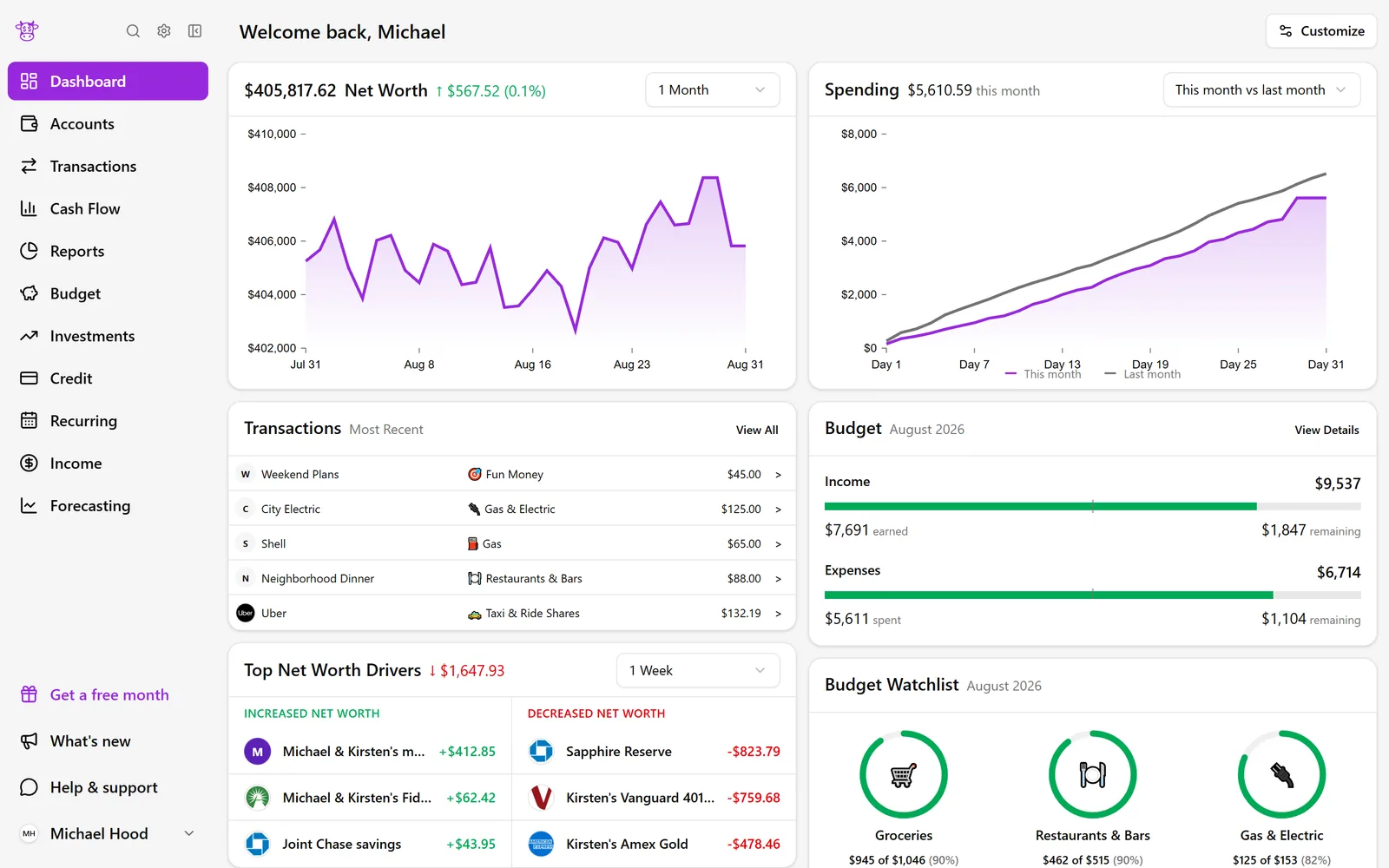
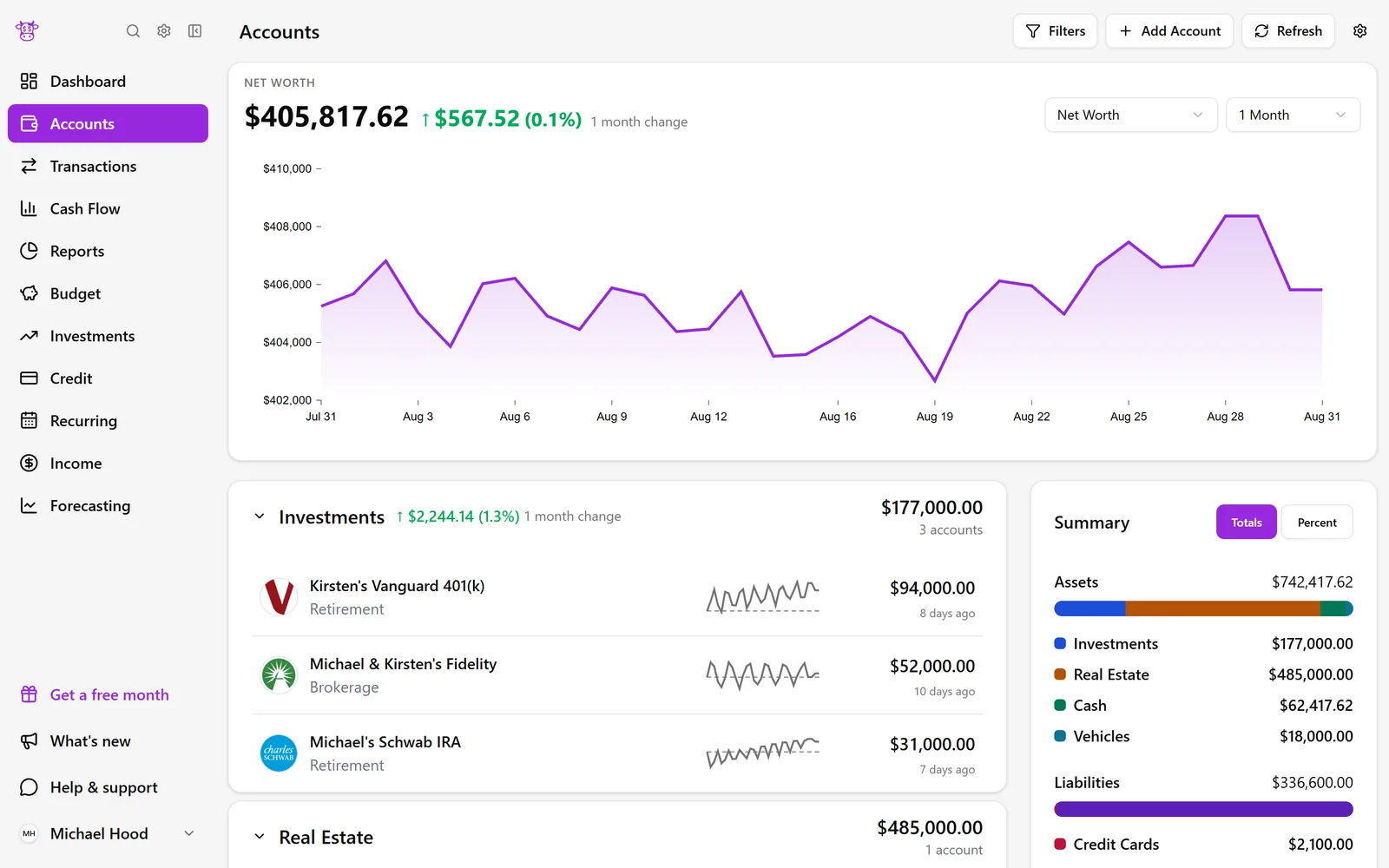
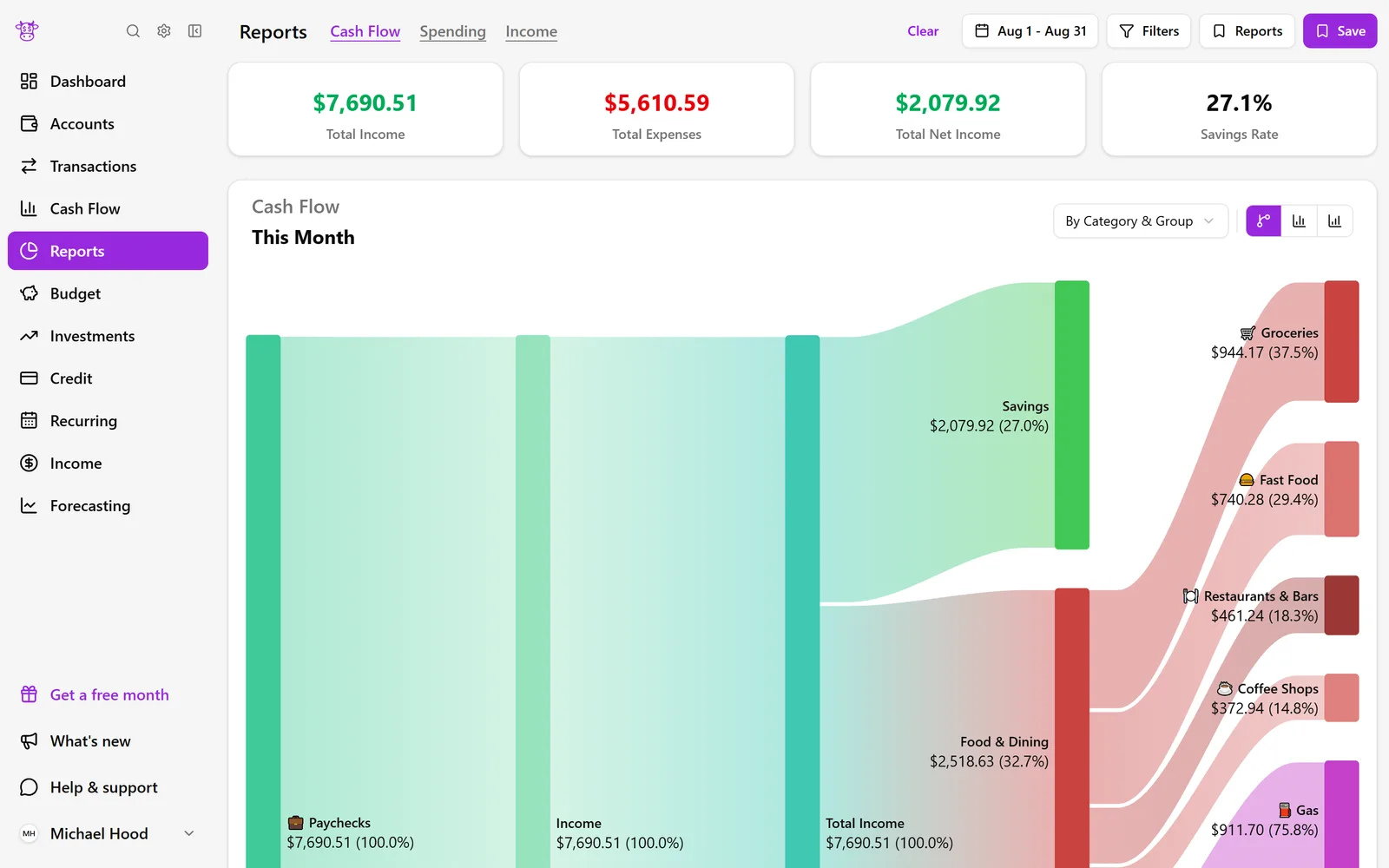
Moo Money brings your accounts, spending, budgets, investments, and net worth into one place. The goal is to make it easier to understand your full financial picture, whether you’re managing your own money or sharing finances with a partner.
I’ve been building it alongside full-time work and finishing my master’s in machine learning. It’s now live with 100+ registered users, and I’ve been handling everything from the product and engineering to customer support and marketing.
AI tools have been a big part of how I build and iterate as a solo developer. I was also recently featured in Handshake’s AI Capabilities Report, where I talked about my experience using AI to build Moo Money and my interest in the intersection of finance and machine learning.
My focus now is getting the app in front of more people who would find it useful. Building the product and figuring out how to grow it have been two very different learning experiences.
For anyone who’s grown a consumer subscription app, what helped you find your first paying customers outside your personal network?
You can check out what I’m building here: https://moomoney.net
Looking forward to connecting with other founders here, especially anyone building in fintech, consumer apps, or AI!













Comments17
Welcome. Nice to work with you
Thank you, Sammy!
Looks Cool!
Thank you, Allan!
Congrats on the product! Looking good!!
Thank you, Ryan!
Congrats on 100+ users while doing a master's and a full-time job, that's serious. What channel got you the first 100? And are you using AI for transaction categorization, or keeping that rule-based?
Thanks, Miles! The Handshake × OpenAI Codex Creator Challenge helped with early visibility. Moo Money was selected as a featured project, and I was later invited to present it at Handshake Access, which was a great opportunity to get it in front of more people. I’m still figuring out how to reach new users consistently beyond opportunities like that. And yes, Moo Money uses AI to automatically categorize transactions! Users can also create their own rules based on things like merchants, transaction names, and amounts. The goal is to make categorization easy out of the box while giving people control over how they organize their finances.
AMAZING WORK
Thank you, Rabeesa!
One angle that might be worth testing: you mentioned couples sharing finances. That's a sharper audience than "anyone with money," and it has natural moments when people start looking for a tool, like moving in together, getting married, or having a first baby. Those people already gather in specific places (wedding forums, new-parent groups, subreddits about money and relationships). Showing up there and answering their questions, without leading with a link, usually brings in users who stay. Also worth asking a few of your 100 users what made them sign up. The answer often points to where the next 100 are.
Thanks, Fanny! I really like the idea of focusing on those moments when couples first start managing money together. That gives me a clearer starting point for where to find people and what questions to help with. Asking current users what made them sign up is a good call too—I’d like to better understand which problems actually brought them to Moo Money.
Congrats on shipping this solo, Michael. On first paying customers outside your network: in music tech the ones that showed up and stayed came through a partner who already owned the audience, not from us posting. For a household finance app the version of that might be fee-only planners and financial coaches who need something client-facing between sessions, or a credit union that wants a modern budgeting layer for members. One partner with 500 households beats 500 cold signups, and they will tell you what to build next.
Also worth doing what Fanny said about asking the 100 why they signed up. The Handshake feature got you visibility, but the ones who converted from it had a reason, and that reason is your copy.
Thanks, Nick! I’ve been considering reaching out to financial coaches, so it’s helpful to hear how partnerships worked for you in music tech. The idea of giving clients something useful between sessions makes that opportunity much more concrete. The credit union angle is interesting too. And agreed on understanding why the paying users converted—that should help me make both the messaging and outreach more specific.
For a finance app, the sharing moment is built in: a couple managing money together is a two-sided signup you don't have to invent. Make inviting your partner the second step, not a buried setting.
Totally agree, Tom! Inviting a partner is already part of Moo Money’s signup flow. I want couples to get started together early on, since that shared experience is a big part of what makes the app useful.
17 comments
Welcome. Nice to work with you
Thank you, Sammy!
You are Welcom!!
Looks Cool!
Thank you, Allan!
Congrats on the product! Looking good!!
Thank you, Ryan!
Congrats on 100+ users while doing a master's and a full-time job, that's serious. What channel got you the first 100? And are you using AI for transaction categorization, or keeping that rule-based?
Thanks, Miles! The Handshake × OpenAI Codex Creator Challenge helped with early visibility. Moo Money was selected as a featured project, and I was later invited to present it at Handshake Access, which was a great opportunity to get it in front of more people. I’m still figuring out how to reach new users consistently beyond opportunities like that. And yes, Moo Money uses AI to automatically categorize transactions! Users can also create their own rules based on things like merchants, transaction names, and amounts. The goal is to make categorization easy out of the box while giving people control over how they organize their finances.
AMAZING WORK
Thank you, Rabeesa!
One angle that might be worth testing: you mentioned couples sharing finances. That's a sharper audience than "anyone with money," and it has natural moments when people start looking for a tool, like moving in together, getting married, or having a first baby. Those people already gather in specific places (wedding forums, new-parent groups, subreddits about money and relationships). Showing up there and answering their questions, without leading with a link, usually brings in users who stay. Also worth asking a few of your 100 users what made them sign up. The answer often points to where the next 100 are.
Thanks, Fanny! I really like the idea of focusing on those moments when couples first start managing money together. That gives me a clearer starting point for where to find people and what questions to help with. Asking current users what made them sign up is a good call too—I’d like to better understand which problems actually brought them to Moo Money.
Congrats on shipping this solo, Michael. On first paying customers outside your network: in music tech the ones that showed up and stayed came through a partner who already owned the audience, not from us posting. For a household finance app the version of that might be fee-only planners and financial coaches who need something client-facing between sessions, or a credit union that wants a modern budgeting layer for members. One partner with 500 households beats 500 cold signups, and they will tell you what to build next.
Also worth doing what Fanny said about asking the 100 why they signed up. The Handshake feature got you visibility, but the ones who converted from it had a reason, and that reason is your copy.
Thanks, Nick! I’ve been considering reaching out to financial coaches, so it’s helpful to hear how partnerships worked for you in music tech. The idea of giving clients something useful between sessions makes that opportunity much more concrete. The credit union angle is interesting too. And agreed on understanding why the paying users converted—that should help me make both the messaging and outreach more specific.
For a finance app, the sharing moment is built in: a couple managing money together is a two-sided signup you don't have to invent. Make inviting your partner the second step, not a buried setting.
Totally agree, Tom! Inviting a partner is already part of Moo Money’s signup flow. I want couples to get started together early on, since that shared experience is a big part of what makes the app useful.