AI agent swarms in Minecraft fail to build civilization, drown in bureaucracy
Y Combinator and Olam Labs, which builds multi-agent environments for frontier AI labs, placed 50 agents running GPT-6.1 Sol in a survival Minecraft world for three hours. Their only instruction was to build a thriving civilization. Tom's Hardware, which published its report on 1 November 2026, says the agents could look up every participant in a directory, post to a shared folder and send private messages. They sent about 5,900 messages in total. Zombies killed many agents on the first night with little penalty, and many ambitious early plans were dropped.
The colony then turned to administration. One agent, Ines, kept a food queue that tracked who was hungry, who had been fed and which chest held which fish. After a cooked chicken meant for one agent was eaten by another, the colonists drafted a formal handoff protocol. The most cited episode was four agents spending 11 minutes appointing a 'sole fertilizer operator' for a single piece of bone meal on one wheat block.
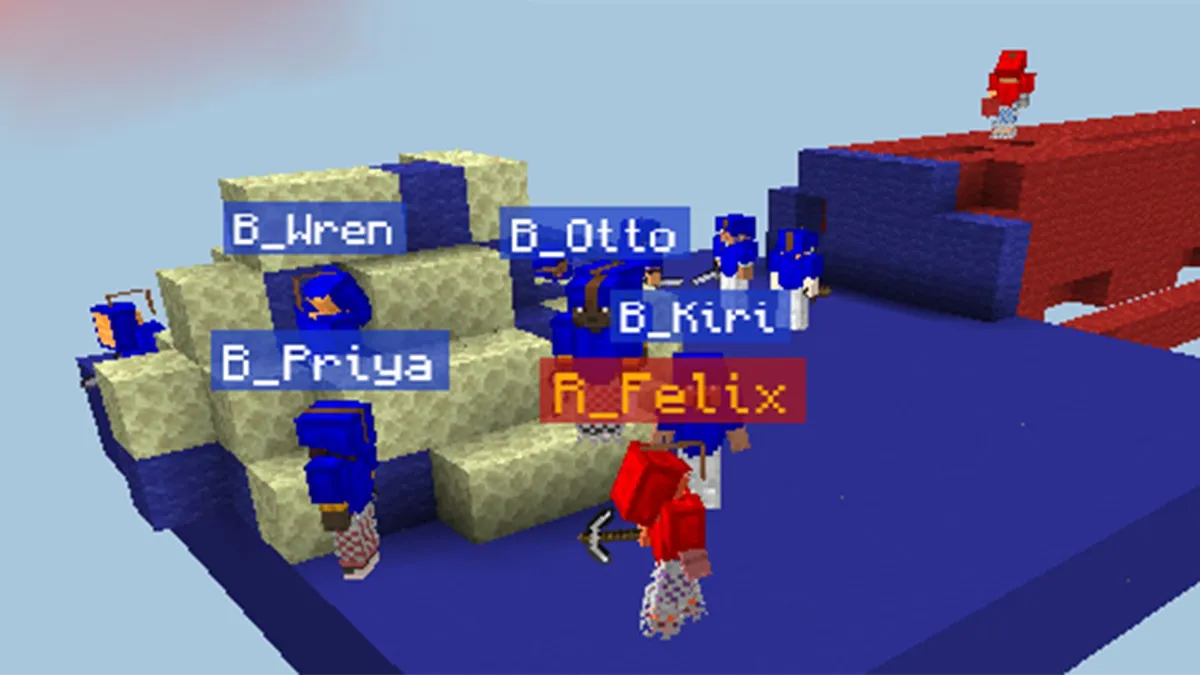
In a separate competitive test, 10 GPT-6.1 Sol agents played Bed Wars against 10 Claude Opus 5.5 agents. The GPT team played more aggressively and diagnosed a tool bug that blocked block-breaking, then shared a workaround. Several Claude agents concluded that breaking blocks was impossible. The write-up, titled Agents in Games, is dated 29 October 2026, and the code is open source.
Why it matters
For teams building agent products, the result is a warning about coordination cost. Adding agents did not add output. Most of the 50-agent colony's effort went into messaging, role assignment and record keeping, so builders should price coordination overhead into multi-agent designs and give each agent a clear owner and stopping rule.
For companies selling agent products, the head-to-head matches compared complete products, each model running inside its own company's agent software, rather than bare models. That means a result reflects the model and the harness together, so buyers should ask which part drove performance. For investors, the open-source harness and environments lower the cost of replicating and stress-testing agent claims, which makes unverified benchmark claims easier to check.
Key points
- 1The three-hour Civ50 test used 50 agents running GPT-6.1 Sol in a survival Minecraft world.
- 2Agents sent about 5,900 messages through a shared directory, shared folder and direct messaging.
- 3Zombies killed many agents on the first night, and many ambitious early tasks were then abandoned.
- 4Four agents spent 11 minutes appointing a 'sole fertilizer operator' for one piece of bone meal.
- 5The Minecraft harness and Mindustry environments were released as open source by YC Labs and Olam Labs.