 @victor2
US midterms as commented in Brussels' EU bubble...
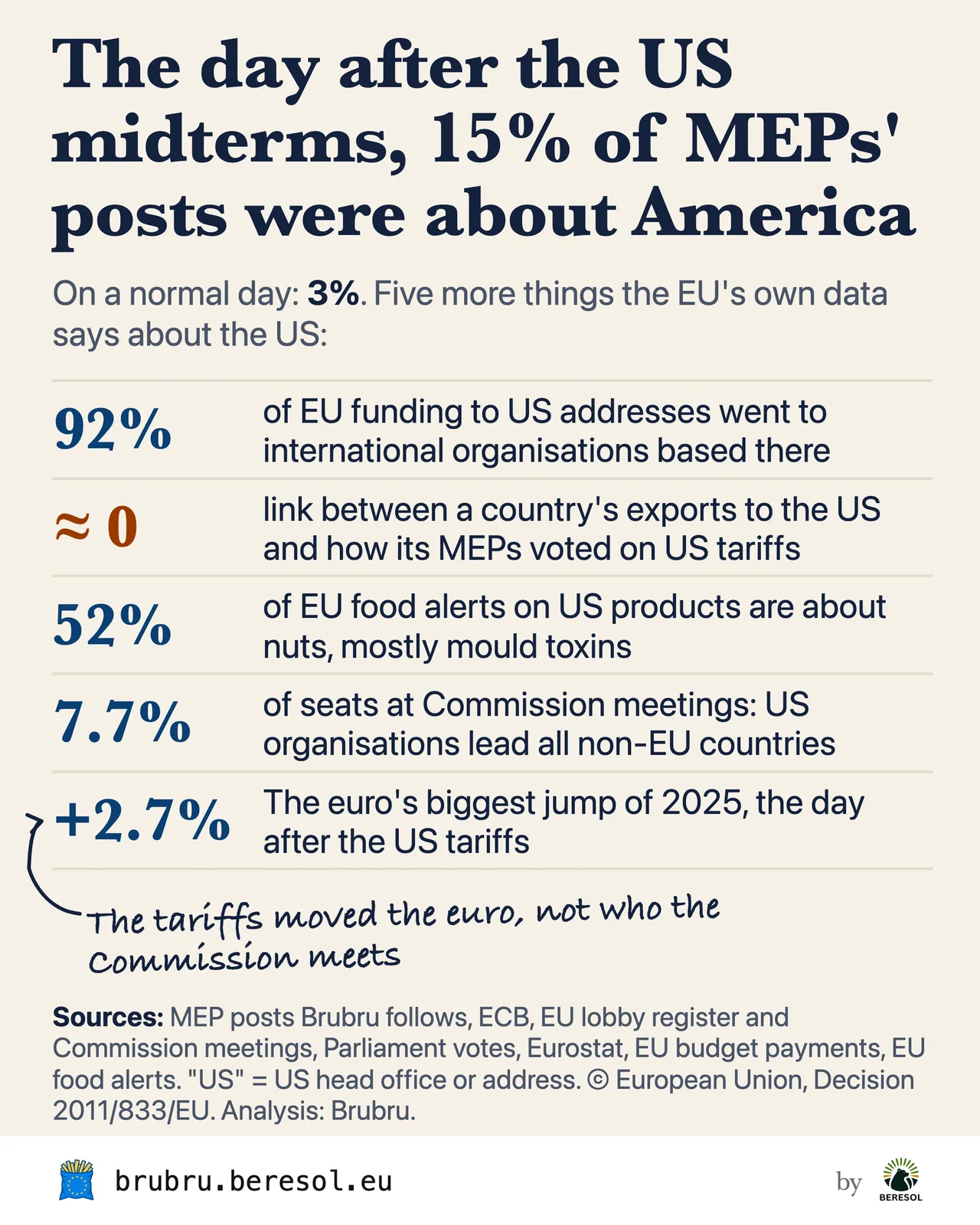
On Tuesday, the #US went through its #bluenami in their #midterm elections. And in Europe (a protectorate to the US as the Greek world was to Rome) of course followed it with interest. In Brussels' Eurobubble, the day after the US midterms, 15% of MEPs' posts were about America. On a normal day: 3%.
That is from the MEPs' social media accounts Brubru fetches data from (all of them): 4 November against the two weeks before. So I gave the LLM I'm building just one word, "US", and crossed everything we hold: lobbying, votes, money, markets, food safety.
(At the beginning, it made some mistakes, as if asking "What about us? What about all the broken happy ever afters?" 🤣 )
So, yeah, things that the model found out:
→ The #euro's biggest one-day jump of 2025 came the day after the US tariffs were announced: +2.7%
→ Yet the tariffs did not change who the Commission meets. The US share of meeting seats was the same before and after
→ On the 2026 votes cutting tariffs on US goods, MEPs voted with their political group. How much their country sells to the US made no measurable difference at all.
→ US-based organisations hold 7.7% of seats at Commission meetings, more than any other non-EU country (and THAT's the power of lobbying with American mmmmmmoney!)
→ 92% of EU funding to US addresses goes to international organisations based there, not to American companies.
→ Half of the EU's food alerts on US products concern... #nuts.
#Brussels reacts to #Washington loudly, in posts and in markets. The machinery underneath, who gets a meeting and how MEPs vote, kept to its own logic of interests and party.
Which surprises you more: the euro jumping while the meetings stayed put, or MEPs voting the same whatever their country exports?
Which topic should I cross next?











Comments
0 comments