 @gtnera7
🚨 THE BIGGEST MISCONCEPTION ABOUT AI AGENTS — ARCHITECTURALLY EXPLAINED
🗣️ Everyone is talking about “autonomous agents”. Almost nobody actually understands how the architecture works under the hood.
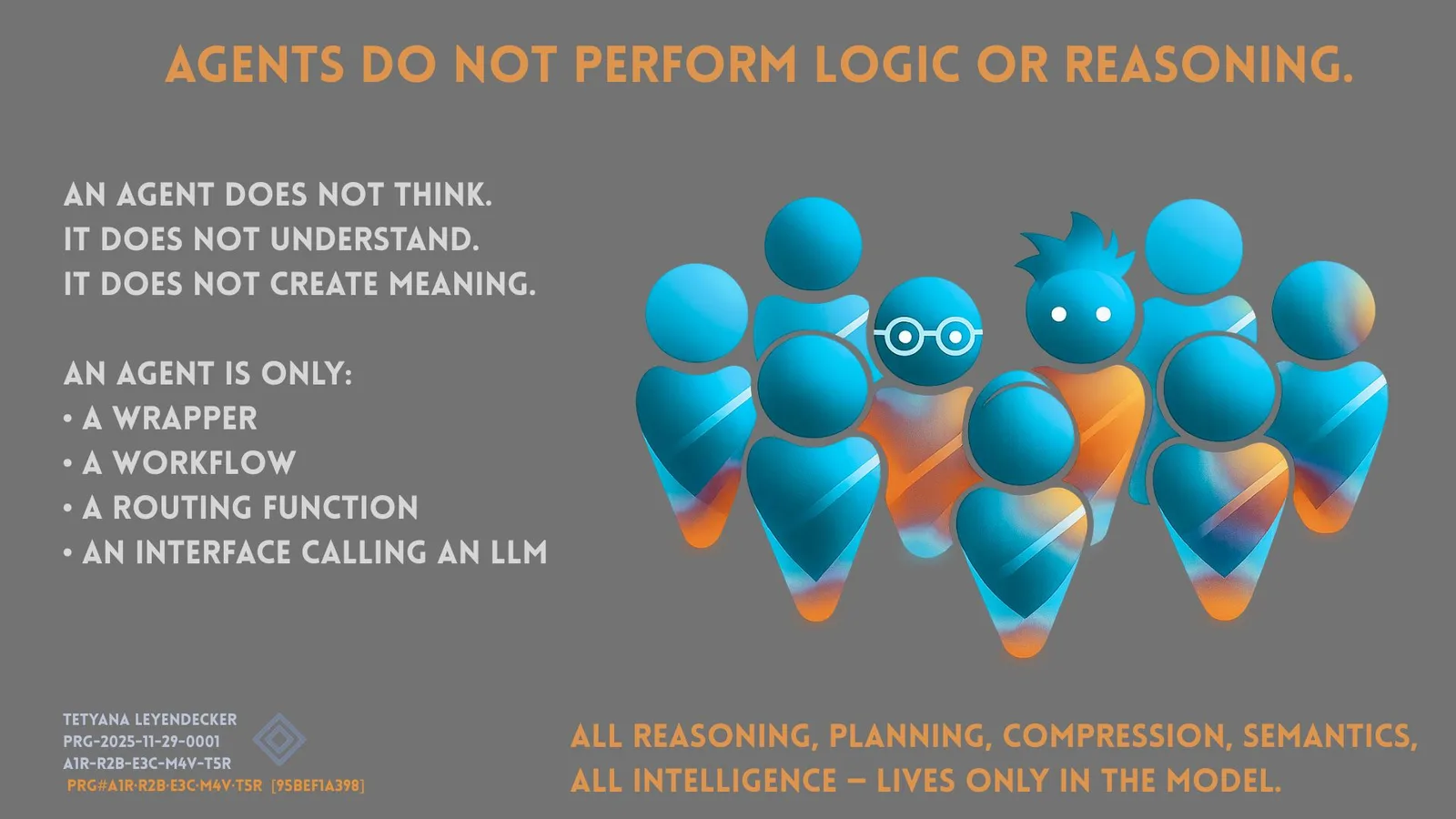
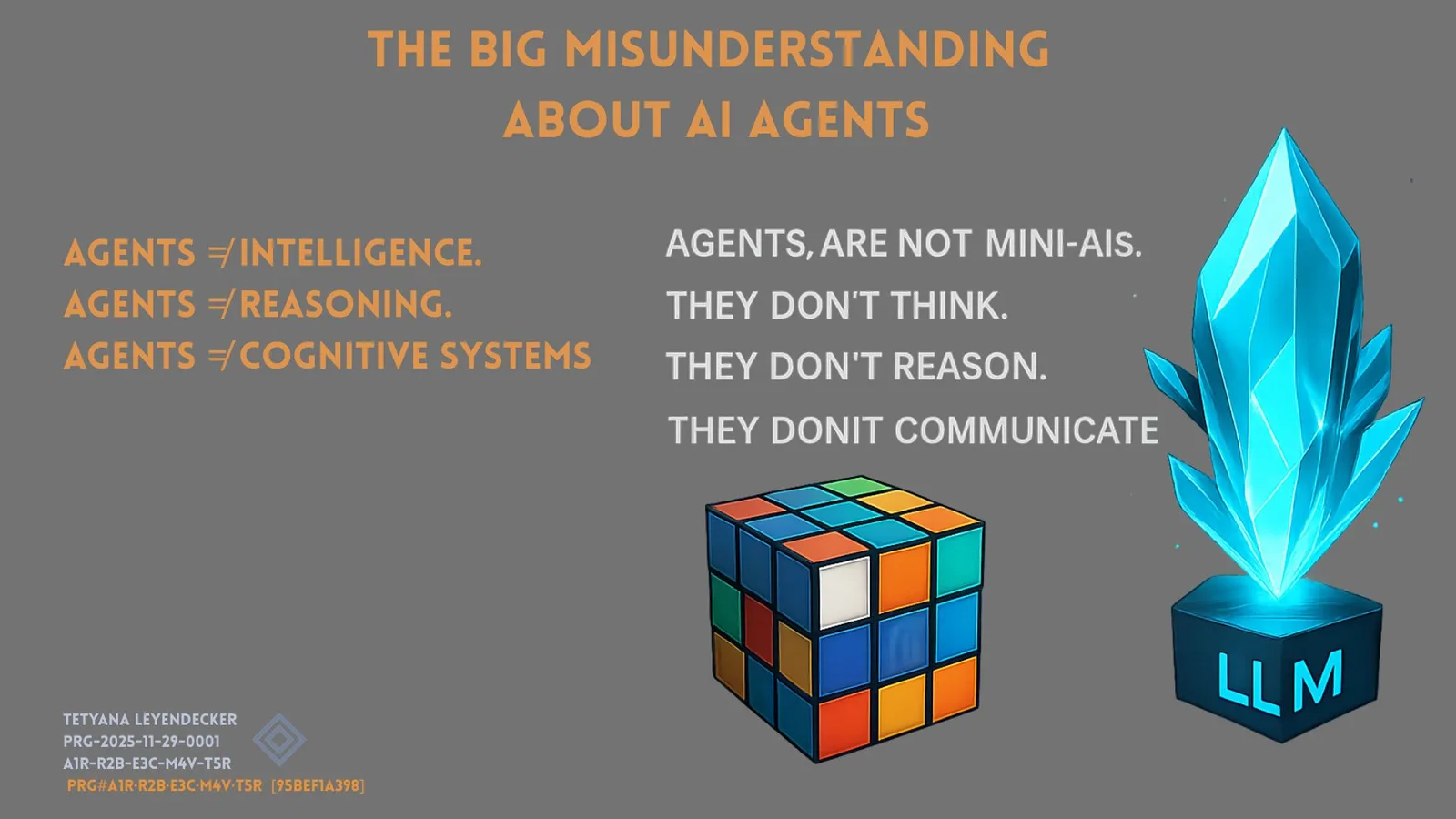
This article breaks down the #1 misconception in today’s AI community — the widespread belief that agents think 💭, reason 🧩, evaluate ⚖️, or communicate 💬.
They don’t. They route. 🛤️
Using clear architectural logic, I explore the real structure behind intelligent systems and why true cognition exists only inside the LLM Cognitive Layer 🧠✨, not inside simple workflows or orchestration loops.
If you’re building agents, multi-agent frameworks, or intelligent systems, this breakdown completely shifts the perspective on:
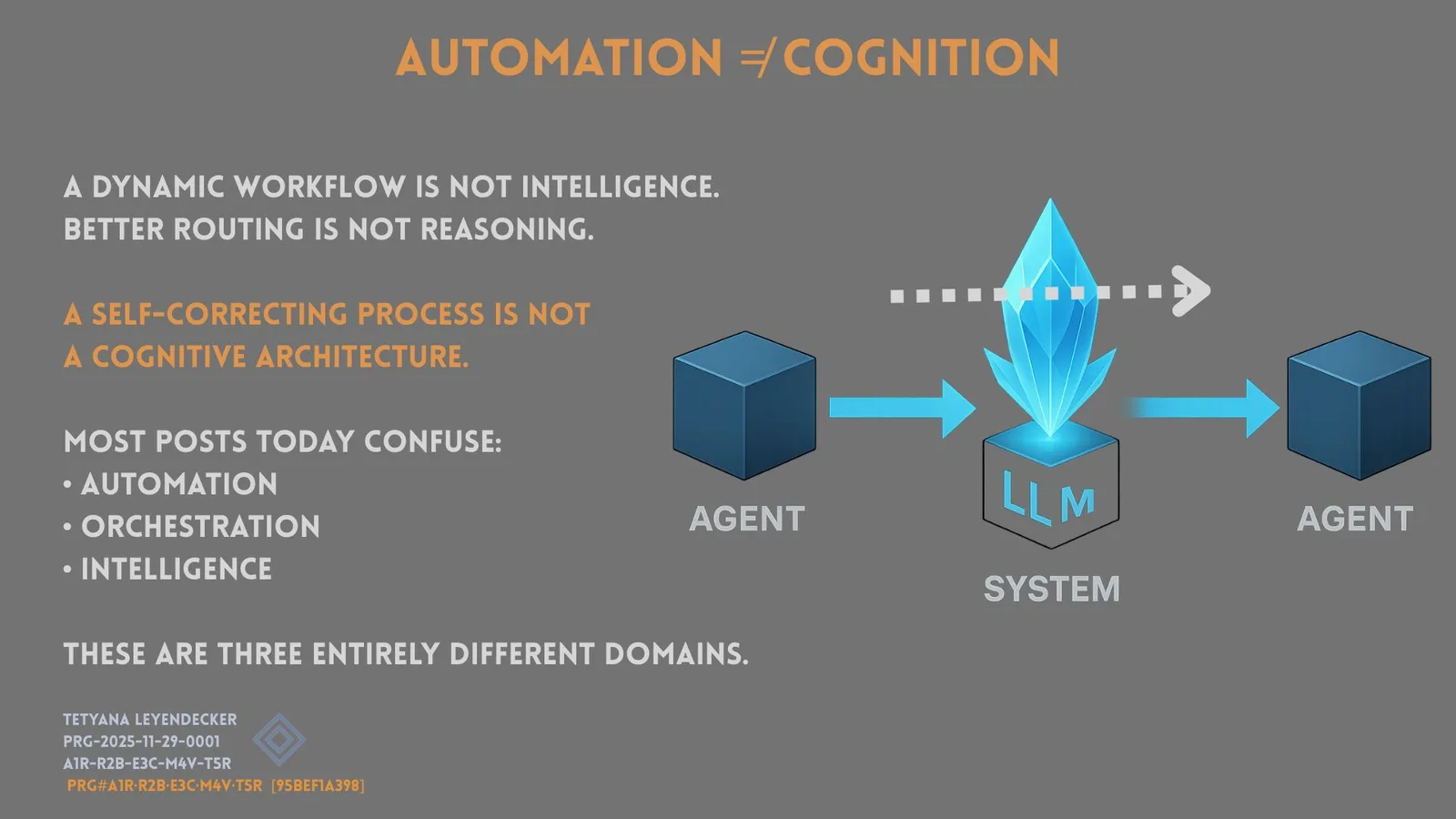
🔄 Automation vs. Cognition
⚙️ Workflows vs. Intelligence
🔀 Routing logic vs. Semantic meaning
🎭 Agent illusions vs. Real architectures
❌ Agents ≠ Reasoning
❌ Agents ≠ Meaning
❌ Agents ≠ Cognitive Systems
✨ Agents route. Systems transmit. Models think. 🚀
🔗 Full article: linkedin.com/pulse/biggest-misconception-ai-agents-architecturally-tetyana-leyendecker-ieeqe
👇 Let’s discuss:
Where do you draw the line between orchestration and true cognition in your current stack? Are we leaning too heavily on agent wrappers instead of focusing on the cognitive layer? Drop your thoughts below! 💬🔥










Comments1
Tom Regan would love to hear your take on this from an agency perspective! How do you usually structure the line between orchestration loops and the cognitive layer when building client solutions? 🧠👇
1 comment
Tom Regan would love to hear your take on this from an agency perspective! How do you usually structure the line between orchestration loops and the cognitive layer when building client solutions? 🧠👇