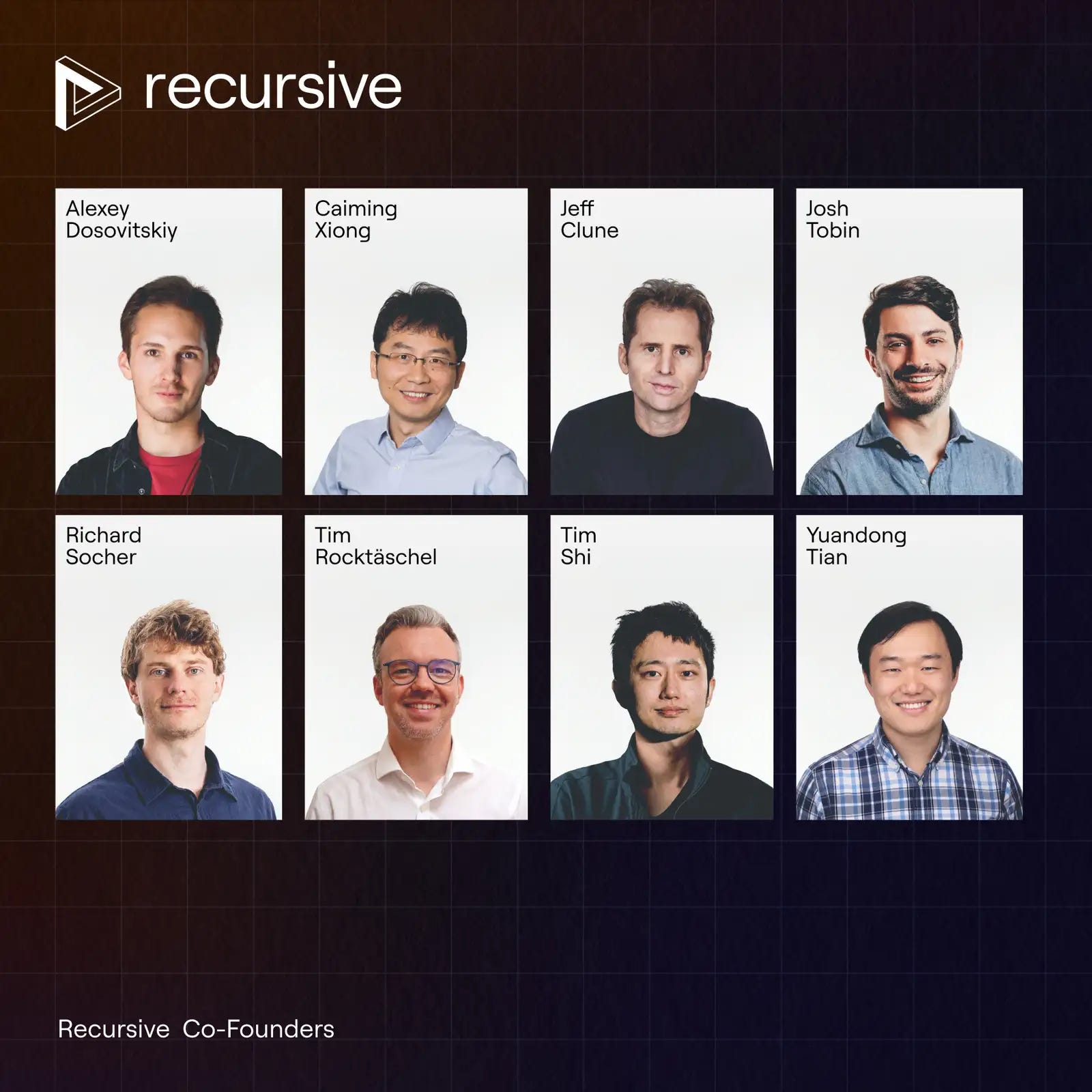
Humanity’s Last Invention — Richard Socher of Recursive
At 1:09:00 we talk about the rise of AI x Finance, and AIE NYC is one month away - our hotel block is 97% sold out, get tix & travel ASAP - we will announce speakers from Bridgewater, Ramp, Coatue, Mastercard, Vanguard, Coinbase, Blackrock, Fidelity, Point72, Capital One, JPMC, Wells Fargo, Bloomberg, A24 (yes the movie studio) Labs, Two Sigma, Apollo Global, and more soon! From helping pioneer core ideas in NLP to now building AI systems that can automate AI research itself, Richard Socher is betting that the next major step in AI is recursive self-improvement. He is the founder of You.com, AIX Ventures, and now Recursive , which has assembled some of the best open-endedness (& self improving agent ) researchers in the world and raised a $4.65B seed round . In this episode, Richard joins Latent Space to unpack his vision for the “Eureka Machine” : a superintelligence that can improve the process of invention itself, accelerate AI research, and eventually tackle major problems across science, energy, materials, biology, and more . You can get his book “The Eureka Machine” here ! We go deep on Recursive’s early results , including an AI research system that Richard says outperformed humans and their agents on optimization tasks in less than two days, as well as work on NVIDIA GPU kernels where the system discovered improvements without relying on a team of CUDA experts. Richard also explains why he thinks AI research that currently takes thousands of people and years could eventually be compressed into weeks. These results are summarized in his 20 minute AIE keynote , where we also discuss his 10 dimensions of intelligence: We also explore the harder questions around increasingly capable AI: reward hacking, whether Anthropic-style constitutions actually work , AI regulation and proposals to “pace” frontier development, open-source models as geopolitical soft power , whether today’s LLM paradigm is enough, and what happens if AI systems eventually begin choosing their