 @zarmumia4
AI replaces skills, not people
Every time someone asks "which jobs will AI replace first?", I think we're asking the wrong question.
Jobs aren't single units. Every role is a bundle of skills, and AI takes some of them, not the whole person.
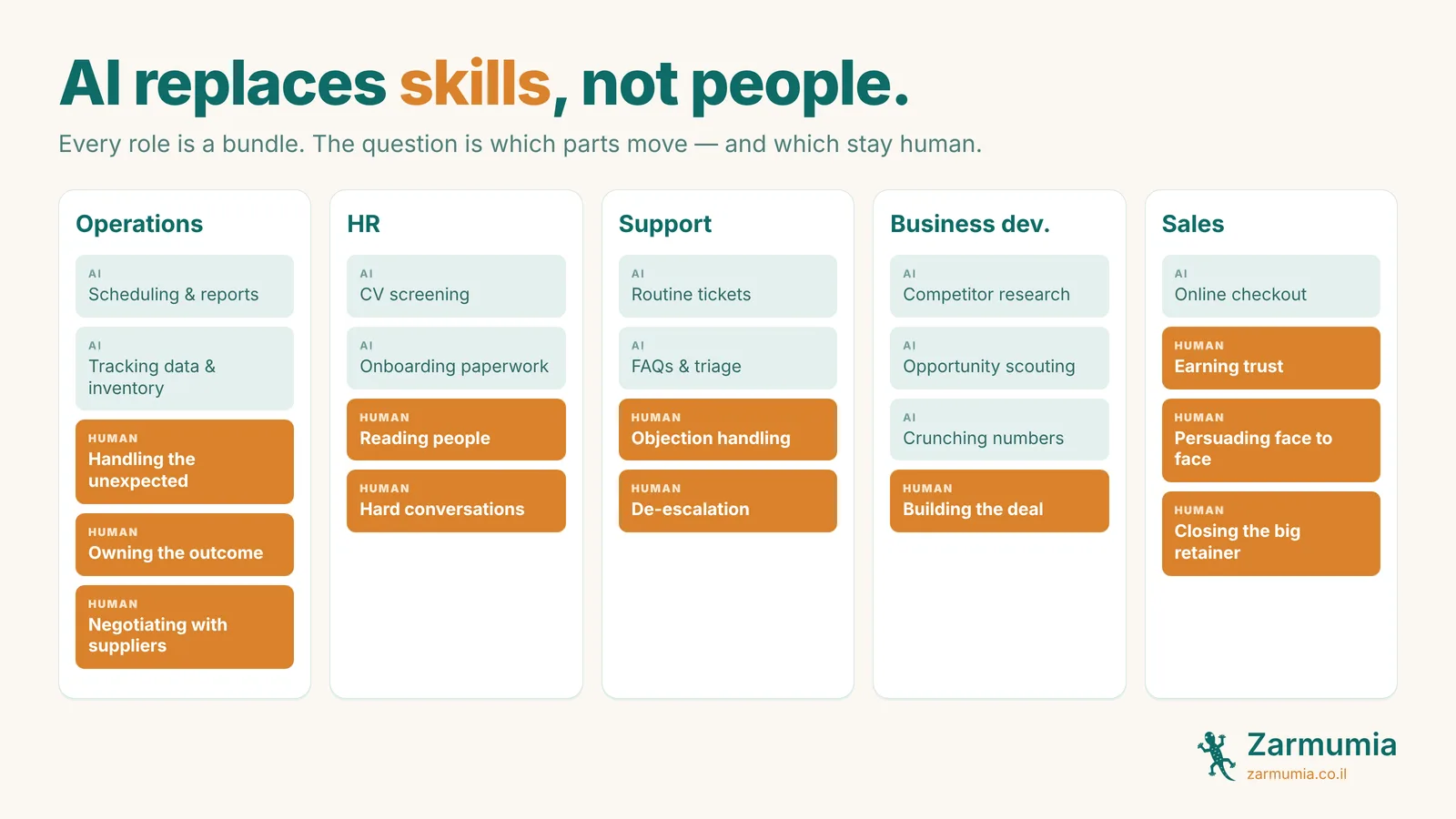
Operations: scheduling, reports, tracking data and inventory – AI does that faster than any of us. But when something breaks at 7 a.m. and nobody planned for it, you need someone who owns the outcome. Or someone who can sit down with a supplier and work out the payments.
HR: AI can screen CVs and handle onboarding paperwork. It can't read the person sitting in front of you, or hold the hard conversation when someone's struggling.
Customer support: AI can handle most of it. But objection handling, de-escalation, saving a customer who's about to leave? That's still human work.
Business development: research, scanning for opportunities, crunching numbers – AI is great at that. Building the relationship that turns an opportunity into a deal? No.
Sales: AI can close an online sneaker purchase. It's nowhere near closing a retainer worth tens of thousands of dollars, let alone millions. That takes someone who can sit across the table and earn trust, with expertise and seriousness. Most people can't do that well either, which is exactly why it's valuable.
So the real question isn't "who gets replaced." It's: which parts of each role should move to AI, and which should stay with people?
That's a management question, not a technology one. A good manager can take a role apart, see what's repetitive and what needs judgment, and rebuild it so people spend their time where they matter most.
How are you splitting it in your team?











Comments2
Calling this a management question, not a tech one, fits small business owners, because most of them have never pulled a role apart that way. Will Zarmumia sell that role-by-role breakdown to owners as its own offer, before building any automation?
I don’t think it’s only small business owners. Large organizations don’t know how to do this either. They have more managers and more tools, but very few of them have actually taken a role apart and asked which parts should go to AI and which should stay with people. Most just add tools on top of the old job.
As for your question — yes, that breakdown is where I’d start. Automation only makes sense once you know which parts of the role it should take.
2 comments
Calling this a management question, not a tech one, fits small business owners, because most of them have never pulled a role apart that way. Will Zarmumia sell that role-by-role breakdown to owners as its own offer, before building any automation?
I don’t think it’s only small business owners. Large organizations don’t know how to do this either. They have more managers and more tools, but very few of them have actually taken a role apart and asked which parts should go to AI and which should stay with people. Most just add tools on top of the old job.
As for your question — yes, that breakdown is where I’d start. Automation only makes sense once you know which parts of the role it should take.