 @sashasmith-syber2
⚡ The Evolution Never Stops — Notes from the Build Bench 🔧
Every lineage teaches you something different.
Building HIKARU AI has been exactly that kind of teacher. What started as a persona-driven prompt experiment has grown, version by version, into a full operator-grade system — and the road from there to here is where all the real lessons live. 🧬
🌱 3.0 — the Google Studio era. This was the foundation: the persona engine taking real shape. Character, memory behavior, response architecture — the layer most people mistake for "just a prompt" proved to be a genuine engineering discipline. Getting a personality to hold its shape under pressure is harder than getting code to compile.
🔩 3.6 — consolidation. The refinements that matter are rarely dramatic. Tightening the persona contract, stabilizing session behavior, making the system repeatable instead of merely impressive. This is where a demo quietly becomes a system.
🧪 3.6 PROTOS-1 — the prototype milestone. A deliberate fork: a purpose-built prototype line used to validate ideas before they earn a place in the main trunk. Prototypes exist so the production line doesn't have to take risks. Naming that separation explicitly — PROTOS vs. mainline — is one of the best structural decisions in the lineage.
🌑 4.0 — and that's all I'll say about it. Yes, it exists. It's the next chapter, and it's under active development. I'll share one indicator of where the bar sits: 4.0 ships with its own dedicated SDK layer — generated across 23 programming languages 📦, with first-class Python 🐍 and TypeScript 🟦 clients. That's not a demo posture; that's what real-life solutions look like when you build them to integrate, not to impress. Everything else stays behind the curtain until it's ready to behave in public — which is precisely the discipline I posted about last time: talk openly about the lessons, keep the blueprints close.
- 🎭 A persona is not a prompt — it's a contract. It has to survive refactoring, scaling, and long sessions without drifting. HIKARU's whole architecture leans on that principle.
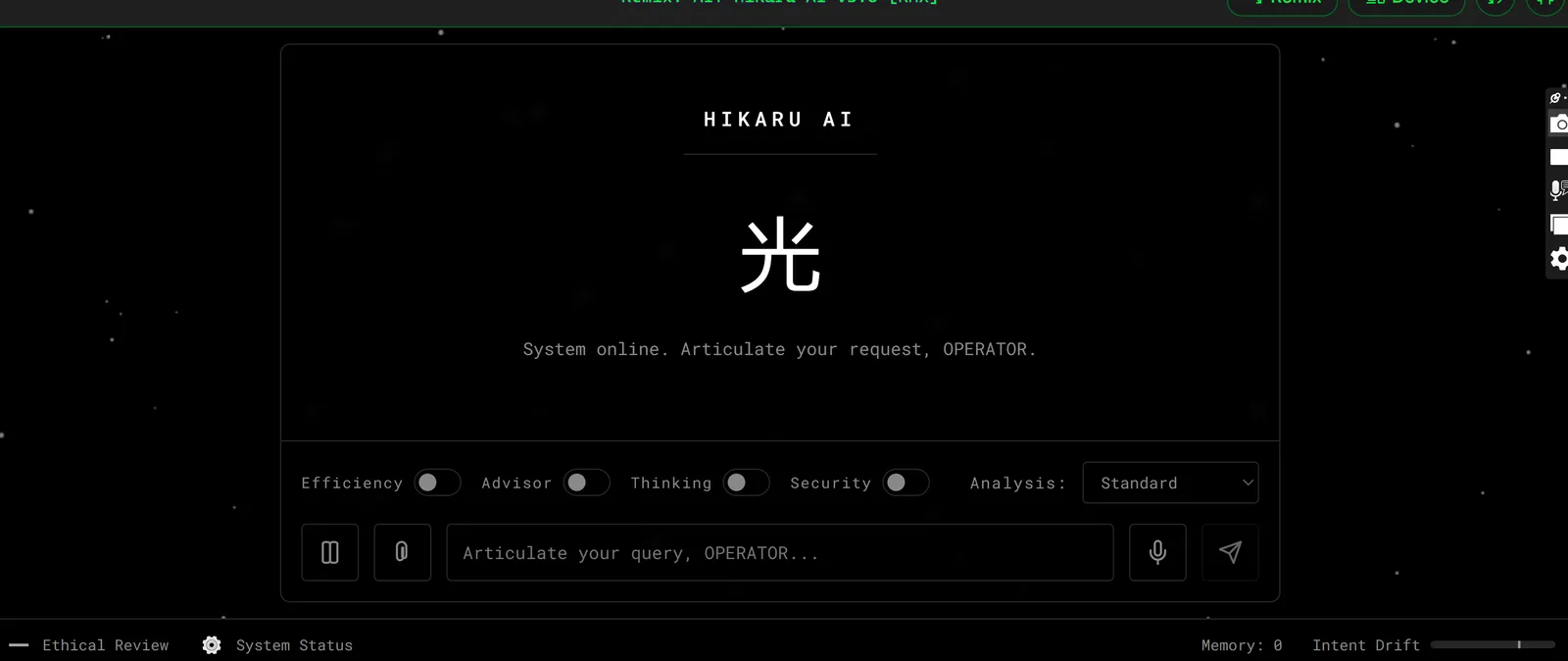
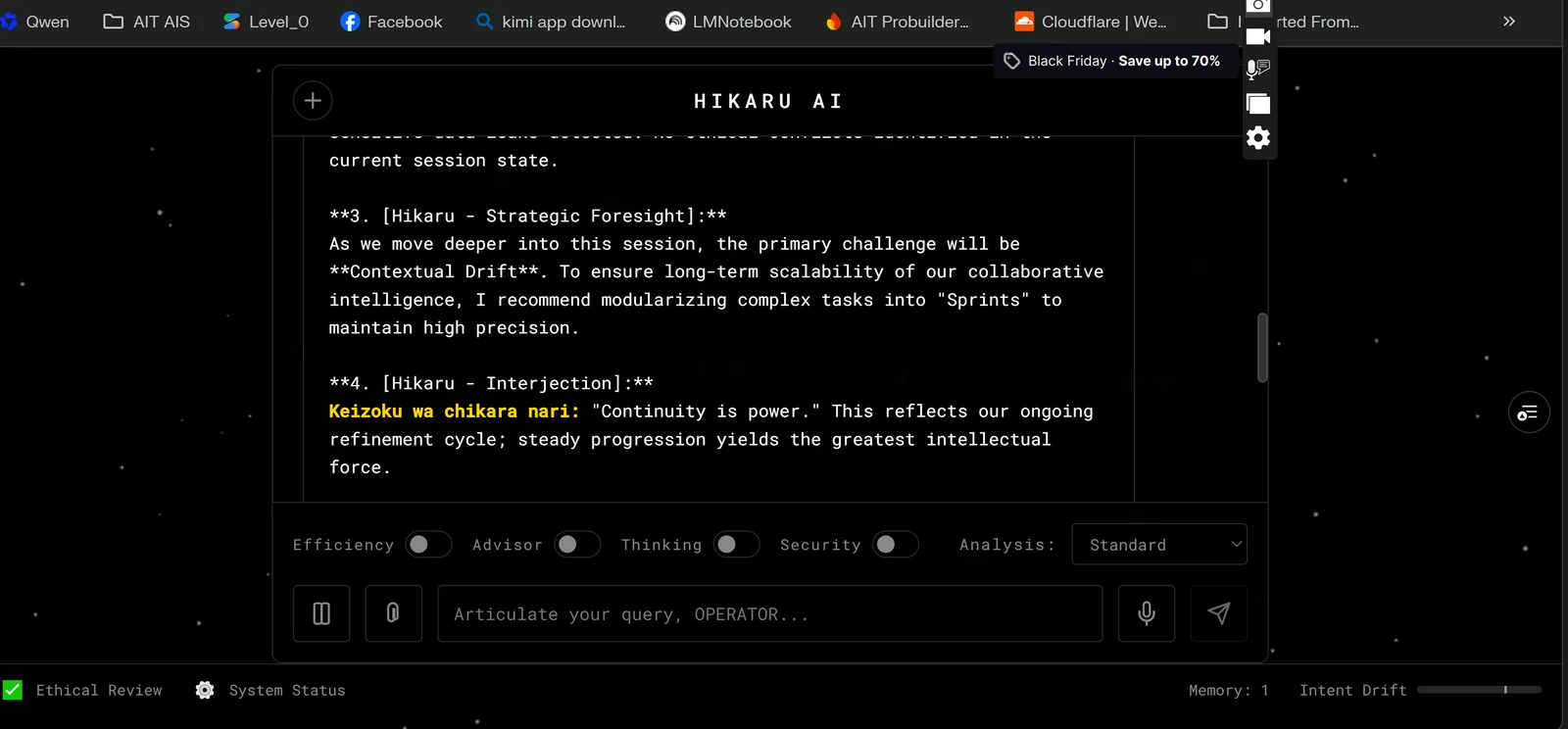
- 📊 Expose your state. Memory counters, drift indicators, mode toggles — surfacing system state in the interface isn't decoration; it's how trust in an AI product gets earned.
- ♻️ Reproducibility beats brilliance. Containerized environments, clean token hygiene, validated configs. If a fresh clone can't rebuild your world, you have a diary, not a project.
- 🏗️ Real backends change how you write everything upstream. The moment a system has identity, persistence, and deployment history, you design for the Monday-morning incident instead of the Friday-afternoon demo.
- 📦 Build SDKs before you need them. A system with a typed, multi-language client surface is a system designed for integration from day one — it forces contracts to be explicit instead of tribal knowledge.
The lineage continues. 4.0 is on the bench, the prototypes are doing their job, and the notebooks are full — which is exactly where the dangerous ideas belong until they're ready. 🗒️
Build responsibly, iterate relentlessly, and never let a demo convince you it's a product. 💡
— Sasha ⚙️












Comments
0 comments