 @siddicky2
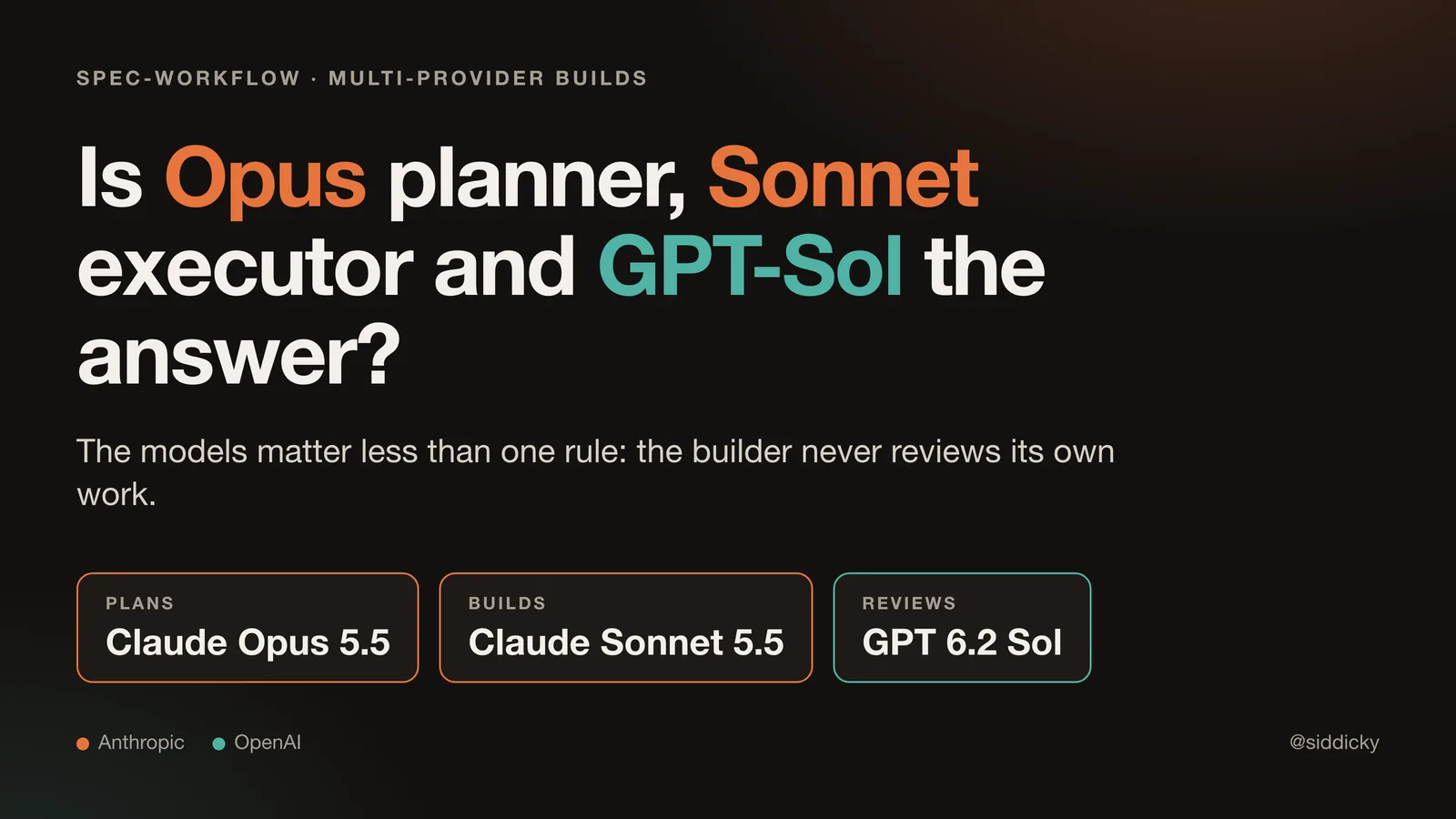
Is Opus planner, Sonnet executor and GPT-Sol the answer?
It is the lineup I run by default. Claude Opus 5.5 plans, Claude Sonnet 5.5 builds, and GPT 6.2 Sol reviews the work. The models matter less than one rule about who reviews whom.
A model reviewing its own work mostly agrees with itself, because it makes the same assumptions the second time. A second model from the same vendor shares many of them.
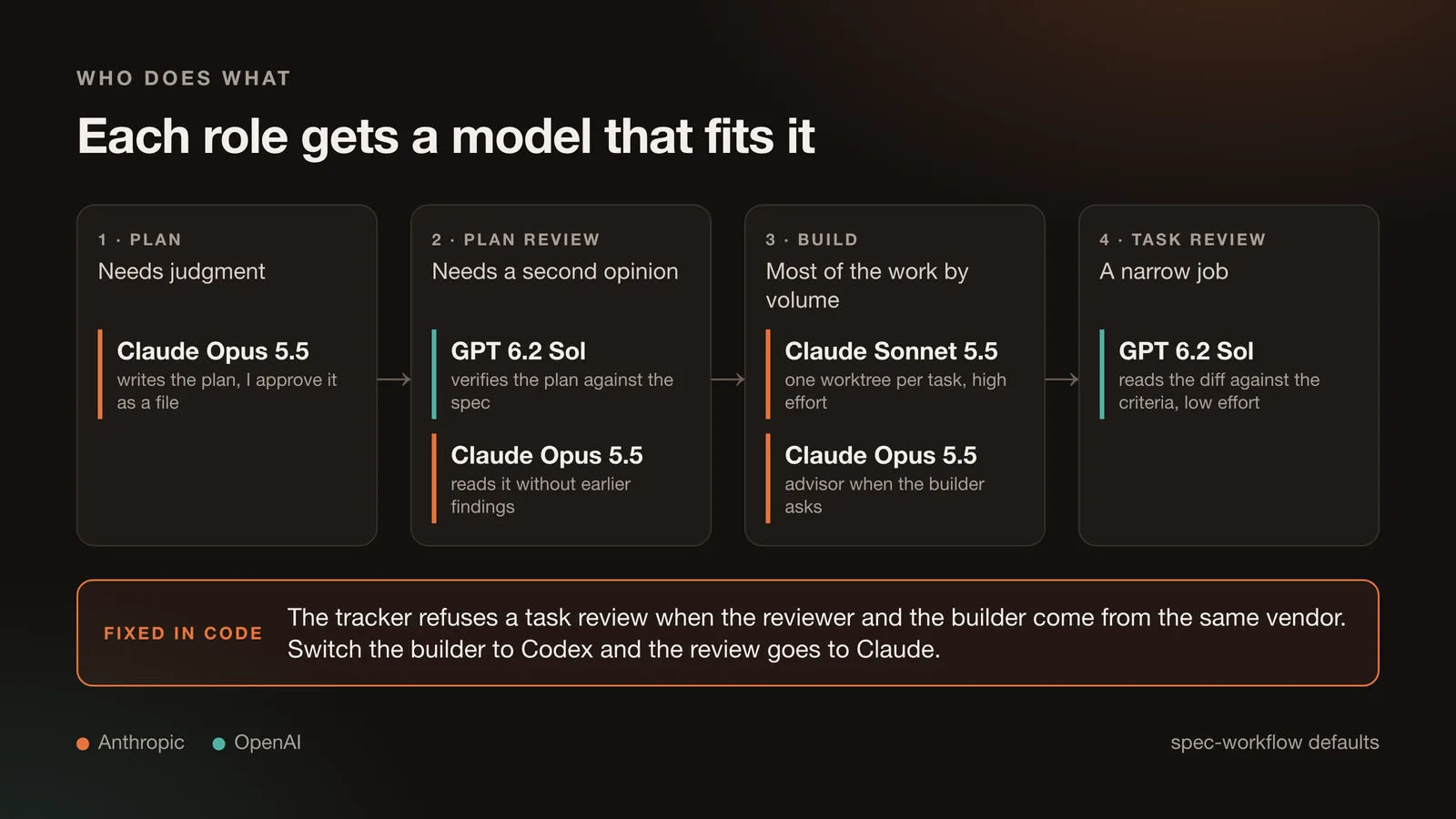
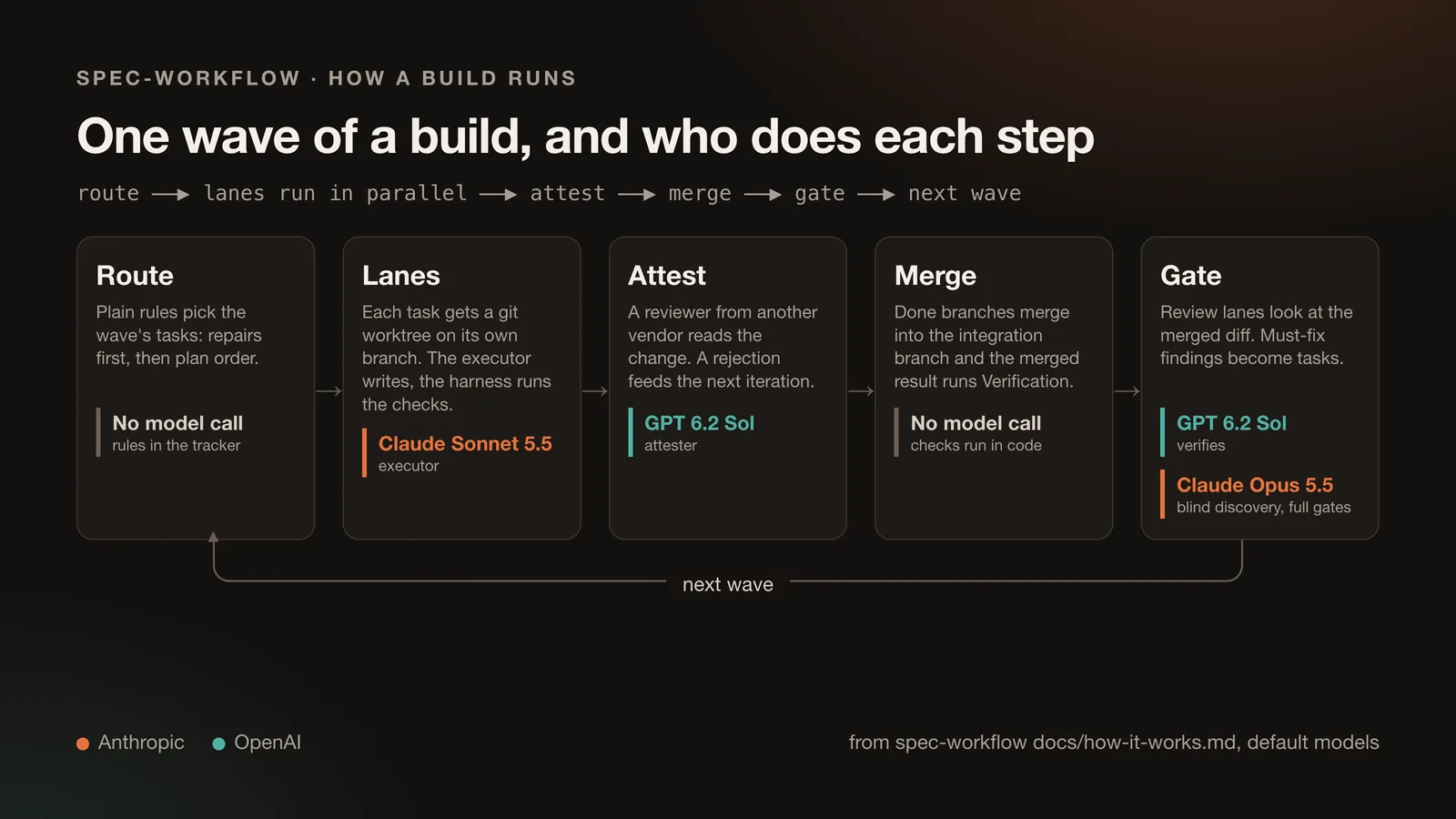
In spec-workflow, a model from a different vendor reviews every finished task. I did not write this as a prompt instruction. The tracker refuses the review if the two vendors match.
Planning needs judgment, so Opus writes the plan and I approve it as a file.
Plan review needs a second opinion. Sol verifies the plan against the spec. A second Opus session reads the plan without seeing earlier findings.
Building is most of the work by volume. Sonnet runs each task in its own worktree at high effort and can ask Opus for advice.
Task review is a narrow job. Sol reads a diff against the stated criteria at low effort. It does not need to be the strongest model, only a different one.
This keeps cost down. The plan gets the expensive model because a mistake there is expensive. The task reviewer can be a cheaper setting because its job is small.
These model names will be out of date in months. If I switch the executor to Codex, the tracker assigns the task review to Claude. Muse and Grok are optional extra reviewers for high-stakes plans.
Three things are fixed in code: who may review whom, what blocks a build from closing, and which commit a check covers. I wrote about the third in my previous post, "The agent restarted. Which commit passed?"
The blind plan reviewer is Claude reading a plan Claude wrote. That is same-vendor, and the tracker records it that way. Sol's verification is the independent half of plan review.
It is my answer for now. For any agent setup I would ask who reviewed the work, and whether that reviewer could have made the same mistake.











Comments
0 comments