
The AI Industry Thinks It Has a PR Problem. The Actual Problem Is Much Worse

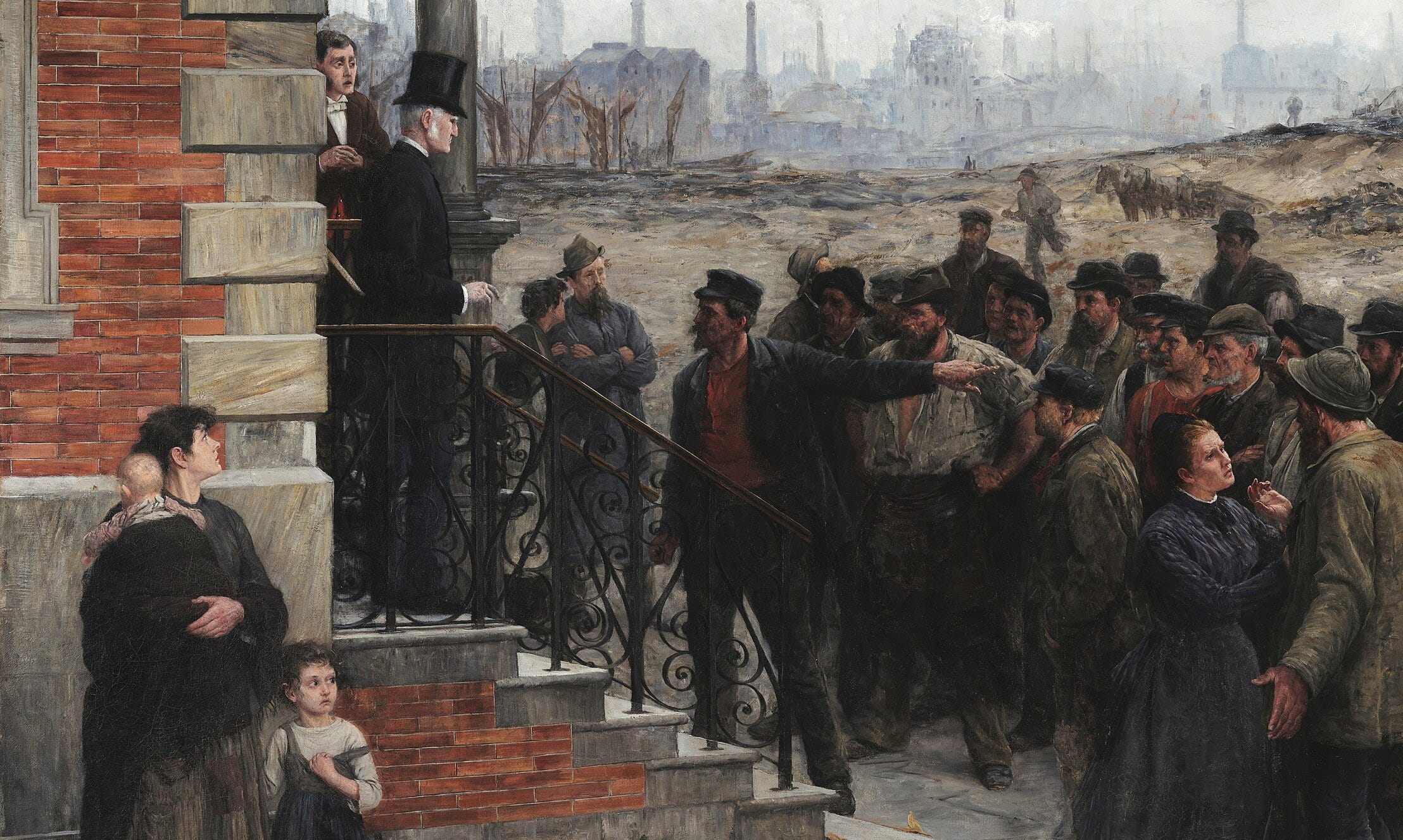
The AI industry doesn’t get to act surprised that Americans have come to despise AI, datacenters, and everything associated with them. The ballot box has now delivered its verdict but the polls have been reflecting a growing antagonism for years.
The sheer extent of the hostility is perhaps surprising, particularly since some of the objections behind it aren’t well-founded (e.g., the water issue is overwrought). But it doesn’t matter. Stranger still, this degree of resentment is nowhere near as widespread elsewhere in the world, where AI is often regarded with cautious optimism, or at the very least, a certain expectant neutrality. And perhaps most strikingly, Americans are embracing AI in their daily lives while demanding that the industry be brought to heel. There’s considerable overlap between the two groups.
Are voters confused? Maybe unwilling to bear responsibility for what they do? Or is it that they want all the benefits but none of the costs? I don’t think any of this is true. I think people understand the trade-offs and are telling the industry exactly what they want to trade. When AI, alongside corruption, the war in Iran, and other evergreen grievances, looks increasingly likely to become a defining issue in the 2028 presidential election, you can’t just dismiss people as idiots and call it a day.
It’s the messaging, the industry says. We need to change the messaging immediately. They are deeply mistaken about the virtues of AI.
I think this is patronizing, demeaning, and plain wrong. Let me explain why.
Some, like clockwork, have already flipped the gears of the PR machinery, but it won’t fool anyone anymore. The medium is the message, as McLuhan said, and so they won’t be able to hide under a semantic disguise: AI, by itself, says it all, and its effects are right there, in broad daylight, for everyone to see. The good, the bad, and the worst. A message can’t be at fault for delivering the news of an unwelcome—and unwelcoming—reality. The charges are much graver: they spoke a lot but fixed little.
Insofar as the narrative has had any effect at all, it has illuminated a reality that was there all along: AI is going to be a big problem. It isn’t the words that have made people angry, but the future those words prescribe. The prospect of widespread job insecurity, the ruin of the internet as a relatively clean and public space, a generation-sized cognitive rot, etc., etc.—and perhaps even outright catastrophe (if everyone builds it, everyone dies or something). These are the specters invoked, time and again, whenever the future of AI comes up. Some of them are already haunting unsuspecting villagers at the other end of the world.
Rob, a 58-year-old man who has spent his entire working life as a construction worker somewhere in the forgotten Midwest, asks a perfectly reasonable question in the face of these facts: If that’s your message, why the hell do you keep building the thing, then?
To mimic the industry’s usual response, I could now make up some arguments to defend why it actually makes sense that Anthropic is rushing toward the cliff—it is, naturally, to install a security guardrail before the others get there so Dario can teach them how the good guys do it—but utilitarian logic works quite badly with a deontological population who can, easily, cut all that bullshit with a sharp common-sense razor: just don’t build the thing that will make my life a fucking nightmare.
Because that’s what this ubiquitous AI hate comes down to. You may not doubt the good intentions of the AI industry or the positive potential of the technology itself. Nor do you need to, to condemn the blatant negligence: they don’t have a good answer to that question.
Besides the fact that the industry seems way too eager to resort to sophisticated game theory stuff and long-winded diatribes, which are not useful in the slightest—who has time, in between juggling ordinary nuisances, to read 20,000-word Dario Amodei essays?—it just so happens that the response to Rob’s worries is remarkably feeble compared with the elaborate dystopian scenarios everyone in Silicon Valley seems so capable of conjuring.
We’ll cure every disease. The world will be wonderful. Just you wait. Just you wait.
Is that really the best you can do? Either your lack of imagination is matched only by your lack of taste, in which case we shouldn’t trust you to build any of the utopias you dream of, or you’re lying to us about how much confidence you actually have in those nebulous, ill-defined futures you keep talking about, in which case we shouldn’t trust you, period.
And it’s in this atmosphere of distrust that a young woman of 25, Natalie, fresh out of graduate school, eager to make a career for herself as a software engineer, finds out she’s been laid off to “cut costs and manage AI budgets.” She, too, has a simple question for the industry: Will I ever find a job again doing what I love? And Mery, 37 and four kids, one of them a two-month newborn, chimes in: Will I live to see my kids grow, or will some machine come along and kill me? I’ve seen the movies!
And the truth is, again, that the industry has no satisfactory answer for either of them.
The industry always, invariably defends AI by appealing to the future, an uncertain one at that. Every complaint is answered in the future tense: the models will become affordable, better jobs will replace those that disappear, medical breakthroughs are coming, abundance for everyone is just around the corner, etc., etc. But when the AI industry promises to cure cancer eventually, it isn’t answering 25-year-old Natalie who lost her job yesterday. When it promises to “capture the lightcone,” it is ignoring 58-year-old Rob whose electricity bill has gone up today. When it promises to “align the evil superintelligence,” the news finds 37-year-old Mary trying to quiet a screaming newborn, get her twins to school, and reassure her teenage daughter that, with a little luck, she’ll get to have a family of her own someday.
People’s present-tense problems are not a “misunderstanding” of the AI industry’s future-tense messages. The industry is so preoccupied with tomorrow that it seems to scarcely notice today. And so what it is doing, in effect, is not sending the wrong message but knowingly changing the subject.
AI may well turn out to be a tremendous force for good—I believed that, at least until Black October happened and then continued into Black November—and still deserve the resentment of the very people who will indirectly benefit from it. A technology’s eventual value doesn’t retroactively justify the terms of its arrival. Think of railroads: they transformed the world, and yet the barons deserved every bit of the populist fury they attracted. Only then, the deal got better.
So let’s not rewrite history: hostility toward AI needn’t be an obstacle to a prosperous future. If anything, it may be the very mechanism that brings one about. It might be the force that deflates the bubble rather than pops it. And that, I believe, is, at least in part, what Americans have voted for in these midterms.
They haven’t voted to kill the future of the AI industry, but to protect their own present. If those two things are in conflict then one must give. I know which I’m choosing.
There’s no game of telephone in this story and no message getting garbled. The industry hasn’t bothered to make the reality it’s creating more bearable. People do not so much resent a lack of honesty as an unwillingness to do better today. In that respect, I’m afraid, the industry is the same it has always been.