America has lost 200k of jobs in media, film and the arts. How much is AI?
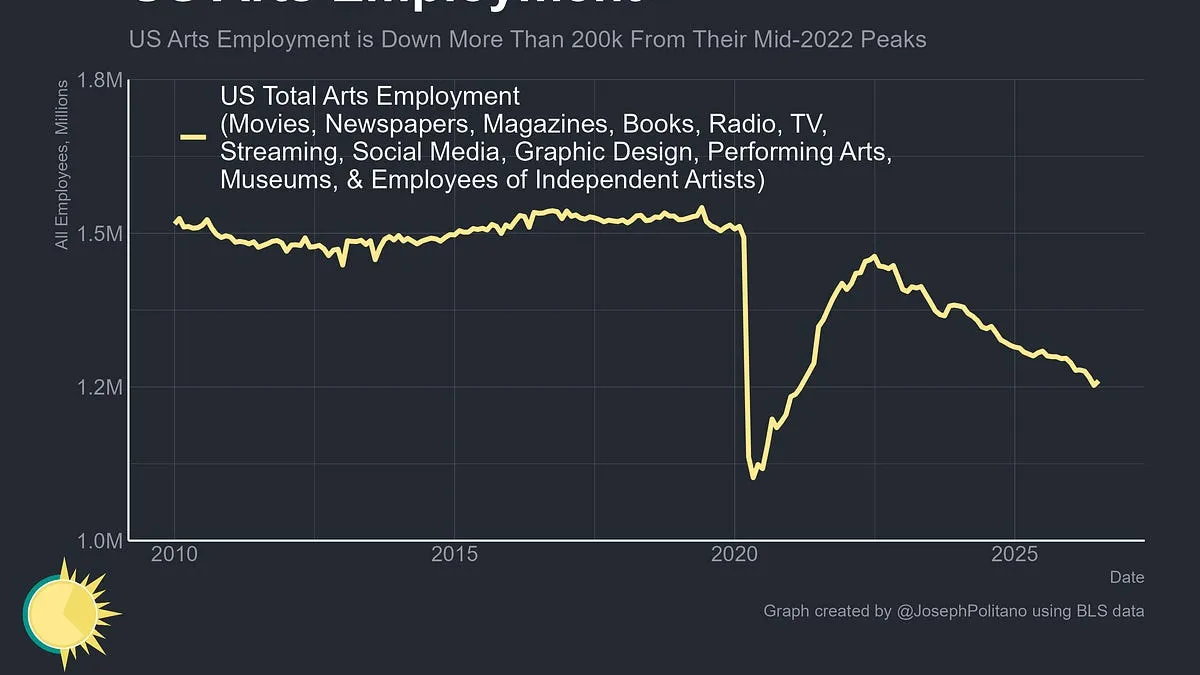
Film and sound recording alone fell 27%, by 120,000 jobs between August 2022 and August 2026, based on a Fortune review of BLS data. Film and TV employment peaked at 289,100 in October 2022 and has since fallen by more than a third. Publishing has been the second-largest source of losses, losing more than 70,000 jobs, and broadcasting and streaming cut about 29,000 more. Over the same period, jobs tied more closely to in-person experiences, including museums and performing arts, have continued to grow. The author does not claim AI explains all of it. It is difficult to distinguish AI's impact from other forces that were already impacting these fields, like media consolidation, movie production moving overseas, and the growing popularity of social media influencers. Media firms also reveal little about their AI use, both to protect against public backlash and, more financially important, to preserve the legal basis for their copyrights. Richard Florida, who coined the term "creative class," said "I'm not sure his numbers are right" and expects AI to reshape creative work rather than remove it. Roughly 32% of arts and entertainment workers use generative AI, below the 62% average across all industries. For a team building an AI company, the useful signal is where work is being absorbed, not the headline total. The steepest losses sit in roles whose output generative models can already produce cheaply, while live work holds up. Buyers in these trades are likely to press on price, and products that fit alongside human crews may find easier demand than tools that replace them outright.