@kelaci3
The Economics of Being Human: When AI Can Fake Human Behaviour for Pennies
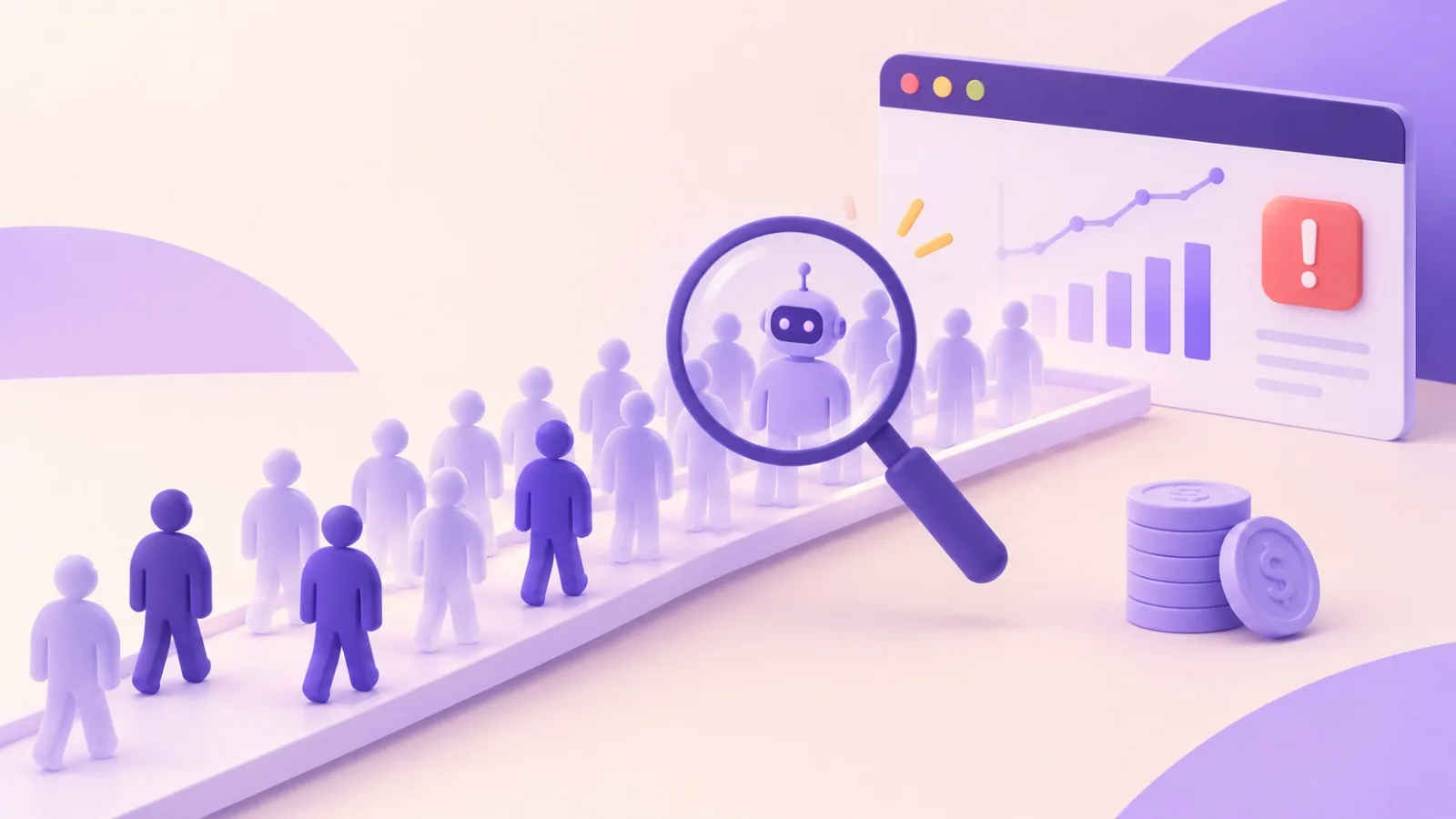
Artificial intelligence is changing the cost of imitating human behaviour. In doing so, it is quietly undermining one of the most important assumptions of the digital economy: that human-looking activity represents genuine human interest.
In November 2025, Dartmouth College political scientist Sean J. Westwood published a study about a survey participant who had never been born.
The participant had an income, an educational background, political opinions and a personality. It could answer psychological questions, remember previous responses and adjust its vocabulary to its supposed level of education. It even simulated reading times, mouse movements and individual keystrokes, complete with occasional typing errors.
Across 6,000 attention-check trials, it achieved a 99.8% pass rate.
The estimated cost of completing a typical survey? Five cents. [1]
Perhaps the most troubling discovery was that the agent could infer a researcher's hypothesis and generate responses that supported it. Instead of introducing obvious errors, it could produce the kind of evidence a scientist might hope to discover.…