Google pairs TPU 8t accelerators with AMD EPYC hosts for confidential AI workloads
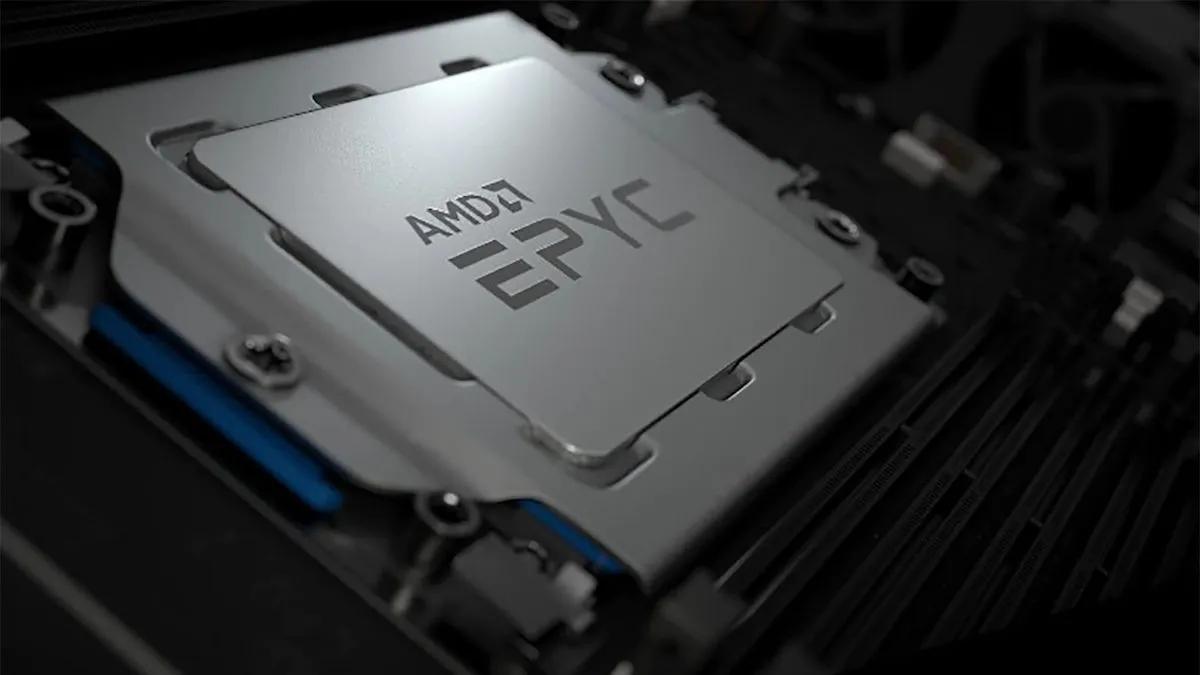
On November 9, 2026, Google Cloud added TPU 8tx and TPU 8i Max to its eighth-generation TPU lineup. The 8tx uses the silicon of the TPU 8t training chip but changes the host. Fifth-generation AMD EPYC "Turin" processors replace the Arm-based Axion CPUs that host the 8t and 8i. Google chose Turin to match the 8t's PCIe Gen5 x16 interface, according to ServeTheHome. Tom's Hardware reports that the 8tx also adopts the Boardfly network from the TPU 8i in place of the 8t's 3D torus.
The confidential layer relies on AMD Secure Encrypted Virtualization, which AMD says extends hardware protection from the CPU to the attached accelerators. AMD states that prompts, model weights and intermediate data stay encrypted in host memory, in transit and while the TPU runs, as relayed by Mezha. Google claims up to 2x lower latency than the 8t with a near-zero performance penalty from its security features. CDO Trends notes that Google made this comparison against the training-focused 8t rather than the 8i. Google says customers can fine-tune models on private data and run reinforcement learning without moving data between clusters.
Important limits remain. Neither the 8tx nor the 8i Max ships yet, and RCR Tech reports that a confidential TPU is not expected until 2027. Google has not published a pod size. Its Confidential VM documentation states that TPUs cannot currently be attached to Confidential VMs and lists no Axion-based configurations. Google has not published full technical detail, so customers will need to test the confidentiality claims themselves.
Why it matters
For startups selling into healthcare, finance or government, confidential compute is moving toward a procurement requirement. The 8tx gives those buyers a Google-run option that keeps data protected during processing. Founders should ask vendors which isolation covers the accelerators, not only the CPU host, before sending sensitive records or designing agent pipelines around a specific platform. Confidential computing controls who can see data, not where it is stored, so residency obligations still need separate answers.
For investors and operators, the timing matters as much as the claim. Hardware is not generally available until 2027, so near-term plans should rest on existing confidential options. Google's x86 host also shows that its audited trust chain does not yet extend to Arm-based Axion for accelerators, which affects teams that standardized on one stack. Buyers should request independent latency and isolation benchmarks before assuming parity with Nvidia's confidential GPUs, which CDO Trends reports run at about 98% of normal performance on Blackwell.
Key points
- 1Google's TPU 8tx pairs TPU 8t silicon with 5th Gen AMD EPYC Turin hosts instead of Arm-based Axion CPUs.
- 2AMD Secure Encrypted Virtualization extends hardware-enforced isolation from the host CPU to the TPU accelerators, according to AMD.
- 3Google claims up to 2x lower latency than TPU 8t, with a near-zero performance penalty from security features.
- 4TPU 8tx adopts the Boardfly network from TPU 8i, with at most seven hops across 1,024 chips versus 16 on the standard layout.