After 600 experiments, here's what I discovered about JEPA world models
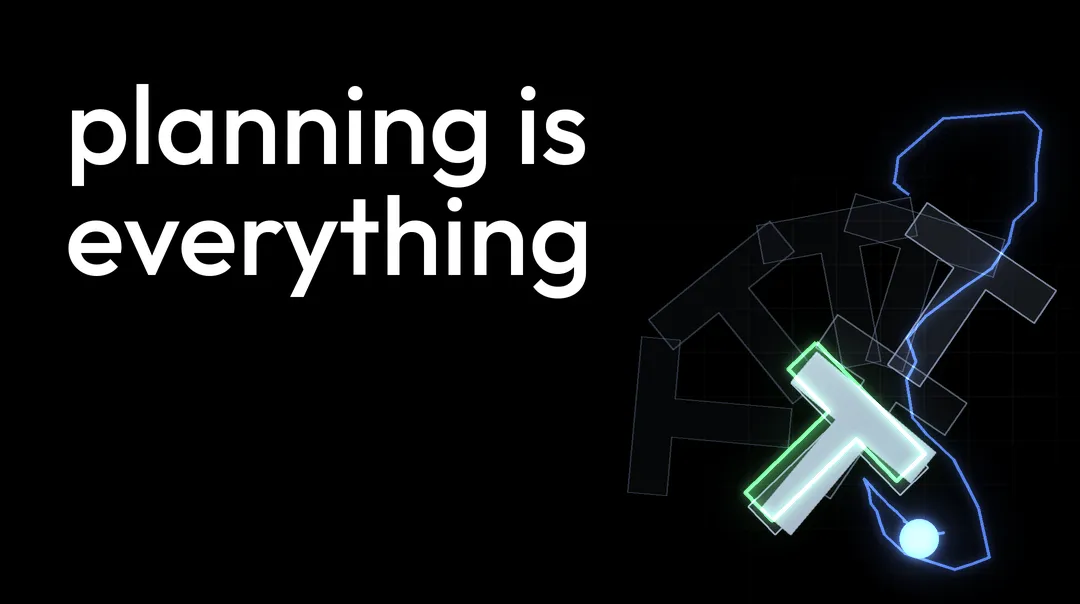
Independent researcher Haddy Alchaer, writing on haddyalchaer.com in November 2026, reports results from about 600 experiments on LeWM, a joint-embedding predictive architecture (JEPA) world model developed by a team that includes Yann LeCun. The benchmark is Push-T, a simulation in which a robot pushes a gray T-shaped block until it matches the green target shown in a goal image. The central claim is that the next gains come from how a trained JEPA model is used, not from retraining it. Alchaer reports that LeWM's useful planning horizon is about 25 steps, so chaining segments of that length was the path to longer tasks.
On 250 tasks with a goal 75 steps away, the learned predictor succeeded 78% of the time, against 77% when the simulator's exact physics replaced it, according to a summary by AI TL;DR. Planning all 75 steps in one pass reached 22%, while a subgoal every 25 steps raised that to 80%. A memory graph built from about 460,000 embedded states of expert demonstrations, with a cost on each jump, reached 85%.
AI TL;DR also reports that LeWM scored 68% on the official 50 episodes but 44% on 250 fresh ones, which suggests published Push-T numbers may be inflated.
Why it matters
For companies building on world models, the result moves engineering effort toward planning and goal design. If a better planner and memory structure can lift success sharply on a frozen model, teams should budget for inference-time search and task specification, not only for larger predictors. For robotics and physical AI startups, a benchmark score on the predictor alone may say less about deployed performance than the performance of the full planning stack.
For investors and buyers, the caution concerns evidence. A drop from 68% to 44% on fresh episodes shows how a benchmark can flatter a model, so diligence should ask for held-out evaluations. The work comes from one independent researcher, and the sources reviewed do not show an independent replication, so it is best treated as a lead for technical teams rather than a settled result.
Key points
- 1The learned predictor reached 78% success on long-horizon Push-T tasks, close to the 77% from exact simulator physics.
- 2Planning all 75 steps at once reached 22% success, while a subgoal every 25 steps raised it to 80%.
- 3A latent memory graph built from about 460,000 embedded demonstration states reached 85% success.
- 4LeWM scored 68% on 50 official test episodes but 44% on 250 fresh ones, according to AI TL;DR.
- 5